
[论文解读] Characterizing cylindrical particles upon local measurements of two Stokes parameters
本文提出一种仅通过在单一远场角度测量两个斯托克斯参数(强度 I 和圆偏振度 V)的局部测量,即可确定圆对称粒子的散射截面和全局偏振态的方法。通过利用多极展开和局部斯托克斯参数的矩阵求逆,该方法实现了仅需照相机和标准波片的最小实验复杂度,显著简化了圆柱形纳米结构的常规光学表征。
Researchers routinely characterize optical samples by computing the scattering cross-section. However, the experimental determination of this magnitude requires the measurement and integration of the components of the scattered field in all directions. Here, we propose a method to determine the scattering cross-section and global polarization state of radiation through measurements of two Stokes parameters at an angle of choice in far-field. The method applies to cylindrically symmetric samples whose optical response is well-described by a single multipolar order j. Moreover, the formalism is applicable for a wide range of different illuminations, and it only requires the use of a single camera and conventional wave plates. Our findings significantly reduce the complexity of routine characterization measurements for cylindrical samples in optical laboratories.
研究动机与目标
- 通过减少对散射场全角度积分的依赖,简化光学实验室中圆柱形粒子的实验表征。
- 仅利用在选定远场角度测量的两个局部斯托克斯参数(I 和 V),实现散射截面和全局偏振态的精确确定。
- 通过利用局部场测量,克服光学定理在聚焦光束和复杂照明条件下的局限性。
- 提供一种实用且低复杂度的测量协议,仅使用标准光学元件(照相机和波片),实现对圆柱形纳米结构的常规表征。
- 建立一个理论框架,通过多极分解将局部远场斯托克斯参数与全局散射和偏振特性联系起来。
提出的方法
- 该方法基于散射场的多极展开,假设光学响应主要由单个多极阶数 j 主导,适用于圆柱对称粒子。
- 通过向量球谐函数导出的系数 f_jm 和 g_jm,推导出局部远场斯托克斯参数(I_far, V_far)与积分散射参数(⟨I⟩_sca, ⟨V⟩_sca)之间的矩阵关系。
- 核心方程(公式 15)通过包含 f_jm 和 g_jm 的 2×2 矩阵的逆矩阵,将测量的局部斯托克斯参数反演,以恢复全局散射和偏振状态。
- 系数 f_jm(θ) 和 g_jm(θ) 以关联合流利多项式及归一化常数的形式进行解析表达,实现精确的角度校准。
- 该方法在偶极子(ℓ=1)粒子中得到验证,其中 f_1m 和 g_1m 的显式表达式以 cosθ 和 m 表示,导出闭式反演公式(公式 22)。
- 该方法在实验上可行,仅需单个照相机和常规波片,避免了全角度扫描或复杂干涉测量装置的需求。
实验结果
研究问题
- RQ1能否仅通过在单一远场角度测量两个斯托克斯参数的局部测量,恢复圆柱对称粒子的散射截面和全局偏振态?
- RQ2在聚焦光束或非平面波照明条件下,如何通过局部场测量克服光学定理的局限性?
- RQ3局部远场斯托克斯参数与粒子积分散射和偏振特性之间的数学关系是什么?
- RQ4在仅使用一个角度的强度和圆偏振度测量时,粒子的多极响应能在多大程度上被重建?
- RQ5由向量球谐函数导出的系数 f_jm 和 g_jm 如何实现从局部测量到全局可观测量的反演?
主要发现
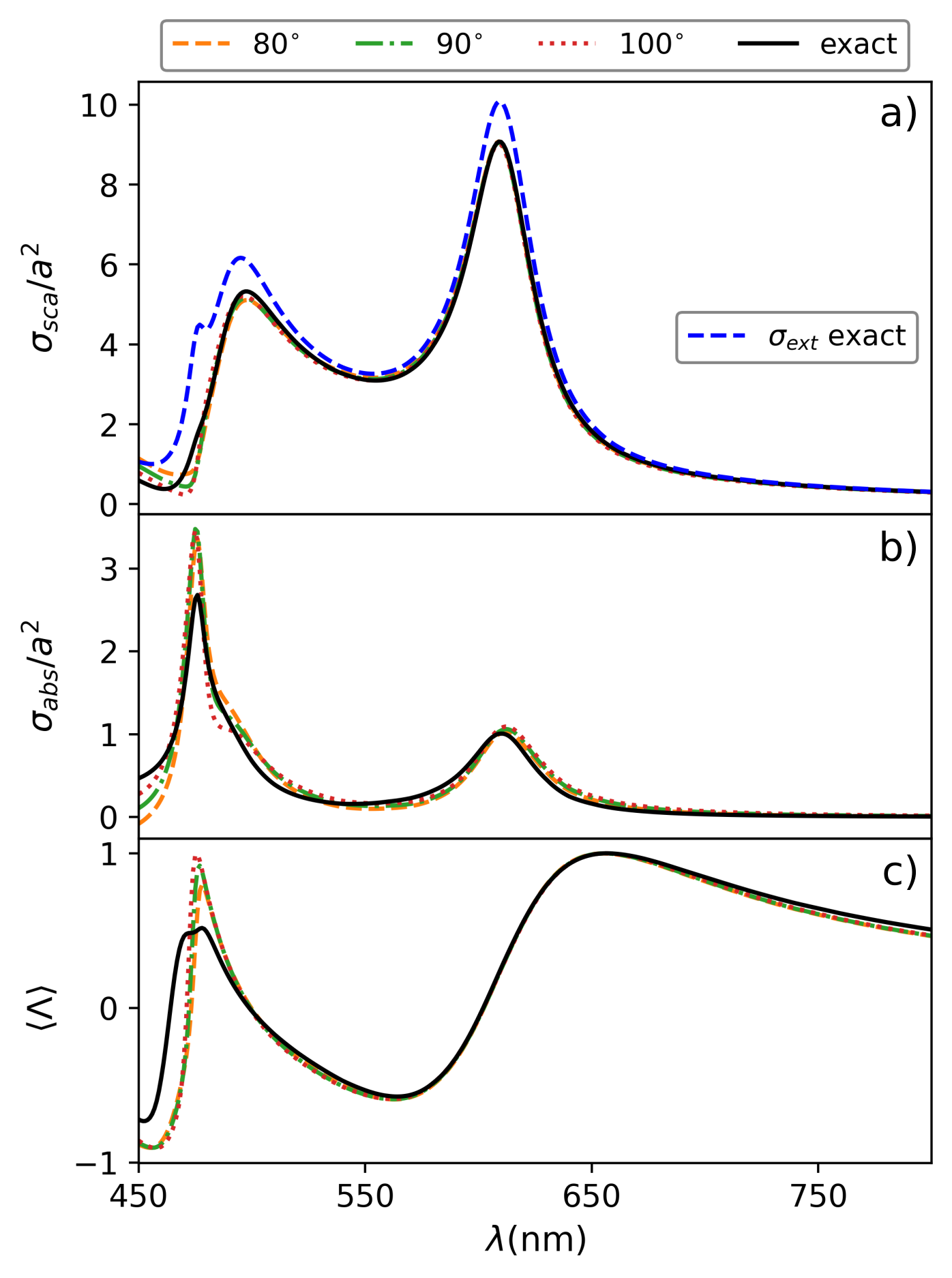
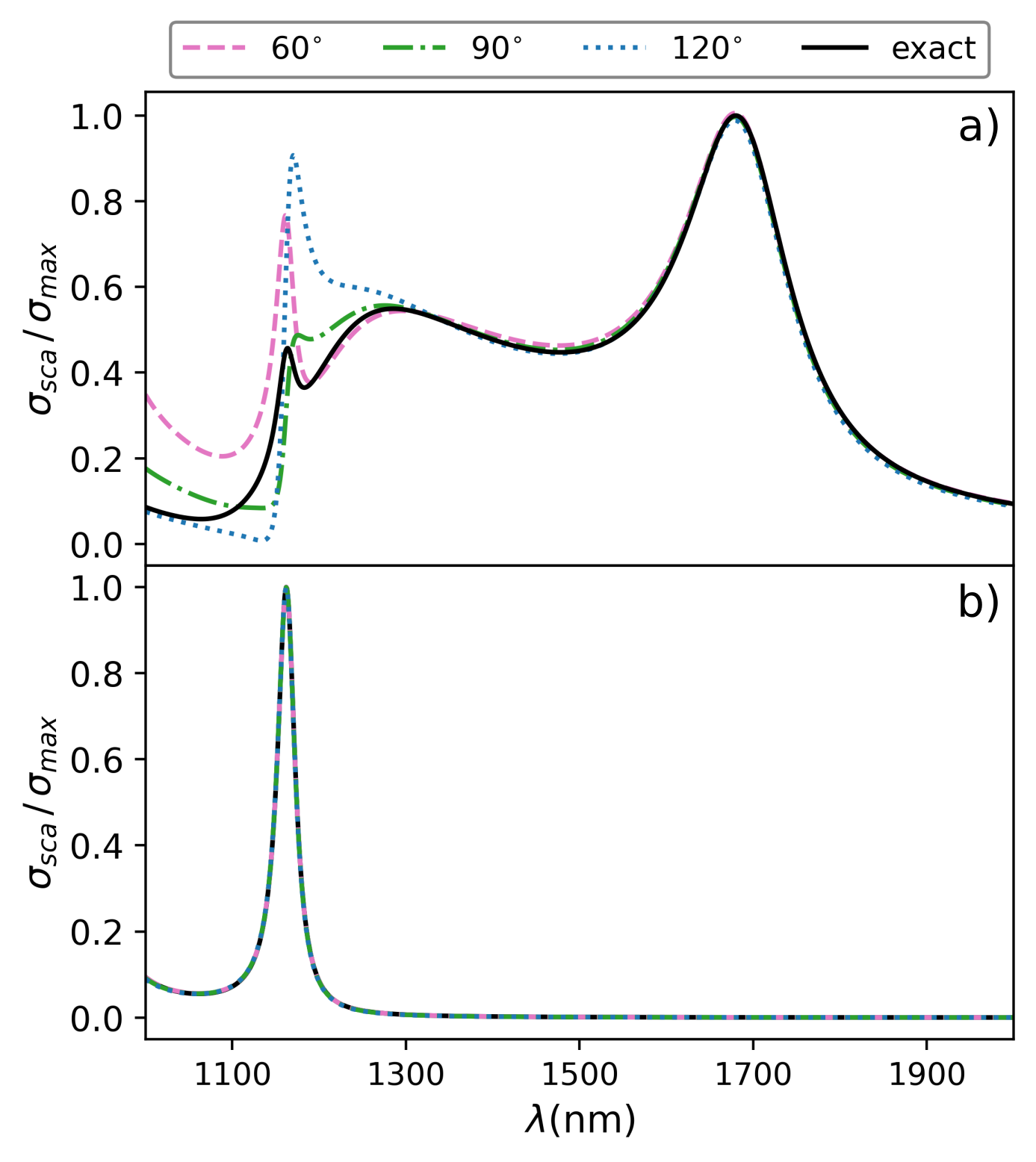
- 该方法仅通过在单一远场角度测量的两个局部斯托克斯参数(I 和 V),即可实现对散射截面和全局偏振态的完整表征,无需进行角度积分。
- 局部与全局斯托克斯参数之间的反演关系被表示为 2×2 矩阵变换(公式 15),其系数 f_jm 和 g_jm 依赖于多极阶数 j 和磁量子数 m。
- 对于偶极子粒子(ℓ=1),反演公式被显式推导(公式 22),表明全局散射和偏振参数与 (kr)^2 成比例,并通过 sin⁴θ 和 (1+cos²θ) 项依赖于测量角度 θ。
- 该方法对多种照明条件具有鲁棒性,包括圆偏振平面波和聚焦高斯光束,其适用范围超越了光学定理的原始范畴。
- 该方法将实验复杂度降低至仅需单个照相机和标准波片,使标准光学实验室中对圆柱形纳米结构的常规、高精度表征成为可能。
- 理论框架通过关联合流利多项式对 f_jm 和 g_jm 的解析推导得到验证,为局部测量与全局光学特性之间建立了完整且定量的联系。
阅读本论文
在 Nubint 阅读器中打开原文,边读边就任意段落提问。
在 Nubint 中阅读本论文本解读由 AI 根据论文原文生成,引用前请核对原文。