
[论文解读] Chebyshev Polynomial-Based Kolmogorov-Arnold Networks: An Efficient Architecture for Nonlinear Function Approximation
本文提出 Chebyshev KAN,一种使用切比雪夫多项式来近似多变量函数的网络层,并在 MNIST 风格任务和 fractal-like 2D 函数上展示其有效性。
Accurate approximation of complex nonlinear functions is a fundamental challenge across many scientific and engineering domains. Traditional neural network architectures, such as Multi-Layer Perceptrons (MLPs), often struggle to efficiently capture intricate patterns and irregularities present in high-dimensional functions. This paper presents the Chebyshev Kolmogorov-Arnold Network (Chebyshev KAN), a new neural network architecture inspired by the Kolmogorov-Arnold representation theorem, incorporating the powerful approximation capabilities of Chebyshev polynomials. By utilizing learnable functions parametrized by Chebyshev polynomials on the network's edges, Chebyshev KANs enhance flexibility, efficiency, and interpretability in function approximation tasks. We demonstrate the efficacy of Chebyshev KANs through experiments on digit classification, synthetic function approximation, and fractal function generation, highlighting their superiority over traditional MLPs in terms of parameter efficiency and interpretability. Our comprehensive evaluation, including ablation studies, confirms the potential of Chebyshev KANs to address longstanding challenges in nonlinear function approximation, paving the way for further advancements in various scientific and engineering applications.
研究动机与目标
- 激发在高维设置下改进非线性函数近似的需求。
- 提出一个实现基于切比雪夫的 Kolmogorov-Arnold 表示的 Chebyshev KAN 层。
- 在图像样数据(MNIST)和分形样的二维函数上展示该方法,以评估近似能力。
- 开展多项式次数和输入归一化的消融研究,以理解它们对性能的影响。
- 概述未来方向以及与更广泛的神经网络架构的潜在整合。
提出的方法
- 按照 Kolmogorov-Arnold 框架,将多变量函数表示为单变量切比雪夫插值的叠加。
- 在切比雪夫评估前,使用 tanh 激活将输入归一化到 [-1,1] 区间。
- 通过递推 T_n(x)=2xT_{n-1}(x)-T_{n-2}(x) 计算到次数 n 的切比雪夫多项式,并通过可学习的系数张量 Θ 组装输出。
- 将输出 Y 形成为跨输入维度和多项式阶数的切比雪夫多项式的加权和:Y= sum_{k=0}^{n} sum_{j=1}^{d_in} T_{j,k} ⊙ Θ_{j,:,k}。
- 通过反向传播训练 Θ,以最小化所选损失函数(例如回归的 MSE,分类的交叉熵)。
- 可选地将 Chebyshev KAN 层集成到更大架构(CNN、RNN)中,以提升函数近似能力。
实验结果
研究问题
- RQ1Chebyshev-based KAN 层在与传统 MLP 相比时,是否能有效近似高维连续函数?
- RQ2多项式次数和输入归一化对近似精度和模型复杂度的影响是什么?
- RQ3Chebyshev KAN 在图像样数据(如 MNIST)和复杂非线性二维分形函数上的表现如何?
主要发现
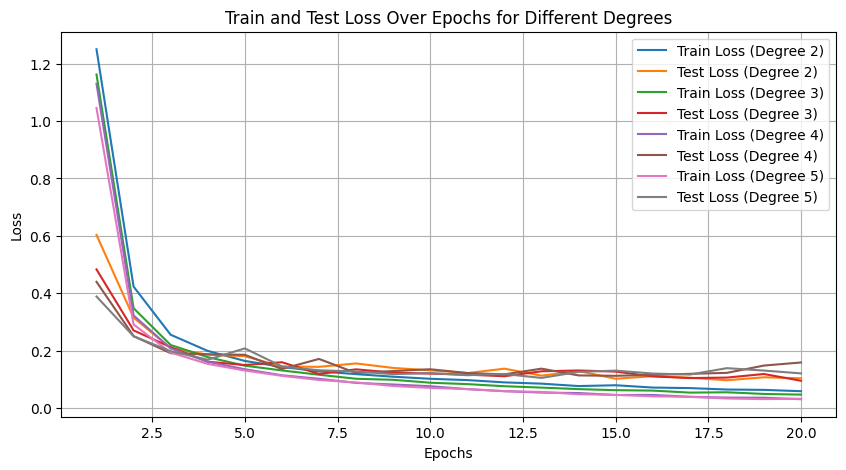
- 在 MNIST 风格分类任务中,三阶切比雪夫多项式在所测试的次数中取得了最佳准确率(0.9718),参数量适中(103,136)。
- 四阶在参数量更大(128,896)的情况下,准确率显著下降到 0.9553。
- 五阶达到 0.9646 的准确率,表明在 MNIST 上超过三阶后收益递减。
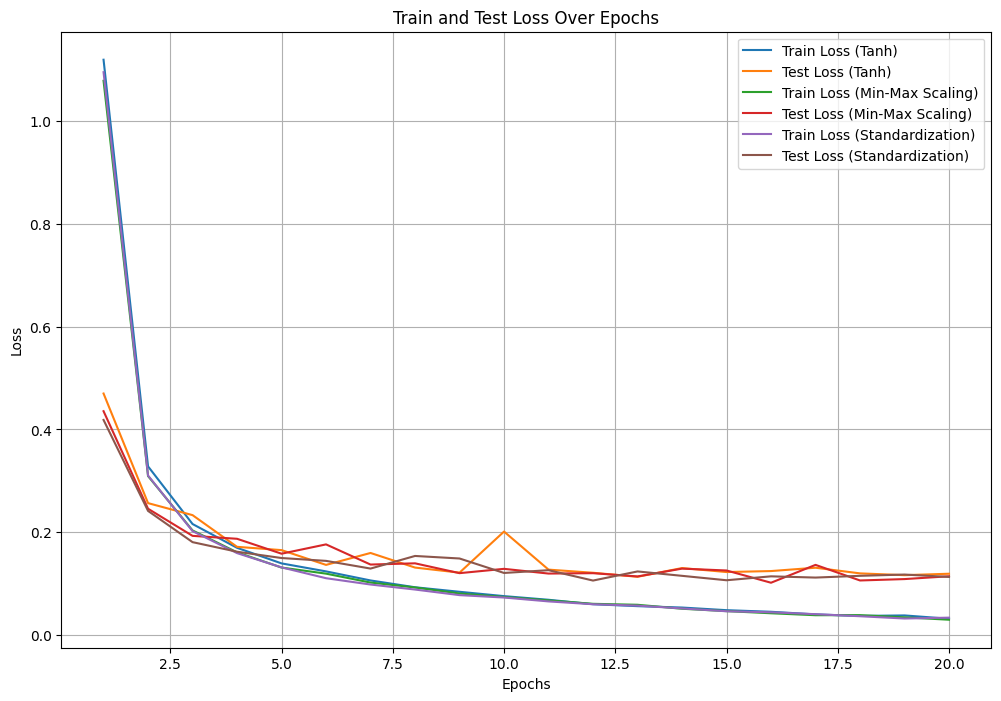
- 以标准化作为输入归一化在 MNIST 实验中略微优于 tanh 和 min-max(0.9692 相较于 0.9680–0.9683)。
- 分形样的二维函数实验显示 Chebyshev KAN 能捕捉复杂模式,使用三层结构:先将二维输入映射到 8 个特征,再映射到 16 个特征,最后到 1 个输出,分别在前后层使用 8 与 4 的次数。
阅读本论文
在 Nubint 阅读器中打开原文,边读边就任意段落提问。
在 Nubint 中阅读本论文本解读由 AI 根据论文原文生成,引用前请核对原文。