
[论文解读] Collaborative Perception for Connected and Autonomous Driving: Challenges, Possible Solutions and Opportunities
本文综述了连接与自动驾驶中的协同感知挑战,提出一个通道感知框架以降低通信时延,并在 OPV2V 数据集上验证了改进。
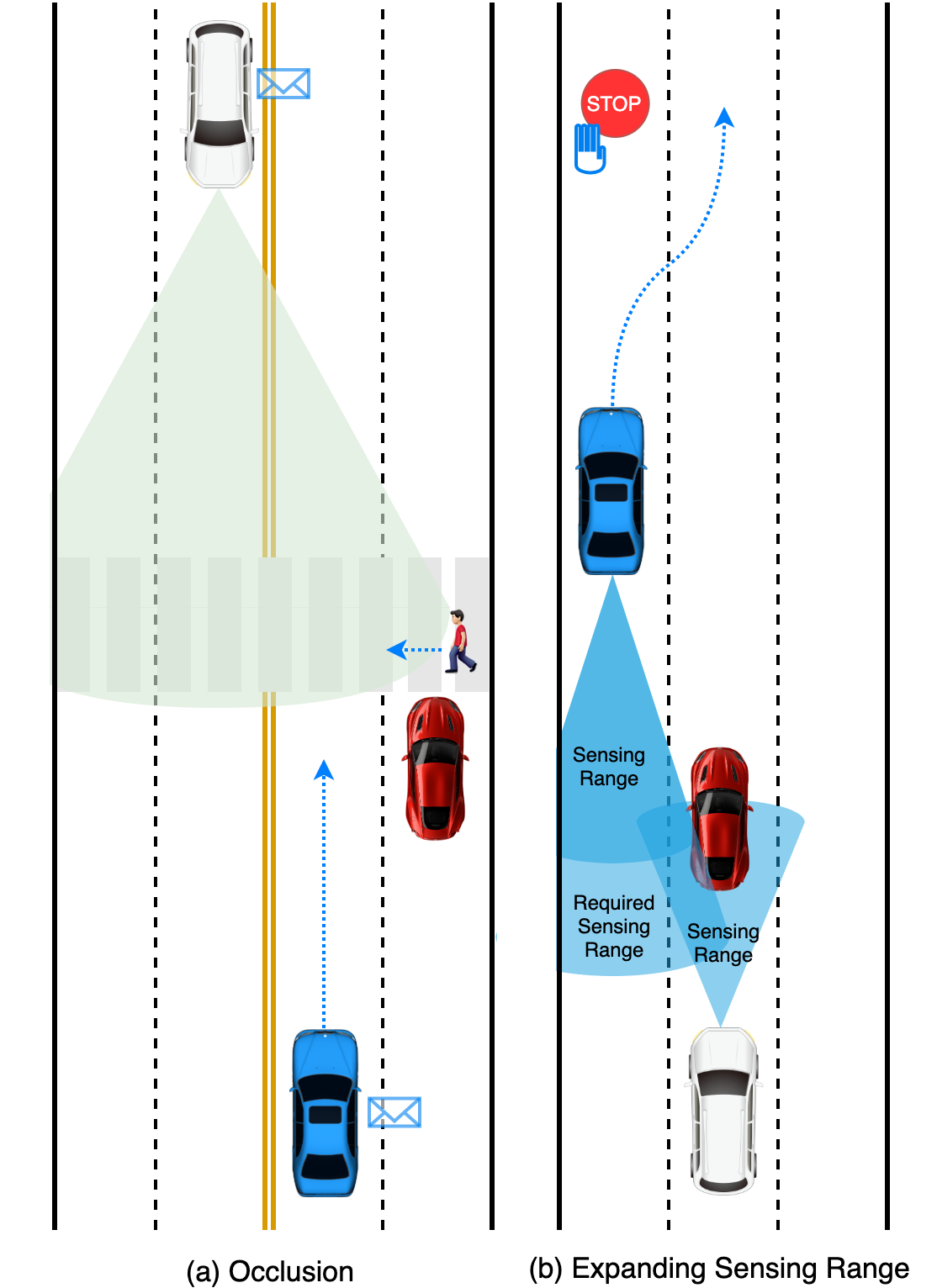
Autonomous driving has attracted significant attention from both academia and industries, which is expected to offer a safer and more efficient driving system. However, current autonomous driving systems are mostly based on a single vehicle, which has significant limitations which still poses threats to driving safety. Collaborative perception with connected and autonomous vehicles (CAVs) shows a promising solution to overcoming these limitations. In this article, we first identify the challenges of collaborative perception, such as data sharing asynchrony, data volume, and pose errors. Then, we discuss the possible solutions to address these challenges with various technologies, where the research opportunities are also elaborated. Furthermore, we propose a scheme to deal with communication efficiency and latency problems, which is a channel-aware collaborative perception framework to dynamically adjust the communication graph and minimize latency, thereby improving perception performance while increasing communication efficiency. Finally, we conduct experiments to demonstrate the effectiveness of our proposed scheme.
研究动机与目标
- 识别阻碍协同感知的关键挑战(数据共享异步、数据量、姿态误差、安全性)。
- 分析并比较在通信、计算和数据融合技术领域的潜在解决方案。
- 提出一个通道感知的协同感知框架,用于动态调整通信图并降低延迟。
- 通过公开数据集(OPV2V)的实验展示实际收益,并讨论未来机会和未解决的研究方向。
提出的方法
- 讨论数据共享模态(早期、中间、晚期融合),并指出中间融合是在感知精度与带宽之间的有利权衡。
- 描述时间延迟补偿和对时延感知的策略,以在车际协同中对齐异步特征。
- 总结姿态误差缓解技术,包括基于注意力的和姿态修正方法。
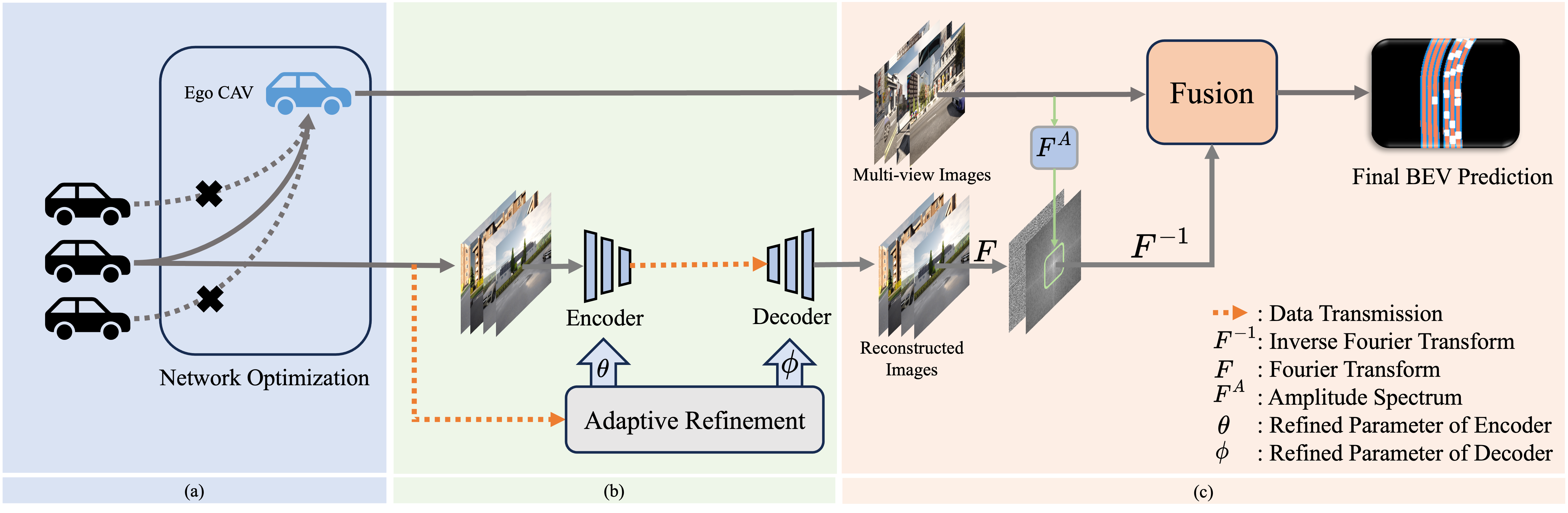
- 提出一个通道感知框架,包含三个组成部分:传输延迟最小化、自适应数据重构和域对齐。
- 给出一种基于自适应速率-失真重构的方法,以实现数据在实时通道感知下的压缩与重构。
- 通过基于FFT的幅度/相位谱对齐引入域对齐,以减少跨车域差异。
实验结果
研究问题
- RQ1在V2X使能的自动驾驶中实现鲁棒协同感知的主要挑战有哪些?
- RQ2通信策略(融合层级、编码和图拓扑)如何降低时延和数据量问题?
- RQ3哪些方法能有效解决协同车辆之间的姿态误差和域不匹配问题?
主要发现
- 所提出的方法在 OPV2V 上实现了最高的 BEV 分割 IoU(55.06),相较若干基线,领先最近的方法 2.11 IoU 点。
- 车辆类别性能提升尤为显著,相较下一个最佳方法高出 4.07 IoU 点。
- 根据所引工作,中间融合经常在感知准确性与带宽使用之间提供有利的折衷。
- 在实验中,通道感知框架表现出平均传输延迟降低和 BEV 融合结果的提升。
- 通过基于 FFT 的幅度谱匹配实现域对齐,减少跨车域差异并提升融合质量。
阅读本论文
在 Nubint 阅读器中打开原文,边读边就任意段落提问。
在 Nubint 中阅读本论文本解读由 AI 根据论文原文生成,引用前请核对原文。