
[论文解读] Communication and Control in Collaborative UAVs: Recent Advances and Future Trends
本论文提供多无人机系统协同通信与控制的全面综述,概述架构、信道、编队任务、城市应用与未来研究方向。
The recent progress in unmanned aerial vehicles (UAV) technology has significantly advanced UAV-based applications for military, civil, and commercial domains. Nevertheless, the challenges of establishing high-speed communication links, flexible control strategies, and developing efficient collaborative decision-making algorithms for a swarm of UAVs limit their autonomy, robustness, and reliability. Thus, a growing focus has been witnessed on collaborative communication to allow a swarm of UAVs to coordinate and communicate autonomously for the cooperative completion of tasks in a short time with improved efficiency and reliability. This work presents a comprehensive review of collaborative communication in a multi-UAV system. We thoroughly discuss the characteristics of intelligent UAVs and their communication and control requirements for autonomous collaboration and coordination. Moreover, we review various UAV collaboration tasks, summarize the applications of UAV swarm networks for dense urban environments and present the use case scenarios to highlight the current developments of UAV-based applications in various domains. Finally, we identify several exciting future research direction that needs attention for advancing the research in collaborative UAVs.
研究动机与目标
- 总结自主多无人机协作的通信与控制要求。
- 回顾当前无人机编队的协同通信机制与架构。
- 突出无人机编队网络在城市环境与智慧城市中的应用。
- 识别未解决的挑战并提出未来协同 UAV 的研究方向。
提出的方法
- 对协同 UAV 通信与控制进行结构化文献综述。
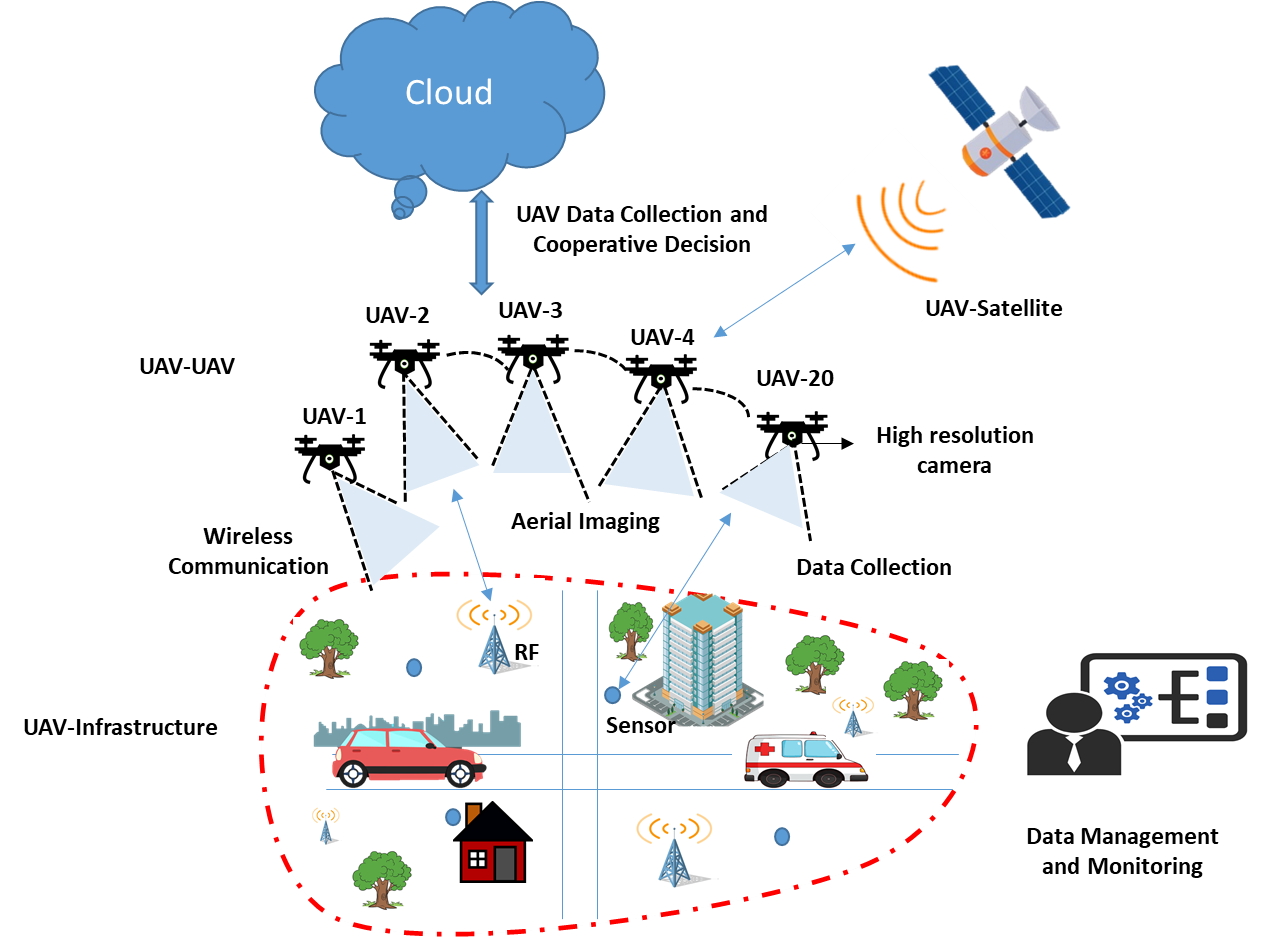
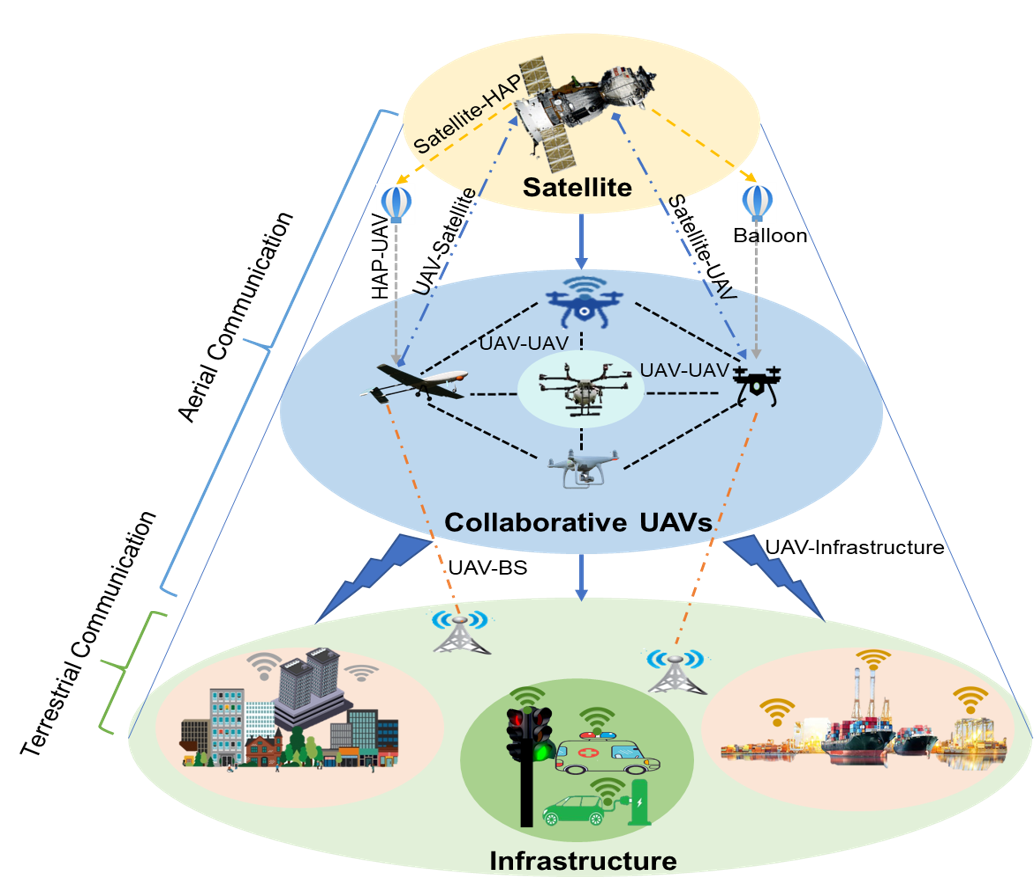
- 将通信模式分为 UAV-to-Infrastructure 和 UAV-to-UAV 并分析其需求。
- 考察基于编队的协同任务、路由、轨迹规划与目标定位。
- 调研城市环境与智慧城市中的用例以说明当前发展。
- 讨论应用于 UAV 编队协调的强化学习及其他 AI 技术。
实验结果
研究问题
- RQ1多无人机协作的基本通信与控制要求是什么?
- RQ2协同 UAV 网络的主要挑战与限制是什么(如连通性、时延、频谱、移动性)?
- RQ3在城市环境中有哪些用例与应用展示了 UAV 编队协作?
- RQ4未来方向与技术(如 5G/6G、RL)能如何推动协同 UAV?
主要发现
- 协同 UAV 通信使多无人机系统的任务完成更快、更可靠且具容错性。
- UAV-to-Infrastructure 与 UAV-to-UAV 链路各自具有不同的需求与挑战,包括视线、干扰、时延与频谱考量。
- 如协同定位、轨迹形成、路由与目标跟踪等基于编队的任务正在通过各种算法积极探索。
- 深度强化学习及其他基于学习的方法正被越来越多地用于改善路径规划、协调与资源管理在 UAV 编队中的应用。
- 在城市环境与智慧城市中的应用凸显了提高监测、灾害管理与安防等方面的潜力。
- 尽管取得进展,通道建模、能效、可扩展架构以及大规模 UAV 编队的安全、可靠运行仍然是挑战。
阅读本论文
在 Nubint 阅读器中打开原文,边读边就任意段落提问。
在 Nubint 中阅读本论文本解读由 AI 根据论文原文生成,引用前请核对原文。