
[论文解读] Composite Classical and Quantum Channel Discrimination
本文研究了非对称设置下的二元复合通道判别问题,刻画了并行策略的 Stein 指数,并为经典与量子通道中的自适应策略推导出上界。研究发现,当假设集非凸时,自适应策略在经典通道中可优于并行策略,揭示了在简单假设检验中所不存在的根本性优势。
We study the problem of binary composite channel discrimination in the asymmetric setting, where the hypotheses are given by fairly arbitrary sets of channels, and samples do not have to be identically distributed. In the case of quantum channels we prove: (i) a characterization of the Stein exponent for parallel channel discrimination strategies and (ii) an upper bound on the Stein exponent for adaptive channel discrimination strategies. We further show that already for classical channels this upper bound can sometimes be achieved and be strictly larger than what is possible with parallel strategies. Hence, there can be an advantage of adaptive channel discrimination strategies with composite hypotheses for classical channels, unlike in the case of simple hypotheses. Moreover, we show that classically this advantage can only exist if the sets of channels corresponding to the hypotheses are non-convex. As a consequence of our more general treatment, which is not limited to the composite i.i.d. setting, we also obtain a generalization of previous composite state discrimination results.
研究动机与目标
- 刻画在经典与量子设置下,复合假设条件下并行通道判别策略的渐近性能。
- 推导出自适应通道判别策略在复合设置下的 Stein 指数上界。
- 研究在假设为复合的情况下,自适应策略是否能在经典与量子通道判别中优于并行策略。
- 确定自适应策略提供性能优势的条件,特别是与假设集的凸性之间的关系。
- 将先前关于复合态判别的结果推广至通道判别场景,突破独立同分布(i.i.d.)假设的限制。
提出的方法
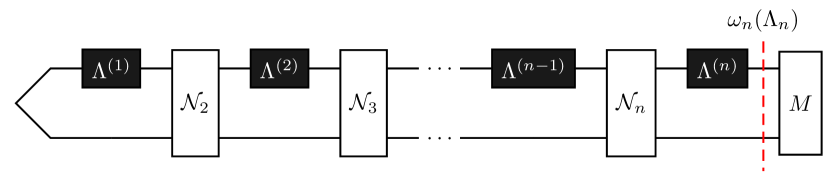
- 使用通道分歧度量,特别是正则化相对通道分歧熵,刻画并行策略下 Stein 指数的特性。
- 利用量子相对熵的联合凸性和可加性性质,通过单字母表达式界定自适应策略指数的上界。
- 通过对输入态和通道集进行变分分析,推导出自适应策略渐近误判指数的上界。
- 构造了具有非凸通道集的显式经典例子,证明自适应指数的上界可被实现。
- 通过放宽 i.i.d. 假设并允许独立但非同分布的通道实例,将复合态判别结果推广至复合通道判别。
- 利用经典与量子通道集的结构,分析凸性在决定并行策略最优性中的作用。
实验结果
研究问题
- RQ1在经典通道的复合假设设置下,自适应通道判别策略是否能优于并行策略?
- RQ2在何种条件下——特别是关于凸性——自适应优势会在经典复合通道判别中出现?
- RQ3在量子复合通道判别设置中,自适应与并行策略的性能之间是否存在根本性差距?
- RQ4在经典设置中,自适应 Stein 指数的上界是否可被实现?若可实现,需满足何种通道集的结构假设?
- RQ5结果在多大程度上可推广至 i.i.d. 设置之外?通道实例的独立性如何影响渐近误判指数?
主要发现
- 对于量子通道,本文利用正则化通道分歧度量刻画了并行策略的 Stein 指数,确立了精确的渐近误判率。
- 推导出自适应策略 Stein 指数的上界,该上界适用于经典与量子通道。
- 在经典通道中,当假设集为非凸时,自适应指数的上界可被实现,表明其相对于并行策略具有严格性能优势。
- 研究证明,当通道集为凸时,经典通道中的自适应优势不可能存在,意味着凸性是并行策略渐近最优的必要条件。
- 本文将先前关于复合态判别的结果推广至通道设置,表明即使在不假设 i.i.d. 通道实例的情况下,相同的结构性洞见依然成立。
- 在某些经典例子中,自适应指数的上界被证明是紧致的,表明该上界并非空洞,且在通道集的特定结构条件下可被达到。
阅读本论文
在 Nubint 阅读器中打开原文,边读边就任意段落提问。
在 Nubint 中阅读本论文本解读由 AI 根据论文原文生成,引用前请核对原文。