
[论文解读] Concerned with Data Contamination? Assessing Countermeasures in Code Language Model
本研究评估了三种对抗代码语言模型(CLMs)数据污染的对策——使用近期数据、使用精心筛选的基准和代码重构。研究发现,CLMs 在截止日期后的数据上表现往往与在污染数据上相当甚至更优,且重构可提升性能,这挑战了关于污染影响的既有假设,并揭示了困惑度等标准指标在检测污染方面的局限性。
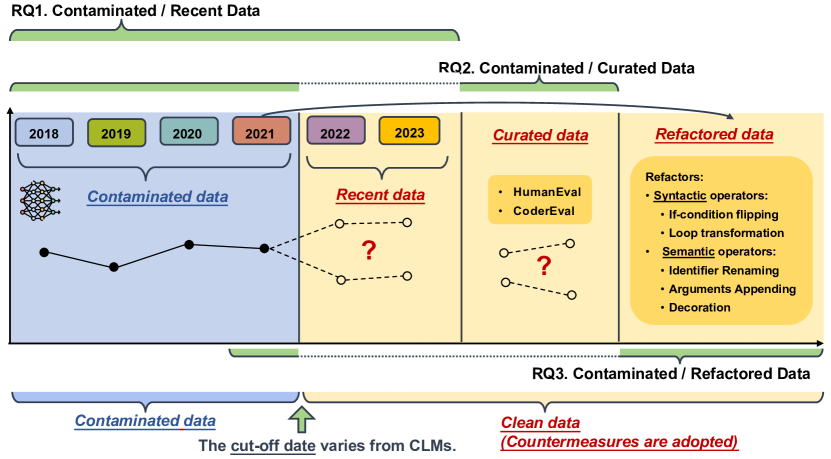
Various techniques have been proposed to leverage the capabilities of code language models (CLMs) for SE tasks. While these techniques typically evaluate their effectiveness using publicly available datasets, the evaluation can be subject to data contamination threats where the evaluation datasets have already been used to train the concerned CLMs. This can significantly affect the reliability of the evaluation. Different countermeasures have been suggested to mitigate the data contamination threat. Countermeasures include using more recent data, curating new data, and refactoring existing data are introduced, yet it is unclear whether these countermeasures could really mitigate data contamination threats to model evaluation. To fill the gap, we systematically study to quantify the impacts of these countermeasures on CLMs' performance. To facilitate the study, we collected over 2 million Python functions with timestamps ranging from January 1st, 2018, to December 31st, 2023. The data created before the models' cut-off date are considered "contaminated data", while the data where the countermeasures are taken are regarded as "cleansed data". We study the impact of these countermeasures by investigating the difference in CLMs' performance on contaminated and cleansed data derived from different countermeasures. Our experiments yield several interesting observations. For instance, CLMs do not necessarily perform worse on data after the models' cut-off date; on the contrary, they sometimes perform better. In addition, refactoring did not always result in decreased performance; it could lead to improvements instead. Furthermore, existing metrics such as perplexity cannot distinguish contaminated/cleansed data. We hope that the results and observations could help deepen the understanding of CLMs' capabilities and inform the community about data contamination.
研究动机与目标
- 调查针对代码语言模型(CLMs)中数据污染的常见对策在实际中是否有效。
- 量化CLMs在污染数据(模型截止日期前)与净化数据(应用对策后)上的性能差异。
- 评估现有指标(如困惑度)在检测CLM评估中数据污染的可靠性。
- 为CLM性能受数据污染影响提供实证见解,涵盖不同对策策略的影响。
- 向软件工程社区揭示当前评估实践的局限性,并强调需要更稳健的基准。
提出的方法
- 从2018年1月1日至2023年12月31日期间,收集了2,493,174个带有时间戳的Python函数,将截止日期前创建的数据定义为污染数据。
- 应用三种对策:(1) 使用截止日期后的数据(近期数据),(2) 使用精心筛选的基准,(3) 通过标识符重命名和结构修改对截止日期前的代码进行重构。
- 通过掩码最后语句的代码补全任务,测量污染数据与净化数据之间的性能差异。
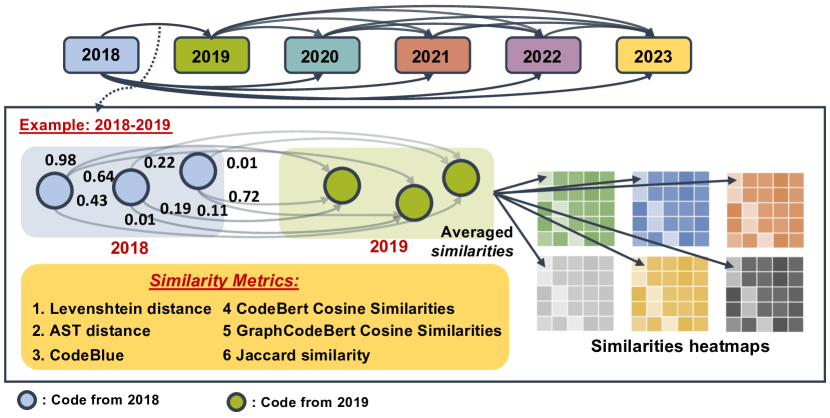
- 使用Jaccard距离和Levenshtein距离量化污染数据与净化数据之间的重叠,以确保最小相似性。
- 使用标准指标(包括困惑度)评估模型性能,以评估其检测污染的能力。
- 使用三种相似性度量验证净化数据与污染数据在语义和语法上均保持显著差异,从而最小化重叠。
实验结果
研究问题
- RQ1当在污染数据与通过近期数据、精心筛选基准或重构净化的数据上进行评估时,代码语言模型(CLMs)的性能有何差异?
- RQ2标准指标(如困惑度)在多大程度上能检测出CLM评估中的数据污染?
- RQ3代码重构是否始终导致CLM性能下降或提升?能否使模型在先前见过的代码上实现性能提升?
- RQ4污染数据与净化数据之间的重叠程度有多大?是否影响性能比较的有效性?
- RQ5现有的精心筛选基准是否真正免于污染?与截止日期后的数据相比,其在模型性能上表现如何?
主要发现
- CLMs 并不必然在截止日期后创建的数据上表现更差;在某些情况下,其表现甚至更优,这挑战了‘截止日期后数据天然更可靠’的假设。
- 通过标识符重命名和结构修改对截止日期前代码进行重构,并未导致性能下降,反而在某些情况下提升了性能,表明重构可能无法可靠地缓解污染问题。
- 标准指标(如困惑度)无法有效区分污染数据与净化数据,因为其在不同数据类型上的性能差异极小。
- 通过Jaccard距离和Levenshtein距离测量的污染数据与净化数据之间的重叠保持在相对较低水平,支持了不同数据组之间性能比较的有效性。
- 在精心筛选基准上的表现并未始终低于在污染数据上的表现,表明许多基准可能仍包含与模型训练数据重叠的数据。
- 本研究揭示,当前的对策(尤其是重构和基准筛选)可能无法有效消除污染风险,呼吁在CLM研究中建立更严格的评估协议。
阅读本论文
在 Nubint 阅读器中打开原文,边读边就任意段落提问。
在 Nubint 中阅读本论文本解读由 AI 根据论文原文生成,引用前请核对原文。