
QUICK REVIEW
[论文解读] Data and code example for the article: "Massively parallel hybrid quantum-classical machine learning for kernelized time-series classification"
Jack S. Baker, Gilchan Park|arXiv (Cornell University)|May 10, 2023
一句话总结
该论文提出了一种大规模并行的混合量子-经典机器学习框架,用于时间序列分类,采用可学习的时间序列哈密顿核(TSHK)。TSHK通过参数化量子线路演化构建,并利用可微分多核学习进行优化,实现在QCC-net中的端到端训练。该方法在127量子比特超导处理器上通过量子多任务编程实现了35倍的加速,且未损失精度,展示了NISQ设备的实际可扩展性。
ABSTRACT
Data needed to reproduce the figures of https://arxiv.org/abs/2305.05881 and a simple code example of a quantum-convex-classical neural network used to train a sine versus cosine classification problem.
研究动机与目标
- 解决经典核方法在时间序列分类中缺乏可学习、时间感知核函数的问题。
- 实现在噪声中等规模量子(NISQ)硬件上的量子核方法高效、可扩展的部署。
- 开发一种可微分、端到端可训练的混合量子-经典模型,将量子核学习与凸优化相结合。
- 通过真实量子处理器上的量子多任务编程,展示量子机器学习工作流中的实际并行性。
提出的方法
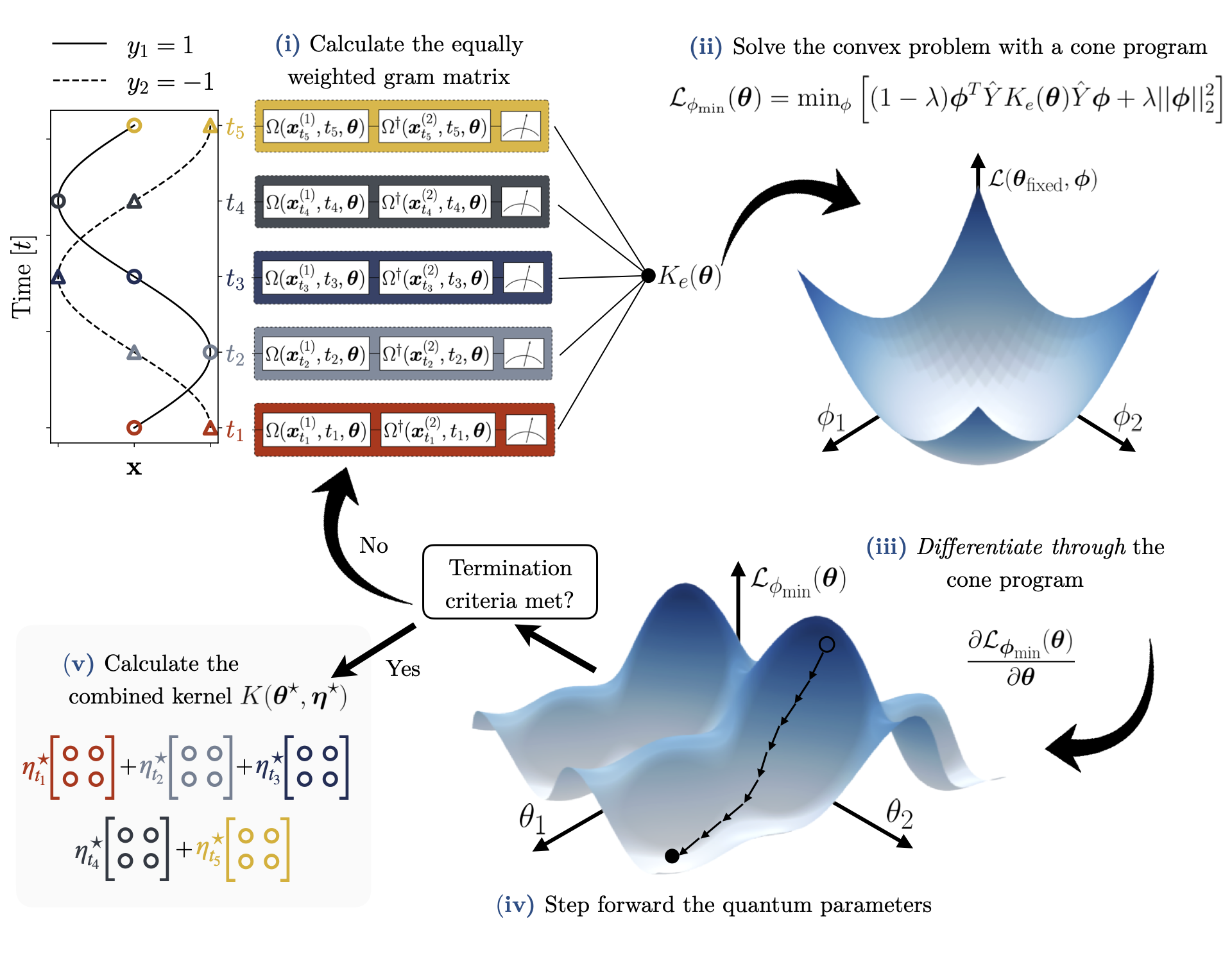
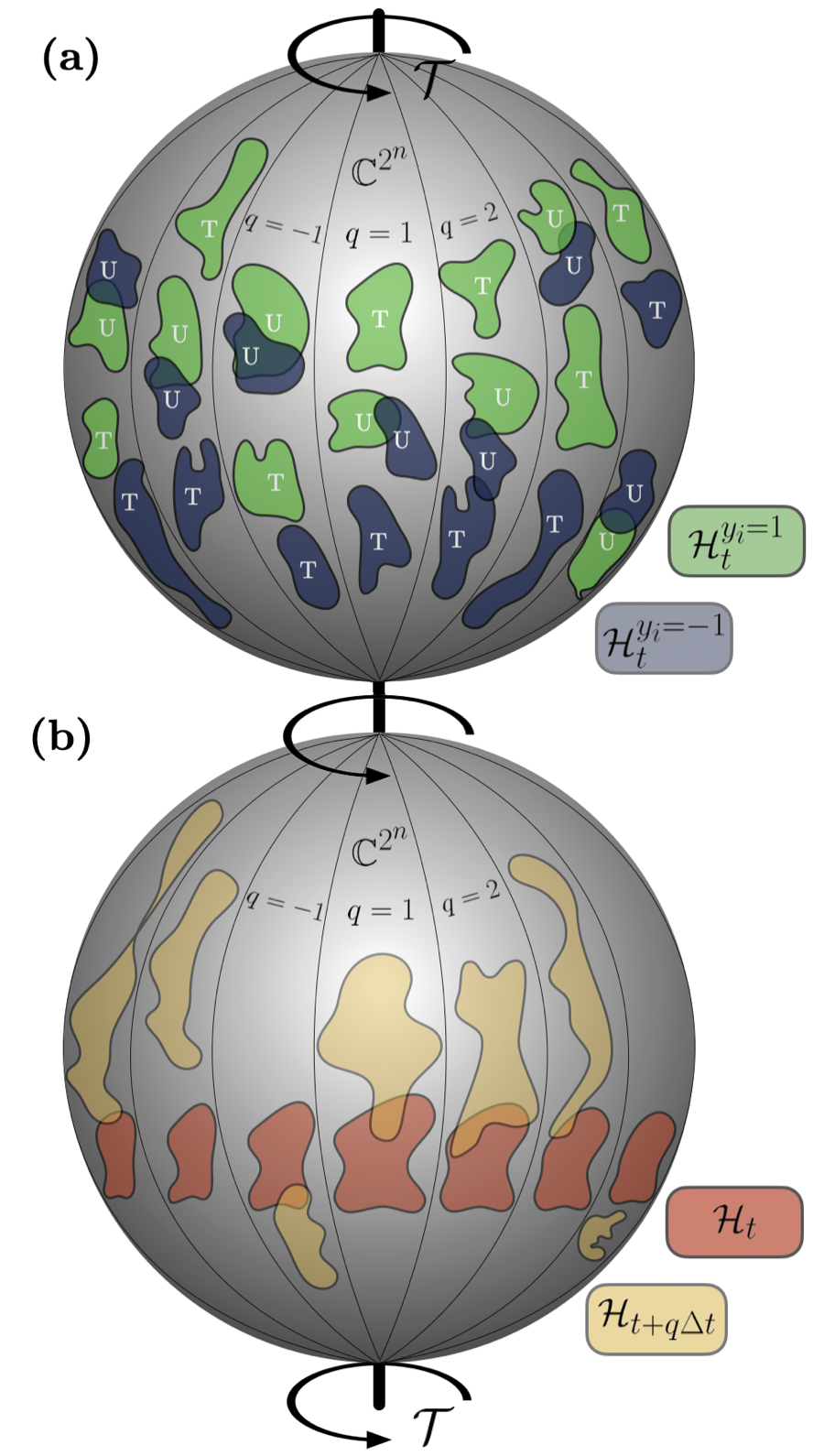
- 时间序列哈密顿核(TSHK)被构建为在不同时间点通过参数化酉演化得到的量子核函数的加权和。
- 核权重通过可微分凸优化进行优化,从而实现在量子-经典-凸(QCC-net)神经网络中的端到端训练。
- 基于变分特征分解的电路Ansatz实现了时间演化算子的轻量化实现,降低了NISQ设备的电路深度。
- 采用量子多任务编程(QMP)在127量子比特IBM处理器上并发执行多个独立的量子电路,实现了大规模并行性。
- 通过自定义代码实现部分测量提取,从完整电路测量中隔离出相关量子比特子系统。
- 将TSHK嵌入支持向量机(SVM)中,用于最终的时间序列分类。
实验结果
研究问题
- RQ1能否构建一个可学习、时变的量子核函数,以捕捉时间序列数据中的时间关系?
- RQ2核权重与量子线路参数能否以端到端可微分的方式联合优化?
- RQ3量子多任务编程是否能在不损失精度的前提下,显著提升量子核计算的速度?
- RQ4所提出的基于TSHK的方法能否在真实NISQ硬件上实现高分类精度?
主要发现
- 与串行执行相比,所提出的TSHK框架在127量子比特IBM量子处理器上通过量子多任务编程实现了35倍的核计算加速。
- 在模拟器和真实设备环境中,QMP与非QMP执行结果的保真度均超过0.99,证实无精度损失。
- QMP在模拟器与设备输出之间的保真度为0.9909,优于非QMP的0.9134,表明鲁棒性更强。
- 该方法在真实硬件上35个测试电路中均表现出一致性能,QMP结果与非QMP输出的保真度在0.99以内。
- 部分测量代码成功隔离了相关量子比特子系统,实现了从多电路运行中高效提取核矩阵元素。
阅读本论文
在 Nubint 阅读器中打开原文,边读边就任意段落提问。
在 Nubint 中阅读本论文本解读由 AI 根据论文原文生成,引用前请核对原文。