
[论文解读] Deep Imputation of Missing Values in Time Series Health Data: A Review with Benchmarking
本文在五个真实世界的数据集中基准测试了最先进的深度学习方法在多变量时间序列健康数据缺失值填补中的表现。结果表明,结合截面和纵向填补的混合深度学习模型在高缺失率和非随机缺失情况下优于传统方法(如MICE),但性能因数据类型和结构而异。
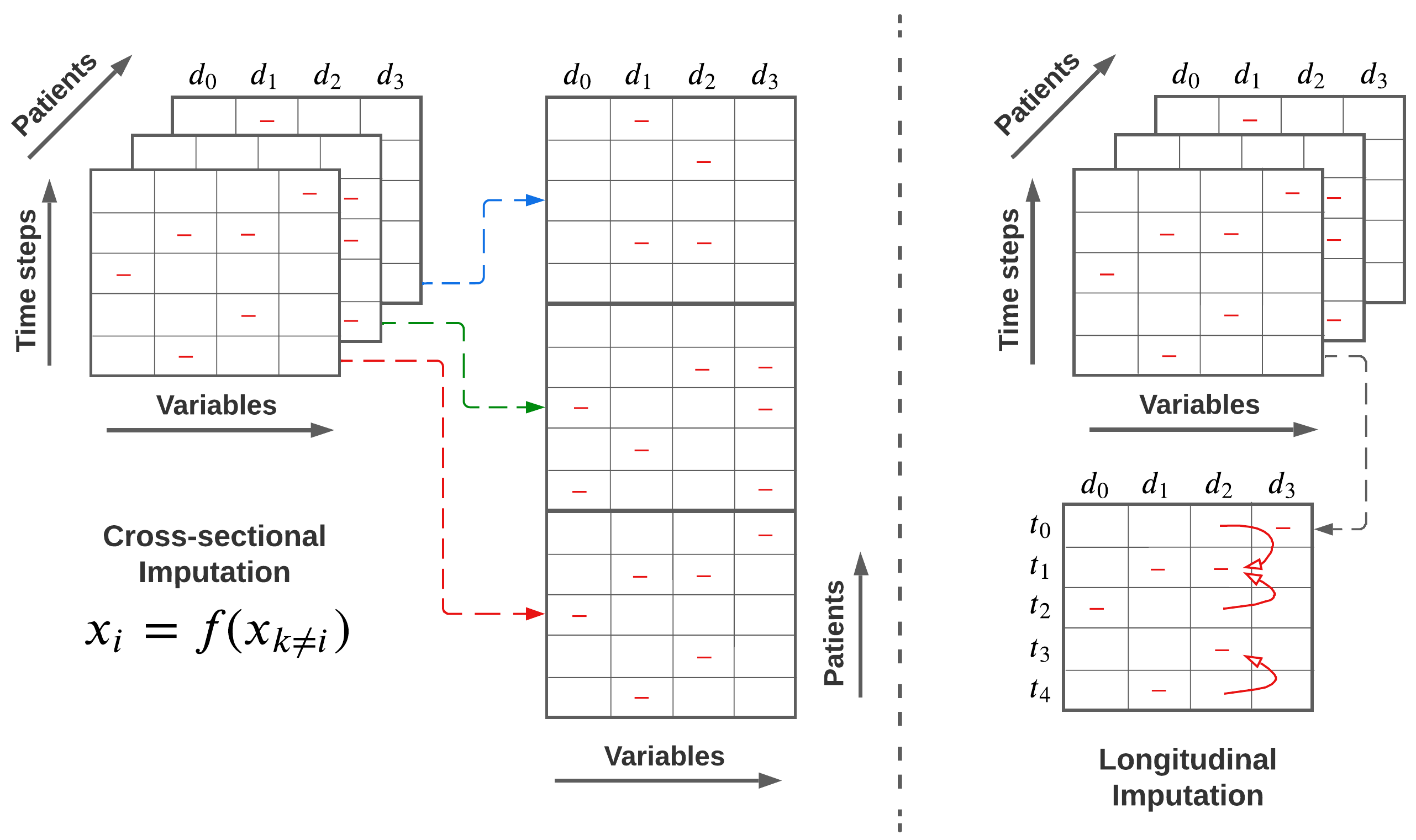
The imputation of missing values in multivariate time series (MTS) data is critical in ensuring data quality and producing reliable data-driven predictive models. Apart from many statistical approaches, a few recent studies have proposed state-of-the-art deep learning methods to impute missing values in MTS data. However, the evaluation of these deep methods is limited to one or two data sets, low missing rates, and completely random missing value types. This survey performs six data-centric experiments to benchmark state-of-the-art deep imputation methods on five time series health data sets. Our extensive analysis reveals that no single imputation method outperforms the others on all five data sets. The imputation performance depends on data types, individual variable statistics, missing value rates, and types. Deep learning methods that jointly perform cross-sectional (across variables) and longitudinal (across time) imputations of missing values in time series data yield statistically better data quality than traditional imputation methods. Although computationally expensive, deep learning methods are practical given the current availability of high-performance computing resources, especially when data quality and sample size are highly important in healthcare informatics. Our findings highlight the importance of data-centric selection of imputation methods to optimize data-driven predictive models.
研究动机与目标
- 评估最先进的深度学习填补方法在真实世界多变量时间序列健康数据上的表现。
- 研究数据特征(如缺失率、缺失类型(MCAR、MAR、MNAR)、变量统计特征和时间序列长度)如何影响填补质量。
- 从数据质量和下游预测性能角度,比较深度学习方法与传统填补技术(如MICE、均值/中位数填补)的表现。
- 为健康科学家提供基于数据特性的最优填补策略选择的实证建议。
- 强调在医疗信息学中应基于数据选择方法,而非随意采用填补技术。
提出的方法
- 在五个多变量时间序列健康数据集(PPG、ECG、Heartbeat、NIH、IEEEPPG)上开展六项以数据为中心的实验。
- 评估了13种填补方法,包括深度学习模型(CATSI、BRITS、TAME、DETRoIT)和传统基线方法(MICE、均值/中位数、KNN等)。
- 采用多种指标:RMSE、MAE以及下游任务的分类准确率,以评估填补质量。
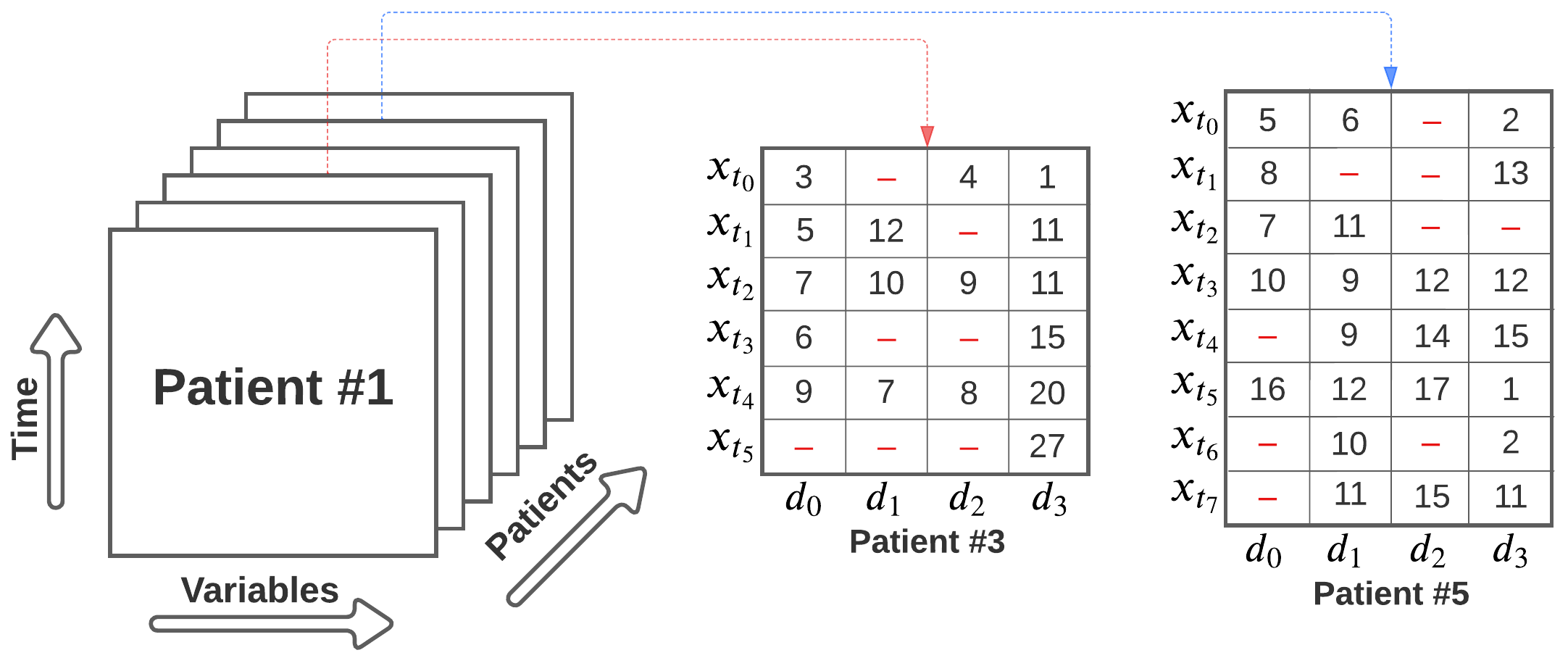
- 应用混合深度学习模型,联合建模缺失数据中的截面(变量)和纵向(时间)依赖关系。
- 采用时间序列感知架构,如基于RNN的模型(如BRITS)和生成模型(如基于GAN的TAME),以捕捉时间动态。
- 在不同缺失值率(5%–50%)和缺失机制(MCAR、MAR、MNAR)下进行消融研究,以评估鲁棒性。
实验结果
研究问题
- RQ1在多样化临床时间序列数据集中,深度学习填补方法与传统方法(如MICE、均值填补)在填补准确率方面如何比较?
- RQ2缺失值率和缺失类型(MCAR、MAR、MNAR)如何影响深度学习填补模型的性能?
- RQ3哪些填补方法在填补后能实现最高的下游分类准确率?
- RQ4与仅关注单一维度的模型相比,联合建模截面和纵向依赖关系的混合深度学习模型在多大程度上提升了填补质量?
- RQ5在临床数据科学中使用深度学习填补方法存在哪些计算权衡?其性能提升是否足以证明计算成本的合理性?
主要发现
- 在所有五个数据集中,没有一种填补方法在所有情况下均表现最优,表明性能高度依赖于数据特定特征。
- 联合建模截面和纵向依赖关系的混合深度学习模型(如CATSI、BRITS)在数据质量方面显著优于传统方法(如MICE)。
- 表现最佳的模型(如CATSI、BRITS)在IEEEPPG数据集中将RMSE降低了高达36.6%,并使分类准确率相对提升1%,相当于在10,000名患者中多正确预测100例。
- 深度学习方法的计算成本显著高于MICE,但作者认为这一成本是合理的,因为其在医疗应用中提升了数据质量和可靠性。
- 填补性能因数据类型而异:传感器数据(如PPG、ECG)缺失率较低且填补质量较高,而采样不规则且异质性高的电子健康记录(EHR)数据则更具挑战性。
- 即使改进未达到统计显著性,1%的相对准确率提升仍被认为具有临床意义,表明不应仅因p值而否定先进填补方法。
阅读本论文
在 Nubint 阅读器中打开原文,边读边就任意段落提问。
在 Nubint 中阅读本论文本解读由 AI 根据论文原文生成,引用前请核对原文。