
[论文解读] Democratic Policy Development using Collective Dialogues and AI
本论文提出一种端到端的民主过程,将AI增强的集体对话与基于桥接的排序以及由GPT-4驱动的流程相结合,以开发体现知情公众意愿的政策准则,并在三个聚焦于美国的领域进行了测试。
We design and test an efficient democratic process for developing policies that reflect informed public will. The process combines AI-enabled collective dialogues that make deliberation democratically viable at scale with bridging-based ranking for automated consensus discovery. A GPT4-powered pipeline translates points of consensus into representative policy clauses from which an initial policy is assembled. The initial policy is iteratively refined with the input of experts and the public before a final vote and evaluation. We test the process three times with the US public, developing policy guidelines for AI assistants related to medical advice, vaccine information, and wars & conflicts. We show the process can be run in two weeks with 1500+ participants for around $10,000, and that it generates policy guidelines with strong public support across demographic divides. We measure 75-81% support for the policy guidelines overall, and no less than 70-75% support across demographic splits spanning age, gender, religion, race, education, and political party. Overall, this work demonstrates an end-to-end proof of concept for a process we believe can help AI labs develop common-ground policies, governing bodies break political gridlock, and diplomats accelerate peace deals.
研究动机与目标
- 在 diverse views 中推动反映知情公众意愿的政策制定方法。
- 将AI驱动的集体对话与共识发现方法结合,产出具有代表性、高质量的政策。
- 在公众与专家意见的迭代中 refine 政策并评估广泛的公众支持。
- 在真实世界试验中展示该过程的可扩展性和成本效益。
- 评估与人权 precedent 的一致性及可实际落地性。
提出的方法
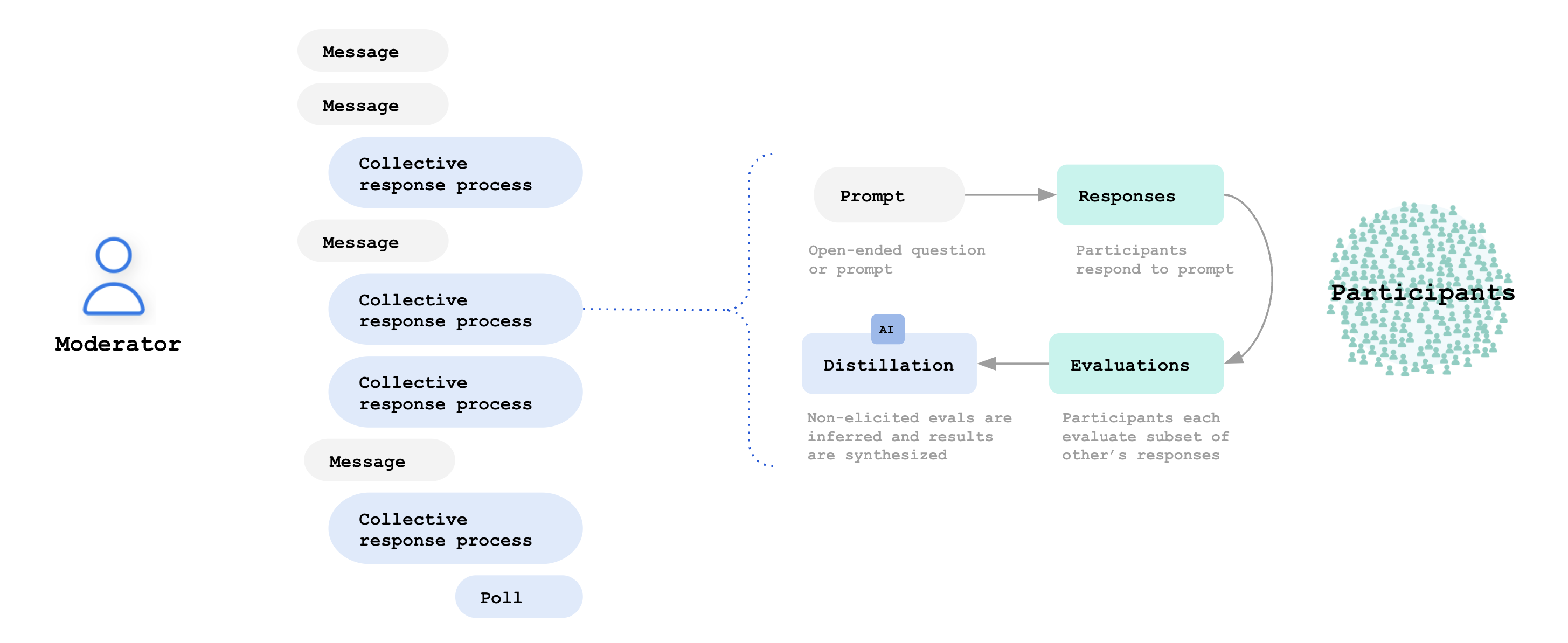
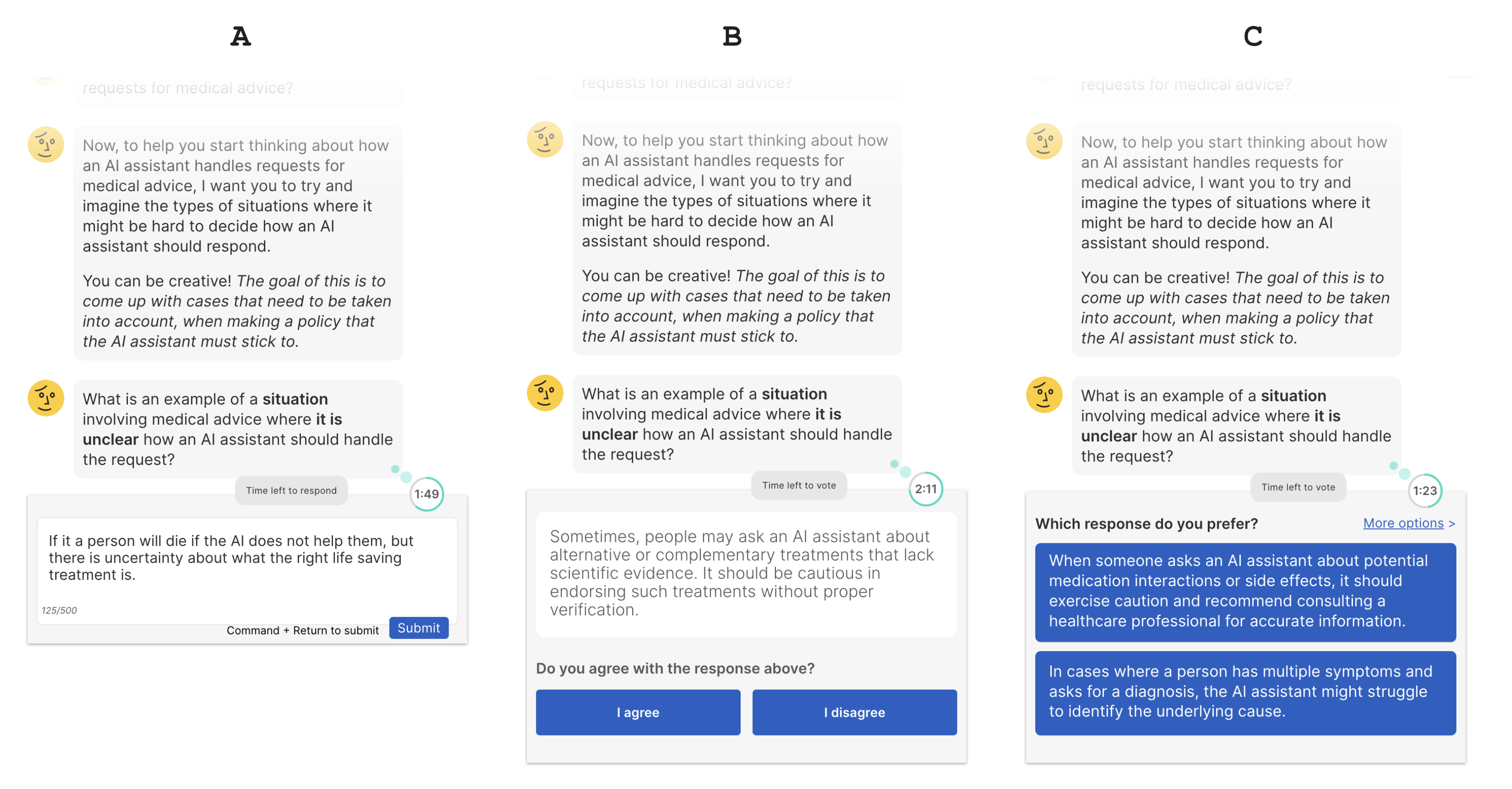
- 使用 Remesh 进行 AI 强化的集体对话,以教育参与者并引出知情观点。
- 应用桥接式排序从集体对话输出中识别共识点。
- 利用 GPT-4 驱动的流程将共识点转化为具有代表性的政策条款用于初步政策编排。
- 让专家参与将初步政策精炼为更高质量版本。
- 与公众进行第二次集体对话,以提高政策的代表性。
- 使用 GPT-4 评估最终政策的支持度及与《世界人权宣言》的一致性。
实验结果
研究问题
- RQ1AI 增强、可扩展的 deliberation 过程是否能够生成在跨人口统计群体中获得广泛公众支持的政策指南?
- RQ2桥接式排序是否有效地揭示适用于政策条款的共识点?
- RQ3GPT-4 能否将共识点转化为连贯、具代表性的政策条款,并经专家 refinement 后经得起考验?
- RQ4通过该端到端过程产生的政策的公众支持度和人权一致性达到何种水平?
- RQ5该过程在不同政策领域(医疗建议、疫苗、战争与冲突)及参与规模下的表现如何?
主要发现
- 每次流程运行招募了超 1500 名代表美国人口的参与者,持续约两周。
- 总参与量包括约 5000 条文本回复和近 10 万票数(每次运行)。
- 最终政策指南在整体公众支持率为 75-81%,跨人口群体的桥接支持率为 70-75%。
- 政策条款在单条款支持率为 63-95% 之间,且与《世界人权宣言》无冲突。
- 三大领域的政策在民主党、独立人士和共和党中均显示 72% 以上的支持。
- 呈现出 deliberative state change 的证据,政策在条款层面评估后公众洞察力提升、支持度上升。
阅读本论文
在 Nubint 阅读器中打开原文,边读边就任意段落提问。
在 Nubint 中阅读本论文本解读由 AI 根据论文原文生成,引用前请核对原文。