
[论文解读] Detecting Anomalies in Blockchain Transactions using Machine Learning Classifiers and Explainability Analysis
本文提出了一种基于树模型集成分类器并结合新型欠采样技术(XGBCLUS)与SHAP可解释性的比特币交易可解释异常检测框架。实验表明,XGBCLUS提升了真正例率(TPR)与ROC-AUC,而集成模型在检测罕见恶意交易方面优于单分类器,且通过特征重要性与决策规则实现了更高的可解释性。
As the use of Blockchain for digital payments continues to rise in popularity, it also becomes susceptible to various malicious attacks. Successfully detecting anomalies within Blockchain transactions is essential for bolstering trust in digital payments. However, the task of anomaly detection in Blockchain transaction data is challenging due to the infrequent occurrence of illicit transactions. Although several studies have been conducted in the field, a limitation persists: the lack of explanations for the model's predictions. This study seeks to overcome this limitation by integrating eXplainable Artificial Intelligence (XAI) techniques and anomaly rules into tree-based ensemble classifiers for detecting anomalous Bitcoin transactions. The Shapley Additive exPlanation (SHAP) method is employed to measure the contribution of each feature, and it is compatible with ensemble models. Moreover, we present rules for interpreting whether a Bitcoin transaction is anomalous or not. Additionally, we have introduced an under-sampling algorithm named XGBCLUS, designed to balance anomalous and non-anomalous transaction data. This algorithm is compared against other commonly used under-sampling and over-sampling techniques. Finally, the outcomes of various tree-based single classifiers are compared with those of stacking and voting ensemble classifiers. Our experimental results demonstrate that: (i) XGBCLUS enhances TPR and ROC-AUC scores compared to state-of-the-art under-sampling and over-sampling techniques, and (ii) our proposed ensemble classifiers outperform traditional single tree-based machine learning classifiers in terms of accuracy, TPR, and FPR scores.
研究动机与目标
- 解决基于机器学习的区块链异常检测模型中可解释性不足的问题。
- 提升在高度不平衡的比特币交易数据集上对罕见异常情况的检测性能。
- 提出一种新型欠采样技术XGBCLUS,以保留关键少数类样本,提升模型泛化能力。
- 整合SHAP与决策规则,实现对模型预测结果的透明、人类可理解的解释。
- 比较单棵决策树分类器与堆叠(stacking)和投票(voting)集成模型在异常检测任务中的性能表现。
提出的方法
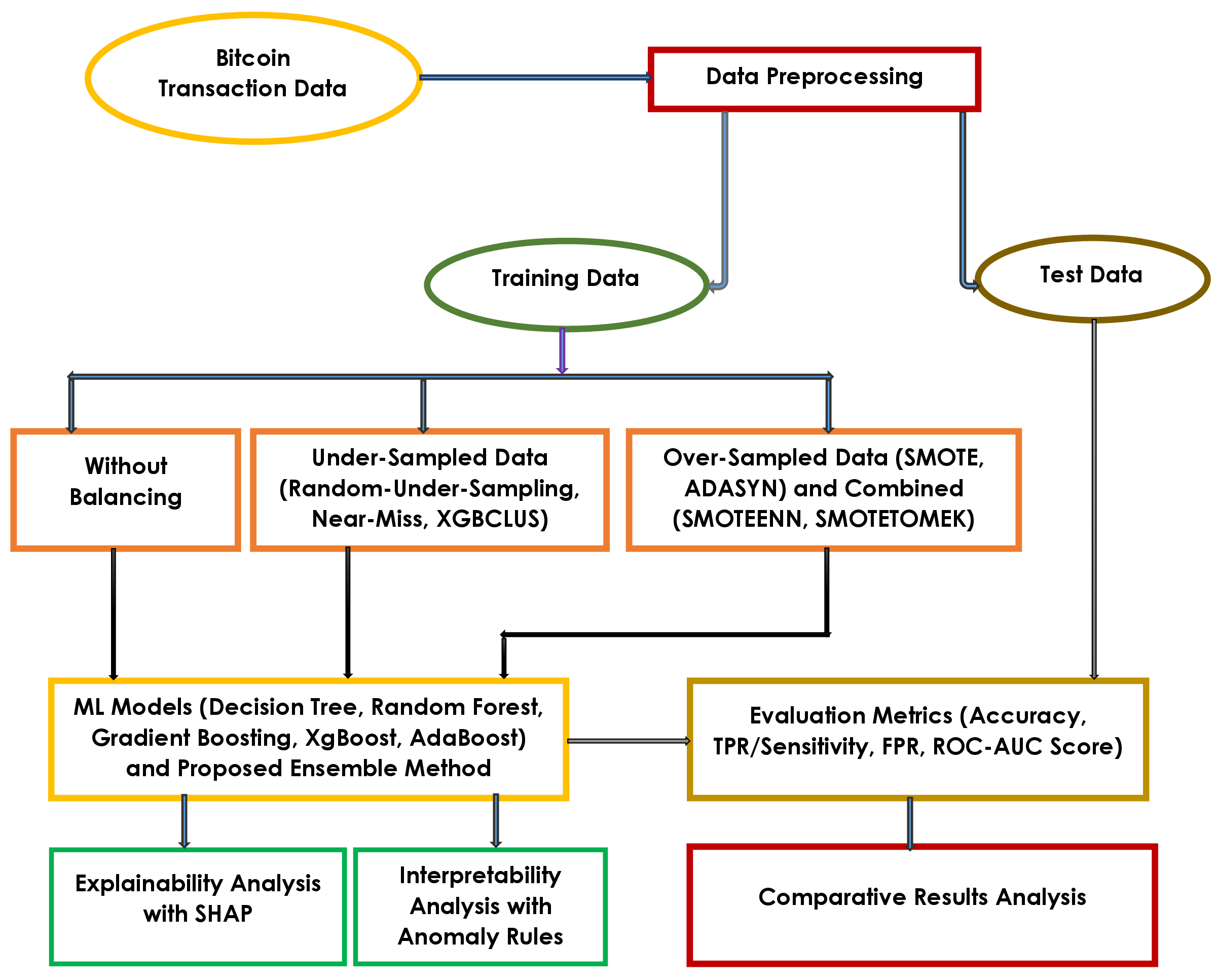
- 提出XGBCLUS,一种基于XGBoost的新型欠采样算法,通过选择具有信息量的少数类样本以平衡不均衡的交易数据。
- 采用基于树的集成分类器(如XGBoost、随机森林)进行异常检测,利用其鲁棒性与可解释性优势。
- 应用SHAP(Shapley Additive ExPlanations)量化每个交易特征对模型预测异常行为的贡献程度。
- 从决策树中提取人类可读的异常规则,逐步解释分类决策过程。
- 使用标准评估指标,将XGBCLUS与标准欠采样(RUS、Near-Miss)及过采样(SMOTE、ADASYN)技术进行对比。
- 基于仅含108起异常案例的真实比特币交易数据集,使用准确率、真正例率(TPR)、假正例率(FPR)及ROC-AUC等指标评估性能。
实验结果
研究问题
- RQ1相较于现有采样方法,新型欠采样技术XGBCLUS是否能显著提升对罕见异常比特币交易的检测能力?
- RQ2在数据不平衡条件下,堆叠与投票集成分类器相较于单棵树模型,在检测区块链异常方面表现如何?
- RQ3SHAP值与决策规则在多大程度上可增强区块链系统中异常检测模型的可解释性?
- RQ4哪些交易特征对识别异常行为最具影响力,其在模型决策中发挥何种作用?
- RQ5在实际应用中,集成可解释性技术(如SHAP与规则提取)是否能提升异常检测模型的信任度与可验证性?
主要发现
- 与最先进的欠采样与过采样技术相比,XGBCLUS显著提升了真正例率(TPR)与ROC-AUC得分。
- 堆叠与投票集成分类器在准确率、真正例率与假正例率方面均优于单一树模型,展现出在不均衡数据上的更强泛化能力。
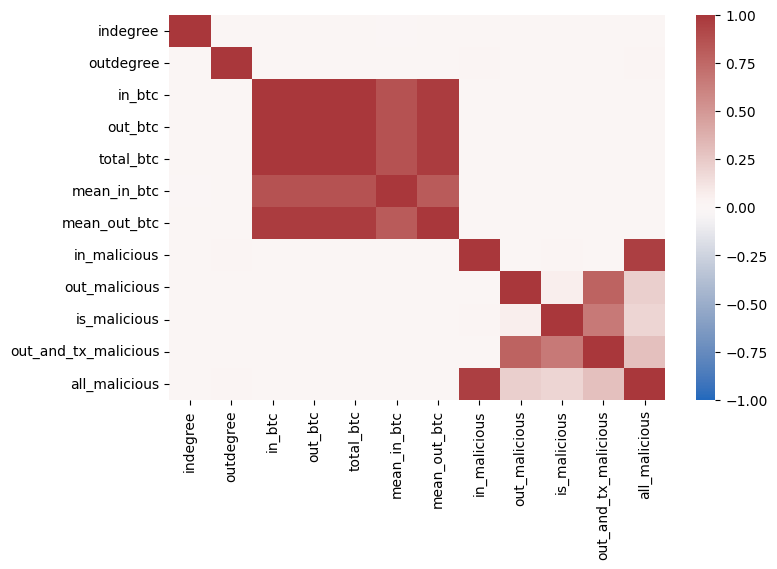
- SHAP分析识别出'total_btc'为检测异常交易的最关键特征,在多个模型中均表现出高特征重要性。
- 决策树及其推导出的异常规则提供了透明、分步的模型决策解释,使领域专家能够验证预测结果。
- 集成XAI技术(SHAP与规则提取)显著提升了模型的可信度,并支持区块链安全应用中的可审计性。
- 所提出的框架在极端类别不平衡场景下表现优异,仅含108起异常交易的原始数据集中仍保持了高检测性能。
阅读本论文
在 Nubint 阅读器中打开原文,边读边就任意段落提问。
在 Nubint 中阅读本论文本解读由 AI 根据论文原文生成,引用前请核对原文。