
[论文解读] Detection of Adversarial Physical Attacks in Time-Series Image Data
该论文提出VisionGuard$^{*}$(VG$^{*}$),一种时间序列对抗检测器,通过将单图检测器(VisionGuard)与时间数据滑动窗口内的多数投票融合相结合,提升视频数据中物理攻击的检测能力。该方法在窗口尺寸增大时,检测性能显著优于单图基线,得益于对抗样本在时间上的一致性模式。
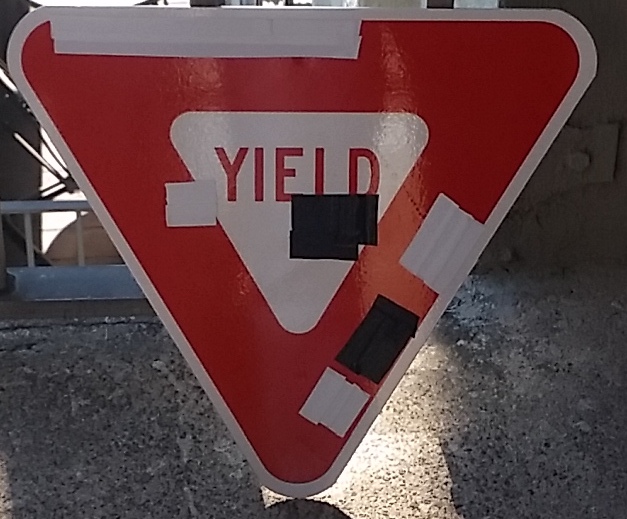
Deep neural networks (DNN) have become a common sensing modality in autonomous systems as they allow for semantically perceiving the ambient environment given input images. Nevertheless, DNN models have proven to be vulnerable to adversarial digital and physical attacks. To mitigate this issue, several detection frameworks have been proposed to detect whether a single input image has been manipulated by adversarial digital noise or not. In our prior work, we proposed a real-time detector, called VisionGuard (VG), for adversarial physical attacks against single input images to DNN models. Building upon that work, we propose VisionGuard* (VG), which couples VG with majority-vote methods, to detect adversarial physical attacks in time-series image data, e.g., videos. This is motivated by autonomous systems applications where images are collected over time using onboard sensors for decision-making purposes. We emphasize that majority-vote mechanisms are quite common in autonomous system applications (among many other applications), as e.g., in autonomous driving stacks for object detection. In this paper, we investigate, both theoretically and experimentally, how this widely used mechanism can be leveraged to enhance the performance of adversarial detectors. We have evaluated VG* on videos of both clean and physically attacked traffic signs generated by a state-of-the-art robust physical attack. We provide extensive comparative experiments against detectors that have been designed originally for out-of-distribution data and digitally attacked images.
研究动机与目标
- 为解决在时间序列图像数据(如自动驾驶车辆的视频流)中检测物理对抗攻击的空白问题。
- 利用多帧间对抗模式的时间一致性,提升检测鲁棒性,超越单图分析的局限。
- 通过理论分析,形式化时间序列检测优于单图检测的条件。
- 使用最先进的对抗补丁在真实世界物理攻击场景下验证VG$^{*}$的有效性,针对交通标志进行测试。
- 证明VisionGuard与多数投票融合在计算上轻量化,适合实时部署。
提出的方法
- 对时间序列数据中的每个图像应用VisionGuard(VG),将每帧分类为对抗性或干净图像。
- 在窗口内对VG输出进行多数投票:若超过一半的帧被分类为对抗性,则整段序列被标记为对抗性。
- 将滑动窗口大小定义为可调超参数,控制检测所用的时间上下文。
- 基于窗口大小和VG检测准确率,形式化时间序列检测器(VG$^{*}$)优于单图检测器(VG)的理论条件。
- 集成目标跟踪,确保同一感兴趣对象在多帧中被一致分析,假设跟踪为完美或概率性。
- 使用ROC曲线和AUROC指标在ImageNet和真实世界交通标志视频上评估性能,测试物理对抗补丁的影响。

实验结果
研究问题
- RQ1时间聚合单图检测结果是否能提升视频数据中对抗攻击检测的鲁棒性?
- RQ2在何种条件下,时间序列检测器VG$^{*}$优于单图检测器VG?
- RQ3时间窗口大小如何影响VG$^{*}$的检测性能?
- RQ4在物理对抗补丁背景下,VG$^{*}$与针对分布外或数字攻击图像设计的检测器相比表现如何?
- RQ5在实时视频流中应用多数投票的计算成本是多少?
主要发现
- VG$^{*}$ 通过利用帧间对抗模式的时间一致性,实现了优于单图检测器的检测性能。
- 理论分析表明,当窗口尺寸足够大且VG检测准确率超过某一阈值时,VG$^{*}$优于VG。
- 在ImageNet数据集上使用对抗补丁时,VG结合HSV亮度变换的AUROC达到93.5%,优于MD(84.5%)和ED(9×9滤波器,32.5%误报率)。
- 多数投票的平均运行时间低于12微秒,表明计算开销极低。
- VG在HSV=200时,VGG16的AUROC达到96.35%,VGG19达到95.93%,表明其在不同深度神经网络架构下均具鲁棒性。
- 即使在强物理攻击下(如使ResNet-50在ImageNet上以73.6%准确率被欺骗的对抗补丁),该方法依然有效。
阅读本论文
在 Nubint 阅读器中打开原文,边读边就任意段落提问。
在 Nubint 中阅读本论文本解读由 AI 根据论文原文生成,引用前请核对原文。