
[论文解读] Diffusion Art or Digital Forgery? Investigating Data Replication in Diffusion Models
本文开发了复制检测器,用于测试扩散模型是否复制训练数据,结果显示在小到中等数据集上复制较常见,但在像 ImageNet 这样的大且多样的数据集上基本不存在,而 Stable Diffusion 在某些条件下表现出显著的复制。
Cutting-edge diffusion models produce images with high quality and customizability, enabling them to be used for commercial art and graphic design purposes. But do diffusion models create unique works of art, or are they replicating content directly from their training sets? In this work, we study image retrieval frameworks that enable us to compare generated images with training samples and detect when content has been replicated. Applying our frameworks to diffusion models trained on multiple datasets including Oxford flowers, Celeb-A, ImageNet, and LAION, we discuss how factors such as training set size impact rates of content replication. We also identify cases where diffusion models, including the popular Stable Diffusion model, blatantly copy from their training data.
研究动机与目标
- 就扩散模型用于商业艺术时的数据复制引发道德与法律问题提供动机。
- 开发并基准化复制检测方法,以识别扩散输出何时复制训练数据。
- 量化在不同规模和多样性数据集上训练的扩散模型的复制率。
- 探究大规模训练是否能缓解复制,或者是否仍有特定模型(如 Stable Diffusion)会继续复制。
提出的方法
- 从 SSL 和图像检索文献中构建并基准化 10 个特征提取器以用于复制检测。
- 创建 5 个合成数据集(如 IN-Cutmix、IN-Dif-Patch、IN-Dif-Diagonal、MSCOCO Segmix、VOC Segmix)用于受控复制评估。
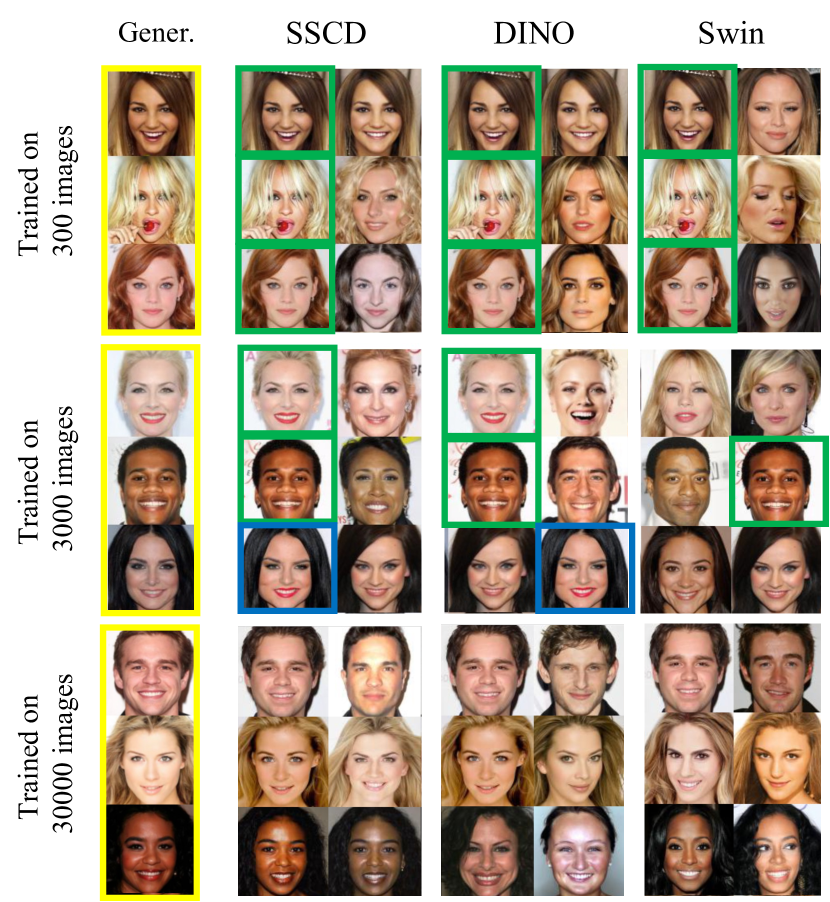
- 在 Celeb-A 和 Oxford Flowers 上以不同数据集大小训练 DDPM,并评估生成图像与训练样本之间的相似性。
- 应用内积和分割积相似度度量;并指出分割积搭配 DINO 和 SSCD 能提供强有力的复制检测。
- 分析真实世界模型(ImageNet Latent Diffusion Model、Stable Diffusion)以评估类级别和总体复制。
实验结果
研究问题
- RQ1扩散模型是否会从训练数据中复制内容,以及在何种条件下(数据集规模、模型类型)会发生?
- RQ2哪些复制检测方法最能在不同模型和数据集上识别被复制的内容?
- RQ3训练数据规模如何影响 Celeb-A、Oxford Flowers 与 Stable Diffusion 这类扩散模型的复制率?
- RQ4复制在类条件或文本条件扩散模型中是否更普遍,影响因素有哪些(如标题采样、数据重复)?
主要发现
- 在小到中等数据集上训练的扩散模型复制较为频繁,但随着数据集增大和多样性增强,复制减少;然而在某些条件下 Stable Diffusion 显示出清晰的复制。
- DINO 配合分割积在所有数据集上是最强的检测器;在真实数据集上 Swin Transformer 领先,而在合成数据集上 SSCD 更出色。
- 对于 Stable Diffusion,复制发生在生成的一部分(在 12M LAION-Aesthetics 6+ 的搜索空间中,相似度≥0.5 时大约为 1.88%)。
- ImageNet Latent Diffusion Model 在类级和群体层面显示出对复制的证据有限;总体复制信号弱于 Stable Diffusion。
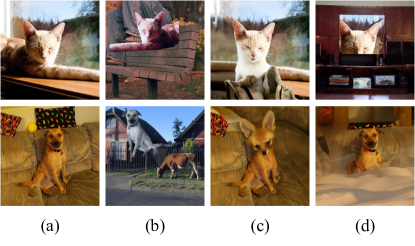
- 复制可以是像素级或重建式,且带有某些短语的提示可能触发精确复制或高度相似的输出(例如特定画作)。
- LAION 数据集中重复的训练图像与 Stable Diffusion 的复制倾向较高相关。
阅读本论文
在 Nubint 阅读器中打开原文,边读边就任意段落提问。
在 Nubint 中阅读本论文本解读由 AI 根据论文原文生成,引用前请核对原文。