
[论文解读] DisDet: Exploring Detectability of Backdoor Attack on Diffusion Models
本文提出 DisDet,一种新颖的框架,通过利用中毒噪声输入与良性噪声输入之间的分布差异,实现对扩散模型中后门触发器的检测与逃避。该框架提出了一种低成本的检测机制,检测准确率达到100%;同时设计了一种隐蔽性触发器,可实现接近100%的通过率以逃避检测,且在多个数据集和模型上保持了高攻击性能与良性生成质量。
In the exciting generative AI era, the diffusion model has emerged as a very powerful and widely adopted content generation and editing tool for various data modalities, making the study of their potential security risks very necessary and critical. Very recently, some pioneering works have shown the vulnerability of the diffusion model against backdoor attacks, calling for in-depth analysis and investigation of the security challenges of this popular and fundamental AI technique. In this paper, for the first time, we systematically explore the detectability of the poisoned noise input for the backdoored diffusion models, an important performance metric yet little explored in the existing works. Starting from the perspective of a defender, we first analyze the properties of the trigger pattern in the existing diffusion backdoor attacks, discovering the important role of distribution discrepancy in Trojan detection. Based on this finding, we propose a low-cost trigger detection mechanism that can effectively identify the poisoned input noise. We then take a further step to study the same problem from the attack side, proposing a backdoor attack strategy that can learn the unnoticeable trigger to evade our proposed detection scheme. Empirical evaluations across various diffusion models and datasets demonstrate the effectiveness of the proposed trigger detection and detection-evading attack strategy. For trigger detection, our distribution discrepancy-based solution can achieve a 100\% detection rate for the Trojan triggers used in the existing works. For evading trigger detection, our proposed stealthy trigger design approach performs end-to-end learning to make the distribution of poisoned noise input approach that of benign noise, enabling nearly 100\% detection pass rate with very high attack and benign performance for the backdoored diffusion models.
研究动机与目标
- 系统研究扩散模型中后门触发器的可检测性,这是现有研究中尚未充分探索的关键指标。
- 基于输入噪声的分布差异,提出一种低成本、高效的触发器检测机制,以防御后门攻击。
- 设计一种隐蔽后门触发器,通过最小化与良性噪声的分布差异来逃避检测,同时保持高攻击性能与良性生成质量。
- 在多种扩散模型和数据集上评估所提出的检测与逃避策略,确保其鲁棒性与泛化能力。
提出的方法
- 提出一种基于分布差异的检测机制,通过比较输入噪声的统计分布来识别中毒输入,采用可微分直方图近似以支持基于梯度的优化。
- 引入 PDD(成对分布差异)损失函数,在触发器学习过程中最小化中毒输入与干净输入之间的分布差距。
- 采用可微分直方图函数 $ h_d(\cdot) $ 作为不可微分分布差异度量的替代函数,实现触发器的端到端训练。
- 引入噪声一致性(NC)损失,以提升模型在中毒输入中预测噪声的能力,从而增强图像质量与生成保真度。
- 结合 PDD 与 NC 损失对触发器模式进行端到端训练,同时优化隐蔽性与性能。
- 使用 CIFAR-10、CelebA 和 ImageNet 数据集,在多种扩散模型架构上评估检测与逃避性能。
实验结果
研究问题
- RQ1输入噪声中的分布差异能否作为检测扩散模型中后门触发器的可靠指标?
- RQ2基于分布差异的检测机制在识别现有后门攻击中的中毒输入方面效果如何?
- RQ3能否设计一种后门触发器,使其与良性噪声的分布差异最小化,从而逃避检测?
- RQ4隐蔽触发器在逃避检测的同时,能在多大程度上保持高攻击成功率与良好的良性生成质量?
主要发现
- 所提出的基于分布差异的检测机制对先前工作中使用的全部后门触发器实现了100%的检测率,表现出极高的可靠性。
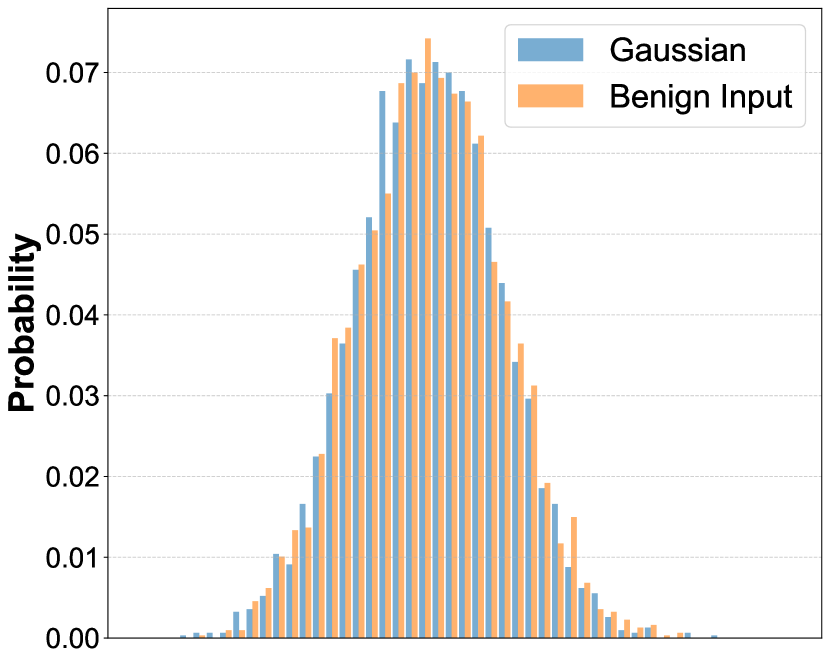
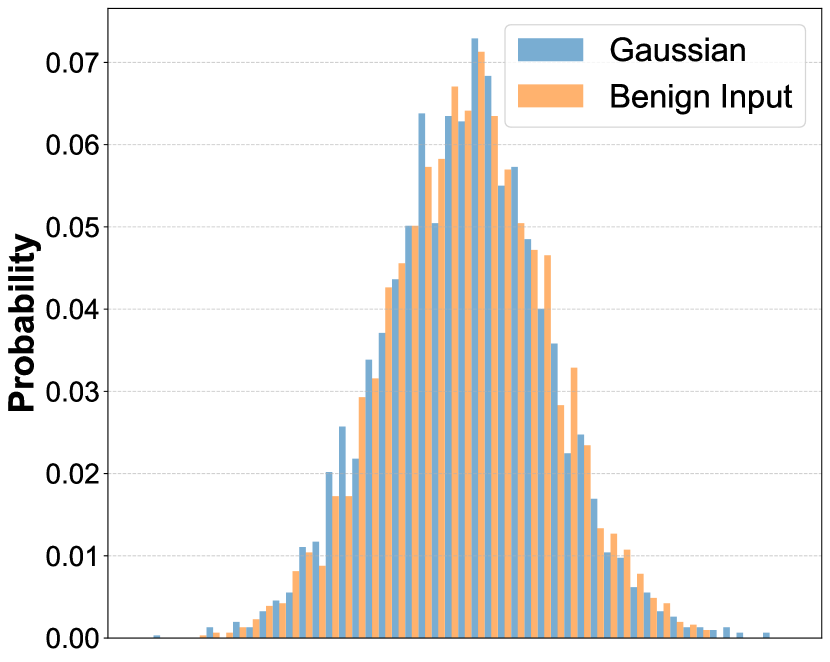
- PDD 优化的触发器设计在 CIFAR-10 上将 PDD 分数降低至 0.023,显著减少了分布差异,增强了隐蔽性。
- 训练过程中触发器值的绝对均值持续增加,与更接近高斯分布的特性相关,从而降低了可检测性。
- 引入 NC 损失后,FID 分数相比基线最高降低 130.8 分,显著提升了良性与攻击设置下的图像质量。
- 隐蔽触发器的检测通过率接近 100%,证实其在保持高性能的同时有效逃避检测。
- 可视化结果表明,PDD 优化的触发器生成的中毒输入在分布上与干净的高斯噪声几乎无法区分。
阅读本论文
在 Nubint 阅读器中打开原文,边读边就任意段落提问。
在 Nubint 中阅读本论文本解读由 AI 根据论文原文生成,引用前请核对原文。