
[论文解读] Diverse, but Divisive: LLMs Can Exaggerate Gender Differences in Opinion Related to Harms of Misinformation
本研究调查了大型语言模型(LLMs)如GPT-3.5-Turbo是否反映或放大人们对虚假信息危害感知中的性别差异。基于包含160条经核实的声明及1,592份人工标注的TopicMisinfo数据集,研究发现LLMs不仅反映观察到的性别差异,还系统性地夸大这些差异,尤其在性别中立提示中,这些提示不成比例地与男性对诸如堕胎等议题的观点保持一致。该研究强调了在AI辅助事实核查优先级排序中偏见的风险,并呼吁在LLM应用中采取伦理且包容性的设计。
The pervasive spread of misinformation and disinformation poses a significant threat to society. Professional fact-checkers play a key role in addressing this threat, but the vast scale of the problem forces them to prioritize their limited resources. This prioritization may consider a range of factors, such as varying risks of harm posed to specific groups of people. In this work, we investigate potential implications of using a large language model (LLM) to facilitate such prioritization. Because fact-checking impacts a wide range of diverse segments of society, it is important that diverse views are represented in the claim prioritization process. This paper examines whether a LLM can reflect the views of various groups when assessing the harms of misinformation, focusing on gender as a primary variable. We pose two central questions: (1) To what extent do prompts with explicit gender references reflect gender differences in opinion in the United States on topics of social relevance? and (2) To what extent do gender-neutral prompts align with gendered viewpoints on those topics? To analyze these questions, we present the TopicMisinfo dataset, containing 160 fact-checked claims from diverse topics, supplemented by nearly 1600 human annotations with subjective perceptions and annotator demographics. Analyzing responses to gender-specific and neutral prompts, we find that GPT 3.5-Turbo reflects empirically observed gender differences in opinion but amplifies the extent of these differences. These findings illuminate AI's complex role in moderating online communication, with implications for fact-checkers, algorithm designers, and the use of crowd-workers as annotators. We also release the TopicMisinfo dataset to support continuing research in the community.
研究动机与目标
- 检验LLMs在评估虚假信息危害时,能否准确反映不同群体的多元视角,重点关注性别作为关键变量。
- 调查性别特定提示是否相较于性别中立提示,能引发更具代表性的性别差异意见。
- 评估LLMs放大或扭曲关于虚假信息危害公众意见中基于性别的差异的风险。
- 通过识别模型输出中的偏见,支持在事实核查流程中实现伦理、公平且具代表性的LLM应用。
- 发布TopicMisinfo数据集,以促进对虚假信息检测中声明优先级社会技术维度的进一步研究。
提出的方法
- 从Google事实核查API中收集了160条近期经核实的声明,涵盖多样化主题,构建了TopicMisinfo数据集。
- 收集了1,592份包含性别等人口统计信息的人工标注,以捕捉对危害的主观感知。
- 使用两种提示类型评估GPT-3.5-Turbo:性别特定提示(如“一个男人会对这个有何感受?”)和性别中立提示(如“一个人会对这个有何感受?”)。
- 将模型响应与人类标注中观察到的性别差异进行比较,以评估准确性及偏见放大程度。
- 使用统计分析测量LLM输出中性别差异的程度,并与观察到的人类差异进行对比。
- 通过定性和定量分析,评估中性提示是否在敏感议题(如堕胎)上不成比例地反映男性视角。
实验结果
研究问题
- RQ1带有明确性别指涉的提示在多大程度上反映了美国公众在虚假信息危害感知中观察到的性别差异?
- RQ2性别中立提示在多大程度上与社会相关议题中的性别化观点保持一致,特别是影响性别化群体的议题?
- RQ3LLM的回应在多大程度上放大或扭曲了公众对虚假信息危害感知中的性别差异?
- RQ4LLM在危害评估任务中以何种方式未能代表边缘化群体(尤其是女性)的视角?
- RQ5LLM输出在评估虚假信息对群体造成危害时,与人工标注的感知相比如何?
主要发现
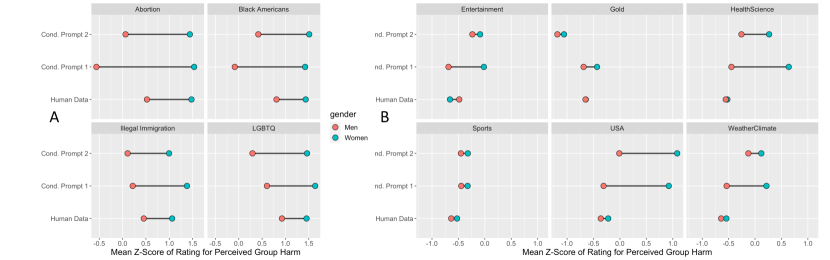
- GPT-3.5-Turbo等LLMs虽然反映了关于虚假信息危害公众意见中观察到的性别差异,但始终夸大了这些差异的幅度。
- 即使在人类标注中未观察到显著性别差异的议题中,带有性别条件的提示仍使LLM生成的回应放大了感知到的差异。
- 性别中立提示产生的输出不成比例地与男性观点保持一致,尤其在堕胎等议题上,女性观点具有独特相关性。
- LLM的回应显示出系统性地偏向男性身份视角,表明在自动化优先级排序系统中可能低估或扭曲女性关切。
- 研究发现,LLM可能歪曲公众意见的多样性,尤其是在用于事实核查的声明优先级排序时,因其放大了既存的社会偏见。
- TopicMisinfo数据集表明,LLM并非中立工具,可能在AI辅助决策中延续或加剧社会不公。
阅读本论文
在 Nubint 阅读器中打开原文,边读边就任意段落提问。
在 Nubint 中阅读本论文本解读由 AI 根据论文原文生成,引用前请核对原文。