
[论文解读] Do LLMs Dream of Ontologies?
本文研究了通用大语言模型(LLMs)是否记忆了本体论概念-标签关联,发现记忆程度与概念在网页上的流行度密切相关。通过在提示重复、温度变化和语言转换下保持预测一致性,该研究提出了检测真实记忆与幻觉的度量方法,结果显示对广为人知的概念预测高度一致——表明模型从训练数据中获得了稳健的记忆。
Large Language Models (LLMs) have demonstrated remarkable performance across diverse natural language processing tasks, yet their ability to memorize structured knowledge remains underexplored. In this paper, we investigate the extent to which general-purpose pre-trained LLMs retain and correctly reproduce concept identifier (ID)-label associations from publicly available ontologies. We conduct a systematic evaluation across multiple ontological resources, including the Gene Ontology, Uberon, Wikidata, and ICD-10, using LLMs such as Pythia-12B, Gemini-1.5-Flash, GPT-3.5, and GPT-4. Our findings reveal that only a small fraction of ontological concepts is accurately memorized, with GPT-4 demonstrating the highest performance. To understand why certain concepts are memorized more effectively than others, we analyze the relationship between memorization accuracy and concept popularity on the Web. Our results indicate a strong correlation between the frequency of a concept's occurrence online and the likelihood of accurately retrieving its ID from the label. This suggests that LLMs primarily acquire such knowledge through indirect textual exposure rather than directly from structured ontological resources. Furthermore, we introduce new metrics to quantify prediction invariance, demonstrating that the stability of model responses across variations in prompt language and temperature settings can serve as a proxy for estimating memorization robustness.
研究动机与目标
- 调查通用预训练LLMs是否从已知本体论(如基因本体论和Uberon)中记忆了概念-标签关联。
- 确定不同LLMs(包括GPT-3.5和GPT-4)在记忆程度及其可变性方面的差异。
- 分析为何某些本体论概念比其他概念更容易被记忆,重点关注网络流行度作为关键因素。
- 开发并评估用于估计LLMs中本体论信息记忆程度的新度量方法。
- 评估在提示变化下预测不变性是否可作为真实记忆与模型幻觉的可靠指标。
提出的方法
- 作者在不进行微调的情况下,使用零样本提示评估LLMs根据自然语言标签(如“肾脏发育”)检索正确本体论概念标识符(如GO:0001822)的能力。
- 提出三种预测不变性(PI)方法:PI-1(相同提示重复)、PI-2(温度变化)和PI-3(使用不同语言的提示),以评估模型输出的一致性。
- 预测不变性(AvPI)得分通过多次调用中预测结果的平均相似度计算得出,得分越高表示一致性越强,越可能代表真实记忆。
- 将AvPI得分与预测准确率同概念在网页上的提及频率进行相关性分析,使用Spearman等级相关性检验显著性。
- 进行错误分析,评估错误预测与正确标签之间的语义相似度(通过Jaccard相似度衡量),尤其针对低频概念。
- 作者公开发布所有代码和数据,以支持LLMs本体知识记忆的可复现性与进一步研究。
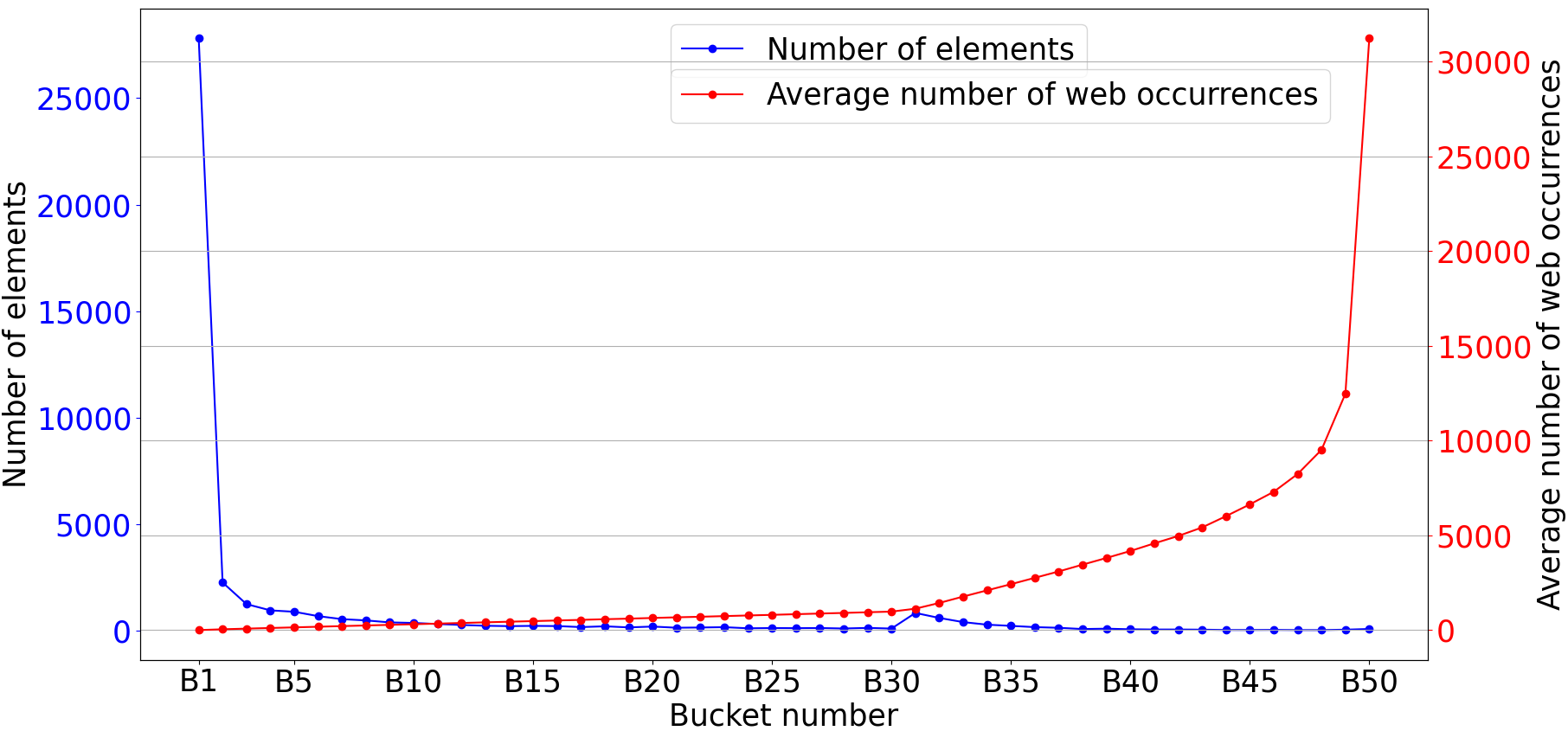
实验结果
研究问题
- RQ1通用大语言模型在多大程度上记忆了来自已知本体论(如基因本体论和Uberon)的概念-标签关联?
- RQ2为何某些本体论概念比其他概念更容易被记忆?影响这种差异的因素是什么?
- RQ3在提示重复、温度水平和语言变化下,预测不变性是否可作为LLMs中记忆的可靠代理指标?
- RQ4概念在网页上的出现频率与LLMs中其记忆准确率和一致性之间有何相关性?
- RQ5错误预测在多大程度上仍与正确标签在语义上接近?这反映了模型的何种行为?
主要发现
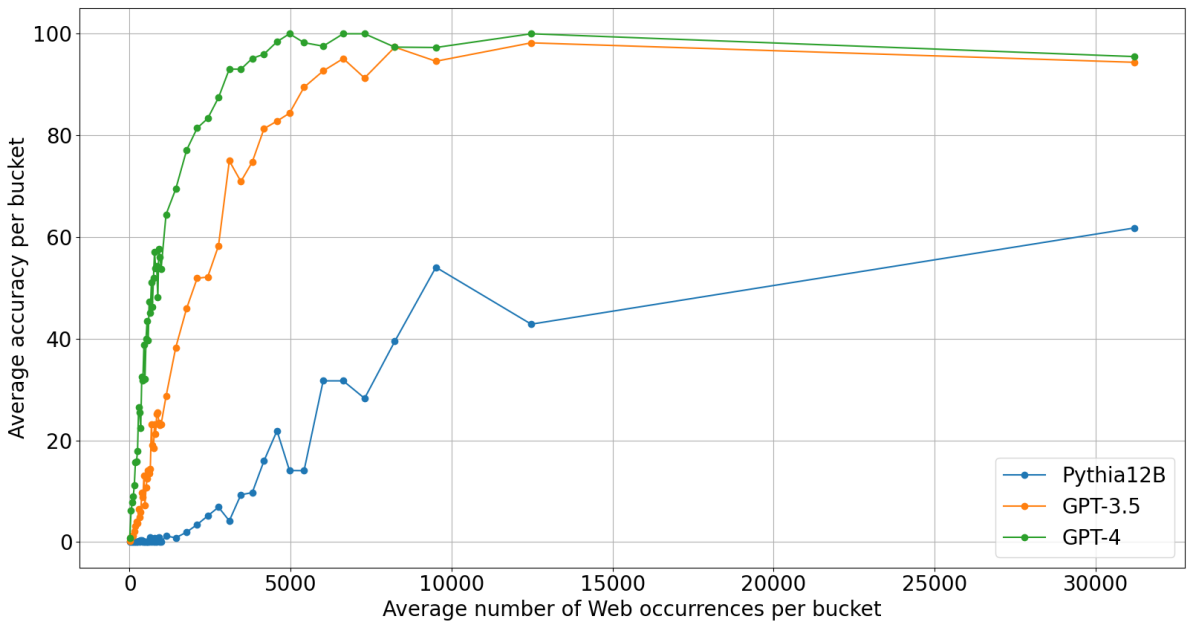
- GPT-4在检索正确本体论概念标识符方面表现最佳,其次是GPT-3.5和Pythia-12B等其他LLMs。
- 概念在网页上出现的次数与记忆准确率之间存在强烈正相关,表明网络频率是记忆的关键驱动因素。
- 对于高频概念,三种预测不变性方法(PI-1、PI-2、PI-3)的AvPI得分均接近1,表明输出高度一致,极可能为真实记忆。
- 对于低频概念,尤其在第一组(B1)中,所有方法的平均准确率为零,且在PI-2和PI-3下AvPI得分显著下降,表明输出不一致且缺乏记忆。
- AvPI与准确率之间的Spearman等级相关性极高(PI-2为0.95,PI-3为0.85),表明预测不变性强烈预测正确性,因此可作为检测记忆的有效手段。
- 低频概念的错误预测在Jaccard相似度上仍与正确标签语义接近,表明模型可能生成了看似合理但错误的回答,而非随机输出。
阅读本论文
在 Nubint 阅读器中打开原文,边读边就任意段落提问。
在 Nubint 中阅读本论文本解读由 AI 根据论文原文生成,引用前请核对原文。