
[论文解读] DPAdapter: Improving Differentially Private Deep Learning through Noise Tolerance Pre-training
DPAdapter 通过使用改进的两批次策略的感知锐度最小化(SAM)进行噪声容错预训练,显著提升了模型的鲁棒性和准确率,从而增强了差分隐私深度学习。在 ε=4 的条件下,平均准确率从 72.92% 提升至 77.09%,可作为即插即用的增强模块集成到现有 DPML 方法中。
Recent developments have underscored the critical role of extit{differential privacy} (DP) in safeguarding individual data for training machine learning models. However, integrating DP oftentimes incurs significant model performance degradation due to the perturbation introduced into the training process, presenting a formidable challenge in the {differentially private machine learning} (DPML) field. To this end, several mitigative efforts have been proposed, typically revolving around formulating new DPML algorithms or relaxing DP definitions to harmonize with distinct contexts. In spite of these initiatives, the diminishment induced by DP on models, particularly large-scale models, remains substantial and thus, necessitates an innovative solution that adeptly circumnavigates the consequential impairment of model utility. In response, we introduce DPAdapter, a pioneering technique designed to amplify the model performance of DPML algorithms by enhancing parameter robustness. The fundamental intuition behind this strategy is that models with robust parameters are inherently more resistant to the noise introduced by DP, thereby retaining better performance despite the perturbations. DPAdapter modifies and enhances the sharpness-aware minimization (SAM) technique, utilizing a two-batch strategy to provide a more accurate perturbation estimate and an efficient gradient descent, thereby improving parameter robustness against noise. Notably, DPAdapter can act as a plug-and-play component and be combined with existing DPML algorithms to further improve their performance. Our experiments show that DPAdapter vastly enhances state-of-the-art DPML algorithms, increasing average accuracy from 72.92\% to 77.09\% with a privacy budget of $ε=4$.
研究动机与目标
- 解决差分隐私(DP)噪声导致深度学习模型性能显著下降的问题。
- 克服现有 DPML 方法依赖算法修改或宽松隐私定义的局限性。
- 将参数鲁棒性作为直接防御机制以应对 DP 噪声,从而保持模型效用。
- 开发一种预训练技术,提升模型对噪声的鲁棒性,同时无需修改下游 DP 训练流程。
- 实现与现有 DPML 算法的即插即用集成,从而在多种下游任务中普遍提升性能。
提出的方法
- 通过引入两批次策略改进感知锐度最小化(SAM)框架:使用大批次准确估计最坏情况扰动,使用小批次高效执行梯度下降。
- 重新表述 SAM 目标函数,优先优化对噪声的参数鲁棒性,确保模型参数在扰动下保持稳定。
- 在公开数据上使用改进的 SAM 变体对模型进行预训练,以最小化对噪声的敏感性,从而提升其在后续 DP 微调中的鲁棒性。
- 将预训练的 DPAdapter 模型作为插件组件集成到现有的 DP-SGD 或 DP-FedAvg 流程中,用于下游的私有微调。
- 理论分析表明,两批次方法通过更准确地估计最坏情况扰动,提升了参数鲁棒性。
- 该方法设计为兼容联邦学习场景,其中 DP 噪声应用于 DP-FedAvg 中的模型聚合阶段。
实验结果
研究问题
- RQ1针对参数鲁棒性的预训练是否能显著降低差分隐私噪声对深度学习模型性能的下降影响?
- RQ2与标准 SAM 相比,DPAdapter 中的两批次 SAM 优化策略如何提升差分隐私模型的准确率?
- RQ3在如 CIFAR-10、SVHN 和 STL-10 等多样化的私有数据集上,噪声容错预训练模型在下游任务中的性能提升程度如何?
- RQ4DPAdapter 是否能无需架构修改地有效集成到现有 DPML 框架(如 DP-SGD 和 DP-FedAvg)中?
- RQ5当在预训练阶段显式优化参数鲁棒性时,其作为防御机制是否比输入鲁棒性或算法重构更有效?
主要发现
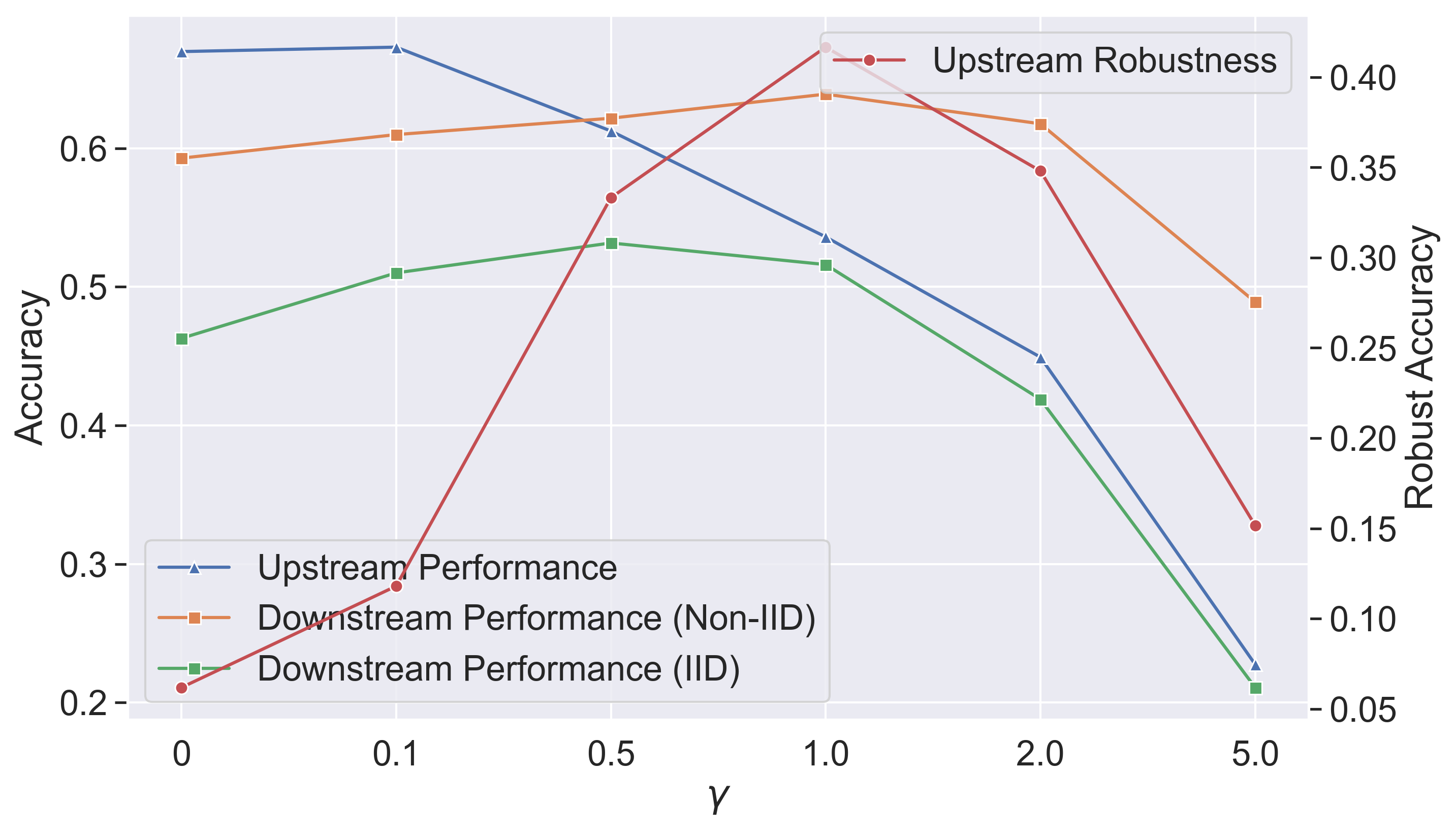
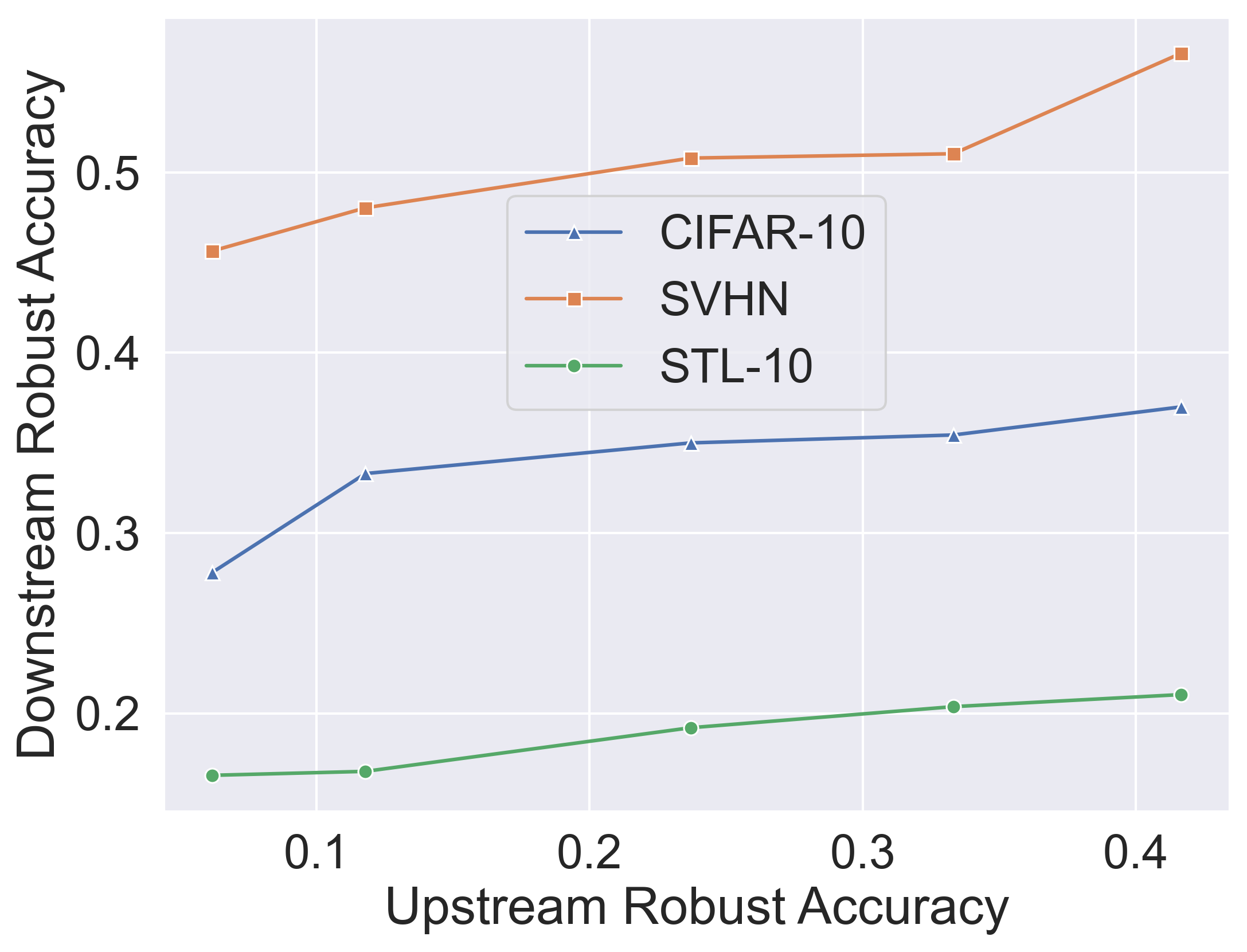
- 在隐私预算 ε=4 的条件下,DPAdapter 将 CIFAR-10、SVHN 和 STL-10 上的平均模型准确率从 72.92% 提升至 77.09%。
- DPAdapter 中的两批次策略能够更准确地估计最坏情况扰动,从而显著提升参数鲁棒性。
- 该方法在多个下游任务中均实现一致的性能提升,展现出超越单一数据集的广泛适用性。
- DPAdapter 作为即插即用组件,可在不修改底层训练流程的前提下增强最先进 DPML 算法。
- 理论分析证实,两批次设计通过降低扰动估计的方差,使参数更新更加稳定,从而提升鲁棒性。
- 该方法可扩展至联邦学习场景,适用于 DP-FedAvg,以保护聚合过程中的模型更新。
阅读本论文
在 Nubint 阅读器中打开原文,边读边就任意段落提问。
在 Nubint 中阅读本论文本解读由 AI 根据论文原文生成,引用前请核对原文。