
[论文解读] Efficient Formation of Massive Galaxies at Cosmic Dawn by Feedback-Free Starbursts
该论文提出,在红移 z ~ 10 时,高红移、大质量暗物质晕中存在无反馈星暴(FFBs),由于高密度(>3×10³ cm⁻³)和低金属度,反馈被抑制,从而实现接近100%的恒星形成效率(SFE ≈ 1)。这些条件使得致密、受屏蔽的云团能够快速冷却并形成恒星,产生紧凑、明亮的星系,其恒星形成率 SFR ~65 M☉/yr,星族质量 ~10¹⁰ M☉,无需引入奇异物理或顶重的初始质量函数,即可解释詹姆斯·韦伯太空望远镜(JWST)观测到的过量明亮星系。
JWST observations indicate a surprising excess of luminous galaxies at $z\sim 10$ and above, consistent with efficient conversion of the accreted gas into stars, unlike the suppression of star formation by feedback at later times. We show that the high densities and low metallicities at this epoch {\it guarantee} a high star-formation efficiency (SFE) in the most massive dark-matter haloes. Feedback-free starbursts (FFBs) occur when the free-fall time is shorter than $\sim 1$ Myr, below the time for low-metallicity massive stars to develop winds and supernovae. This corresponds to a characteristic density of $\sim 3 imes 10^3$cm$^{-3}$. A comparable threshold density permits a starburst by allowing cooling to star-forming temperatures in a free-fall time. The galaxies within $\sim 10^{11} M_\odot$ haloes at $z \sim 10$ are expected to have FFB densities. The halo masses allow efficient gas supply by cold streams in a halo crossing time $\sim 80$ Myr. The FFBs gradually turn all the accreted gas into stars in clusters of $\sim 10^{4-7} M_\odot$ within galaxies that are rotating discs or shells. The starbursting clouds are insensitive to radiative feedback and are shielded against feedback from earlier stars. We predict high SFE above thresholds in redshift and halo mass, where the density is $10^{3-4}$cm$^{-3}$. The $z\sim 10$ haloes of $\sim 10^{10.8} M_\odot$ are predicted to host galaxies of $\sim 10^{10} M_\odot$ with SFR $\sim 65 M_\odot$ yr$^{-1}$ and sub-kpc sizes. The metallicity is $\leq 0.1 Z_\odot$ with little gas, dust, outflows and hot circumgalactic gas, allowing a top-heavy IMF but not requiring it. The compact galaxies with thousands of young FFB clusters may have implications on reionization, black-hole growth and globular clusters.
研究动机与目标
- 为解决詹姆斯·韦伯太空望远镜在 z ~ 10 观测到的明亮星系数量显著超出标准 ΛCDM 模型预测的问题,该模型预测恒星形成效率较低。
- 识别在早期大质量星系中实现高恒星形成效率的物理机制,尤其在缺乏恒星反馈的情况下。
- 证明在宇宙黎明时期,高密度、低金属度条件自然导致大质量晕中出现无反馈星暴(FFBs)。
- 在不引入顶重初始质量函数或奇异宇宙学模型的前提下,为 z ~ 10 时观测到的紧凑、蓝色、高恒星形成率星系提供物理解释。
提出的方法
- 提出,当自由下落时间短于 ~1 Myr 时,无反馈星暴(FFBs)发生,使得大质量恒星的风和超新星反馈无法破坏恒星形成过程。
- 识别出一个临界密度阈值约为 ~3×10³ cm⁻³,低于此值时,气体可在自由下落时间内高效冷却,触发短暂而强烈的星暴。
- 利用与晕质量及红移相关的密度分布,表明在 z ~ 10 时,M_v ~ 10¹⁰.⁸ M☉ 的晕在其核心区域自然达到 FFB 条件。
- 通过冷流吸积模型,其穿越时间约为 80 Myr,支持中心星系的持续供料,并可形成多代 FFB。
- 应用冷却时间与自由下落时间相当的条件,识别出有利于 FFB 的区域,尤其在盘状结构和壳层中。
- 假设致密恒星形成云团受到外部辐射和风的屏蔽,使 FFB 能够不受干扰地进行。
实验结果
研究问题
- RQ1为何詹姆斯·韦伯太空望远镜的观测显示,z ~ 10 时明亮星系的数量比 ΛCDM 模型预测多出一个数量级?
- RQ2在宇宙黎明时期,尽管在后续时期反馈被抑制,是什么物理机制使得大质量晕中恒星形成效率接近100%?
- RQ3在 z ~ 10 时,高密度和低金属度如何抑制反馈并允许无反馈星暴的发生?
- RQ4通过无反馈星暴形成的星系在 z ~ 10 时的结构和可观测特性是什么?
- RQ5无反馈星暴能否在不依赖顶重初始质量函数的前提下,解释紧凑、明亮、低尘埃星系的形成,且其恒星形成率较高?
主要发现
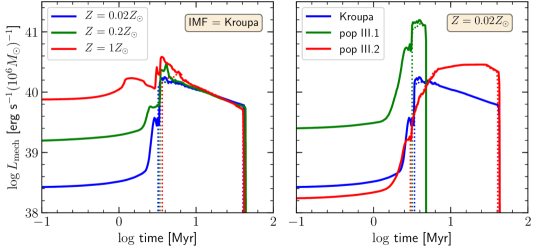
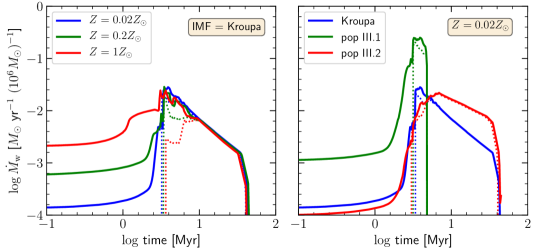
- 在 z ~ 10 时,M_v ~ 10¹⁰.⁸ M☉ 的晕自然达到密度 >3×10³ cm⁻³,从而实现无反馈星暴(FFBs),恒星形成效率 ε ≈ 1。
- 此类星系的预测恒星形成率为 ~65 M☉/yr,有效半径 ≤1 kpc,与观测到的明亮、紧凑星系一致。
- 星族质量可达 ~10¹⁰ M☉,金属度 ≤0.1 Z☉,且尘埃极少,这是由于气体分数低且反馈微弱。
- 星系预计为紧凑结构,尺寸 ≤1 kpc,可能表现为具有巨大星团的厚盘或球形壳层结构。
- FFB 星团受到外部反馈的屏蔽,可能作为球状星团至今仍存在,或通过动力摩擦和吸积过程成为大质量黑洞的种子。
- 该模型预测在红移和晕质量阈值以上,恒星形成效率较高,其中在 z ~ 10 时 M_v ~ 10¹⁰.⁵ M☉,在 z ~ 15 时 M_v ~ 3.5×10⁹ M☉。
阅读本论文
在 Nubint 阅读器中打开原文,边读边就任意段落提问。
在 Nubint 中阅读本论文本解读由 AI 根据论文原文生成,引用前请核对原文。