
[论文解读] Enhanced Load Forecasting with GAT-LSTM: Leveraging Grid and Temporal Features
本文提出 GAT-LSTM,一种融合图注意力网络与 LSTM 的混合模型,用以捕捉电网拓扑与时序动态,并利用边属性提升短期负荷预测。在巴西电网数据集上优于若干基线。
Accurate power load forecasting is essential for the efficient operation and planning of electrical grids, particularly given the increased variability and complexity introduced by renewable energy sources. This paper introduces GAT-LSTM, a hybrid model that combines Graph Attention Networks (GAT) and Long Short-Term Memory (LSTM) networks. A key innovation of the model is the incorporation of edge attributes, such as line capacities and efficiencies, into the attention mechanism, enabling it to dynamically capture spatial relationships grounded in grid-specific physical and operational constraints. Additionally, by employing an early fusion of spatial graph embeddings and temporal sequence features, the model effectively learns and predicts complex interactions between spatial dependencies and temporal patterns, providing a realistic representation of the dynamics of power grids. Experimental evaluations on the Brazilian Electricity System dataset demonstrate that the GAT-LSTM model significantly outperforms state-of-the-art models, achieving reductions of 21. 8% in MAE, 15. 9% in RMSE and 20. 2% in MAPE. These results underscore the robustness and adaptability of the GAT-LSTM model, establishing it as a powerful tool for applications in grid management and energy planning.
研究动机与目标
- 在具有高可再生能源接入的现代电网中,推动实现准确的短期负荷预测。
- 提出将网格特定边属性融入时空建模的混合 GAT-LSTM 架构。
- 在巴西电力系统数据集上评估该模型相较于最先进的基线表现。
- 展示在 MAE、RMSE、MAPE 方面相较于基线的改进。
提出的方法
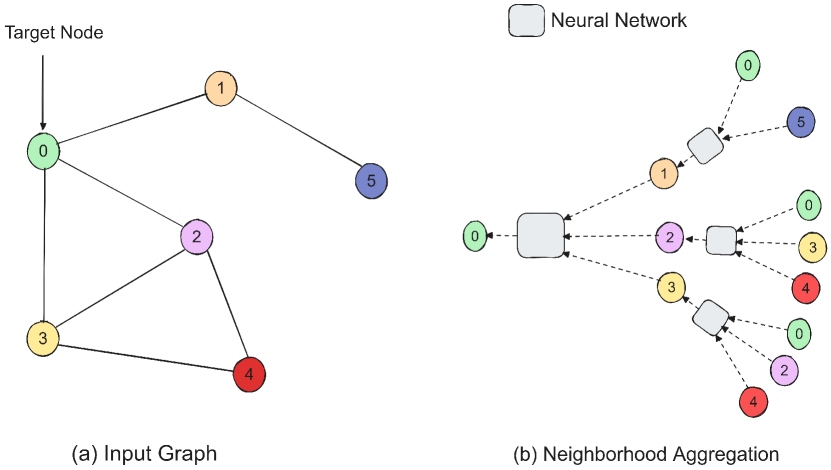
- 开发两个并行的 GAT 层,在注意力系数中加入边属性。
- 在将空间图嵌入与时间序列数据输入 LSTM 之前进行时空信息的早期融合。
- 在 GAT 中使用多头注意力机制和 LeakyReLU 激活以学习节点-边的重要性。
- 使用基于 LSTM 的序列模型处理数据以捕捉时间相关性并生成逐小时预测。
- 使用 Adam 优化器的 MSE 损失进行训练,结合学习率调度与早停以确保泛化。
- 与 LSTM、GCN-LSTM、EdgeGCN-LSTM、XGBoost 等基线在 2019–2020 年巴西数据上进行对比。
实验结果
研究问题
- RQ1GAT-LSTM 相较于基线模型在短期逐小时负荷预测中的性能如何?
- RQ2将边属性融入 GAT 注意力机制对预测精度有何影响?
- RQ3将空间嵌入与时间数据进行早期融合是否提升逐小时负荷的预测性能?
- RQ4在精度指标上,GAT-LSTM 如何处理高峰时段与非高峰时段?
- RQ5在巴西电力系统数据集上使用 GAT-LSTM 时,MAE、RMSE、MAPE 的相对提升有多大?
主要发现
- GAT-LSTM 在 MAE、RMSE、MAPE 三项指标上均取得评估模型中的最佳综合精度。
- 该模型实现显著改进,相较于 LSTM 的 MAE 降幅为 21.82%,相较于 EdgeGCN-LSTM 的 MAE 降幅为 23.62%。
- 在巴西数据集上,GAT-LSTM 的 MAE 为 64.64 MW,RMSE 为 119.06 MW,MAPE 为 4.59%。
- 与 XGBoost 相比,GAT-LSTM 显著优于对比,误差显著降低(MAE 64.64 MW 对 297.47 MW,RMSE 119.06 MW 对 517.69 MW,MAPE 4.59% 对 40.50%)。
- 早期训练分析表明 GAT-LSTM 收敛迅速、验证性能稳定,较基于边的 GNN 变体具有更高的稳定性。
- 峰值时段分析显示对负荷趋势跟踪良好,在快速爬升阶段存在少量偏差,提示高梯度区间仍有改进空间。
阅读本论文
在 Nubint 阅读器中打开原文,边读边就任意段落提问。
在 Nubint 中阅读本论文本解读由 AI 根据论文原文生成,引用前请核对原文。