
[论文解读] Enhancing Autonomous Vehicle Training with Language Model Integration and Critical Scenario Generation
该论文提出CRITICAL,一种闭环框架,通过整合真实世界交通动态、代理安全度量指标和大语言模型(LLMs),提升自动驾驶车辆(AV)训练效果。该框架通过LLM分析迭代识别故障模式并优化训练场景,从而提高学习效率与安全性,在基于PPO的AV训练中实现平均奖励76.886,事故次数为61次(基线为89次)。
This paper introduces CRITICAL, a novel closed-loop framework for autonomous vehicle (AV) training and testing. CRITICAL stands out for its ability to generate diverse scenarios, focusing on critical driving situations that target specific learning and performance gaps identified in the Reinforcement Learning (RL) agent. The framework achieves this by integrating real-world traffic dynamics, driving behavior analysis, surrogate safety measures, and an optional Large Language Model (LLM) component. It is proven that the establishment of a closed feedback loop between the data generation pipeline and the training process can enhance the learning rate during training, elevate overall system performance, and augment safety resilience. Our evaluations, conducted using the Proximal Policy Optimization (PPO) and the HighwayEnv simulation environment, demonstrate noticeable performance improvements with the integration of critical case generation and LLM analysis, indicating CRITICAL's potential to improve the robustness of AV systems and streamline the generation of critical scenarios. This ultimately serves to hasten the development of AV agents, expand the general scope of RL training, and ameliorate validation efforts for AV safety.
研究动机与目标
- 解决开源强化学习(RL)驱动的自动驾驶训练框架中可解释性、多样性与安全关键场景生成不足的问题。
- 克服传统训练方法依赖重复性、非关键场景的局限,这些场景无法有效应对真实世界的复杂性。
- 通过基于故障分析的动态生成高保真、关键驾驶场景,提升强化学习智能体的鲁棒性与学习效率。
- 整合大语言模型(LLMs)以解析训练回合并生成语义丰富、多样化且具有挑战性的场景变体。
- 建立场景生成与强化学习训练之间的闭环反馈机制,持续优化智能体性能与安全性。
提出的方法
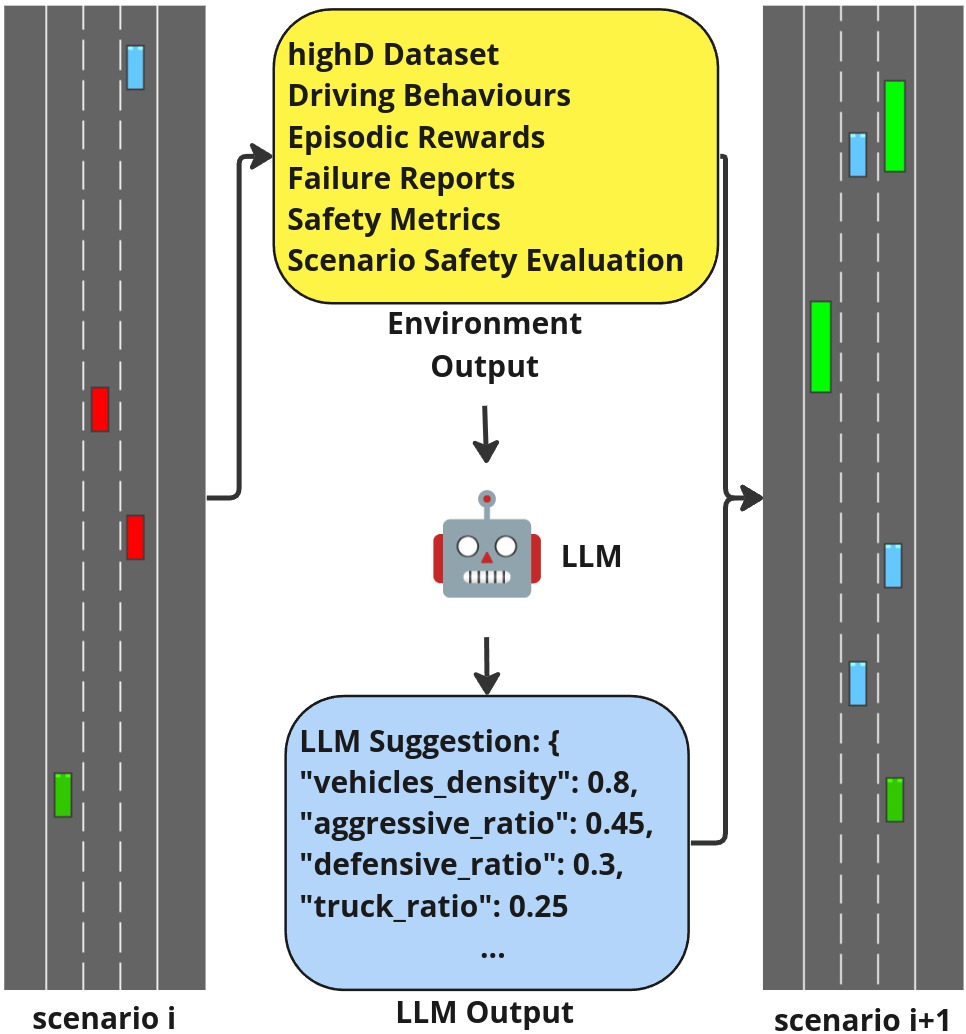
- 利用highD数据集建模真实世界交通动态与驾驶行为,构建高保真仿真环境。
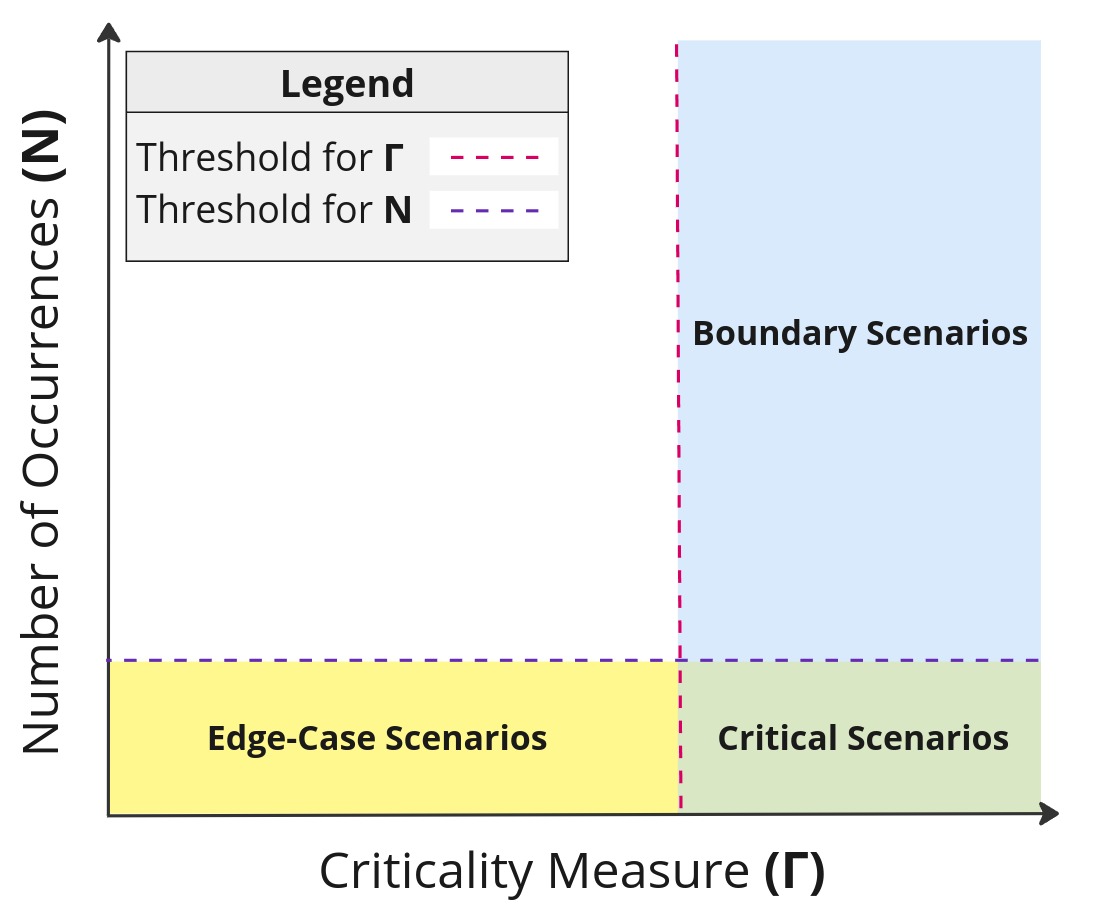
- 应用聚类技术(如K-Means、HCA)从真实世界数据中识别边缘案例场景,重点关注高风险构型。
- 引入两种代理安全度量指标——碰撞时间(TTC)与统一风险指数(r),以量化场景关键性并指导场景选择。
- 将回合输出输入大语言模型(LLM),解析故障模式并生成语义丰富的新型场景配置。
- 构建闭环框架,将LLM生成的场景反馈至强化学习训练循环,实现迭代优化。
- 在HighwayEnv仿真环境中使用近端策略优化(PPO)训练并评估强化学习智能体,其在动态增强的场景分布下运行。
实验结果
研究问题
- RQ1是否能够通过整合真实世界数据、安全度量指标与LLM的闭环框架,有效生成多样化且关键的驾驶场景用于AV训练?
- RQ2与基线及非LLM关键场景生成相比,LLM增强的场景生成在多大程度上提升了RL驱动AV智能体的学习速率与性能?
- RQ3代理安全度量指标(TTC与统一风险指数)在训练过程中是否能准确反映场景关键性的演变,并与智能体性能保持相关性?
- RQ4将LLM集成至场景生成流程是否能生成更具语义意义与复杂性的场景,从而更好地反映真实世界驾驶挑战?
- RQ5该框架是否具备跨不同交通状况与道路布局的泛化能力?其对强化学习训练中的事故频率与回合长度有何影响?
主要发现
- LLM增强的关键场景生成使平均回合奖励从基线的50.068提升至76.886,表明性能显著提升。
- LLM增强生成下,平均回合长度从55.760提升至93.019,表明导航稳定性增强,成功轨迹更长。
- 事故次数从基线的89次降至61次,证实了安全鲁棒性的提升。
- 统一风险指数(r)与TTC近似碰撞次数的平均关键性评分随时间显著下降,尤其在LLM增强设置下,表明对高风险场景的处理能力更强。
- 闭环反馈机制通过持续向智能体暴露于日益复杂与关键的场景,显著加速了学习并提升了智能体鲁棒性。
- LLM分析使研究团队能够发现并生成语义丰富、基于故障信息的场景,这些场景无法仅通过聚类技术捕获,从而将训练分布拓展至数据驱动的边缘案例之外。
阅读本论文
在 Nubint 阅读器中打开原文,边读边就任意段落提问。
在 Nubint 中阅读本论文本解读由 AI 根据论文原文生成,引用前请核对原文。