
[论文解读] Evaluating Graph Neural Networks for Link Prediction: Current Pitfalls and New Benchmarking
这篇论文审计基于 GNN 的链接预测的评估方式,揭示了重大陷阱,并引入 HeaRT,一种将评估与现实场景对齐的困难负采样基准框架。
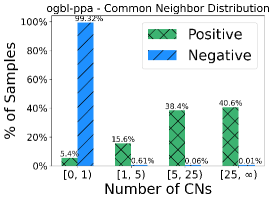
Link prediction attempts to predict whether an unseen edge exists based on only a portion of edges of a graph. A flurry of methods have been introduced in recent years that attempt to make use of graph neural networks (GNNs) for this task. Furthermore, new and diverse datasets have also been created to better evaluate the effectiveness of these new models. However, multiple pitfalls currently exist that hinder our ability to properly evaluate these new methods. These pitfalls mainly include: (1) Lower than actual performance on multiple baselines, (2) A lack of a unified data split and evaluation metric on some datasets, and (3) An unrealistic evaluation setting that uses easy negative samples. To overcome these challenges, we first conduct a fair comparison across prominent methods and datasets, utilizing the same dataset and hyperparameter search settings. We then create a more practical evaluation setting based on a Heuristic Related Sampling Technique (HeaRT), which samples hard negative samples via multiple heuristics. The new evaluation setting helps promote new challenges and opportunities in link prediction by aligning the evaluation with real-world situations. Our implementation and data are available at https://github.com/Juanhui28/HeaRT
研究动机与目标
- 揭示现有链接预测评估中的不一致性和低报性能。
- 在常见数据集上提供对代表性链接预测方法的公平、可重复的比较。
- 提出并验证一个新评估框架(HeaRT),具有硬性、个性化的负采样,以反映现实世界任务。
提出的方法
- 在 Planetoid 和 OGB 数据集上使用相同的超参数和切分,对知名的链接预测方法进行公平再评估。
- 在多个数据集上评估现有的评估设置(负采样、数据切分、度量)。
- 引入 HeaRT:一种启发式驱动的采样技术,通过将负样本限定为对正样本对的扰动并且对对中的每个节点各采样一半来为每个正样本选择 K 个困难负样本。
- 在 HeaRT 下评估方法以衡量鲁棒性和方差降低。
实验结果
研究问题
- RQ1在常见数据集上标准化超参数调优下,当前的链接预测方法表现如何?
- RQ2统一数据切分和评估指标对链接预测中公正模型比较有何影响?
- RQ3现实、样本个性化的负采样策略(HeaRT)是否能为基于 GNN 的链接预测方法提供更具挑战性和信息性的评估?
- RQ4HeaRT 是否降低模型性能方差并揭示传统评估协议遮蔽的差异?
主要发现
- 使用标准化再训练和评估设置时(例如 Neo-GNN 在 ogbl-collab 上),报告的性能往往高于原始论文。
- 统一的评估设置揭示了报告结果中的不一致性,并显示在严格调参下,一些简单基线变得更具竞争力。
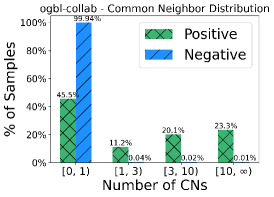
- HeaRT 评估显著增加负样本难度,降低了许多模型的 MRR/AUC,在某些数据集上将模型间方差降低至多 92%,实现更可靠的比较。
- 在 HeaRT 下,简单模型在排序指标上经常超过更复杂的系统,表明当前的进展可能依赖于较易的负样本。
- 在 ogbl-collab 上,启发式方法仍然强劲,强调了公共邻居信息的重要性,而一些复杂模型在更困难的负样本下表现不佳。
- 作者在其代码仓库提供了开源代码和数据以供复现。
阅读本论文
在 Nubint 阅读器中打开原文,边读边就任意段落提问。
在 Nubint 中阅读本论文本解读由 AI 根据论文原文生成,引用前请核对原文。