
[论文解读] Evaluating RAG-Fusion with RAGElo: an Automated Elo-based Framework
本文提出 RAGElo,一种基于 LLM 作为裁判的自动化 Elo 评估框架,用于在企业问答设置中对 RAG 和 RAG-Fusion(RAGF)代理进行排序。通过从真实用户查询和领域内文档生成合成查询,并将相关检索到的文档注入 LLM 裁判的上下文,RAGElo 与专家评分表现出中等程度的相关性,并显示 RAGF 在完整性和整体答案质量方面显著优于 RAG,尽管在精确度方面表现较差。
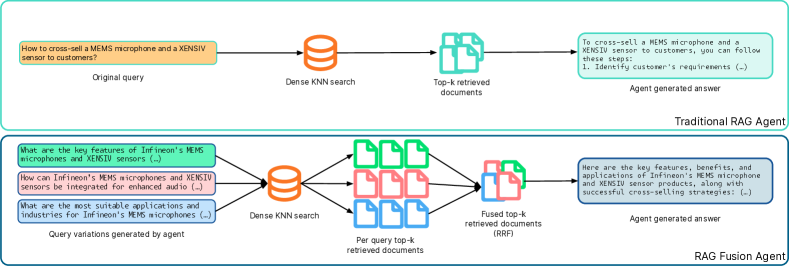
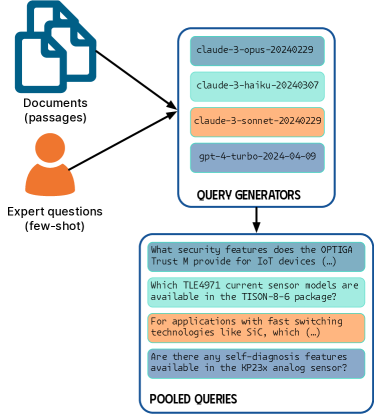
Challenges in the automated evaluation of Retrieval-Augmented Generation (RAG) Question-Answering (QA) systems include hallucination problems in domain-specific knowledge and the lack of gold standard benchmarks for company internal tasks. This results in difficulties in evaluating RAG variations, like RAG-Fusion (RAGF), in the context of a product QA task at Infineon Technologies. To solve these problems, we propose a comprehensive evaluation framework, which leverages Large Language Models (LLMs) to generate large datasets of synthetic queries based on real user queries and in-domain documents, uses LLM-as-a-judge to rate retrieved documents and answers, evaluates the quality of answers, and ranks different variants of Retrieval-Augmented Generation (RAG) agents with RAGElo's automated Elo-based competition. LLM-as-a-judge rating of a random sample of synthetic queries shows a moderate, positive correlation with domain expert scoring in relevance, accuracy, completeness, and precision. While RAGF outperformed RAG in Elo score, a significance analysis against expert annotations also shows that RAGF significantly outperforms RAG in completeness, but underperforms in precision. In addition, Infineon's RAGF assistant demonstrated slightly higher performance in document relevance based on MRR@5 scores. We find that RAGElo positively aligns with the preferences of human annotators, though due caution is still required. Finally, RAGF's approach leads to more complete answers based on expert annotations and better answers overall based on RAGElo's evaluation criteria.
研究动机与目标
- 为解决企业环境中 RAG 系统评估缺乏黄金标准基准的问题,特别是针对内部、领域特定的问答任务。
- 克服由于缺乏人工标注的黄金答案而导致 RAG 管道中幻觉和不可靠评估的挑战。
- 开发一种自动化、可扩展的评估框架,与专家偏好保持一致,并实现对 RAG 变体(如 RAG 和 RAG-Fusion)的公平比较。
- 通过 LLM 作为裁判和专家标注,验证 RAG-Fusion(RAGF)在生成更完整、更高质量答案方面相对于标准 RAG 的有效性。
提出的方法
- 通过提示 LLM 基于真实用户查询和领域内文档生成合成评估查询,使用实际用户查询的 few-shot 示例。
- 将检索到的文档注入裁判 LLM 的上下文中,以提升其在答案评估过程中对相关性、准确性和幻觉风险的判断能力。
- 采用成对的 LLM 作为裁判方法,即裁判 LLM 从不同 RAG 管道中选出两个候选答案中的更优者。
- 应用基于 Elo 的锦标赛系统(RAGElo),根据成对比较结果对 RAG 管道进行排名,实现模型性能的自动化、可扩展排名。
- 使用 MRR@5 衡量检索质量,比较 RAG 和 RAGF 在将相关文档排在前列方面的能力。
- 指示裁判 LLM 从全面性、正确性、帮助性、完整性、准确性、深度和细节等多个维度评估答案。
实验结果
研究问题
- RQ1RAGElo 框架是否在 RAG 系统评估中产生与人类专家偏好一致的评估结果?
- RQ2RAG-Fusion(RAGF)与标准 RAG 相比,在答案完整性和整体质量方面表现如何,精确度如何?
- RQ3将检索到的文档注入裁判 LLM 上下文在多大程度上提高了 LLM 作为裁判评估的可靠性?
- RQ4基于真实查询和领域文档的合成查询生成能否产生高质量、真实的测试集,用于企业 RAG 评估?
- RQ5RAG 和 RAGF 之间的检索指标(如 MRR@5)有何差异,这对其排序性能意味着什么?
主要发现
- 使用 RAGElo 的 LLM 作为裁判评估在相关性、准确性、完整性和精确度方面与领域专家评分表现出中等程度的正相关性。
- 根据专家标注,RAGF 在完整性和方面显著优于 RAG,表明其生成的答案更全面。
- RAGF 在精确度方面表现不如 RAG,表明答案生成中完整性和事实准确性之间存在权衡。
- RAGF 在 MRR@5 得分上表现出略优的文档相关性,表明通过查询多样化和排序融合,检索质量有所提升。
- RAGElo 框架整体成功将 RAGF 排名高于 RAG,支持其作为可靠、自动化评估工具的使用。
- 在给定测试集中,BM25 的检索性能优于向量搜索,表明嵌入质量高度依赖于领域,可能需要微调。
阅读本论文
在 Nubint 阅读器中打开原文,边读边就任意段落提问。
在 Nubint 中阅读本论文本解读由 AI 根据论文原文生成,引用前请核对原文。