
[论文解读] Evaluation of ChatGPT Feedback on ELL Writers' Coherence and Cohesion
本研究评估 ChatGPT 生成的关于连贯性与衔接性的反馈在ELL(英语非母语学习者)作文中的效果,发现如果不进行特定任务培训,反馈大多是抽象且有时不准确,尽管有些提示变体与人工评分高度一致。
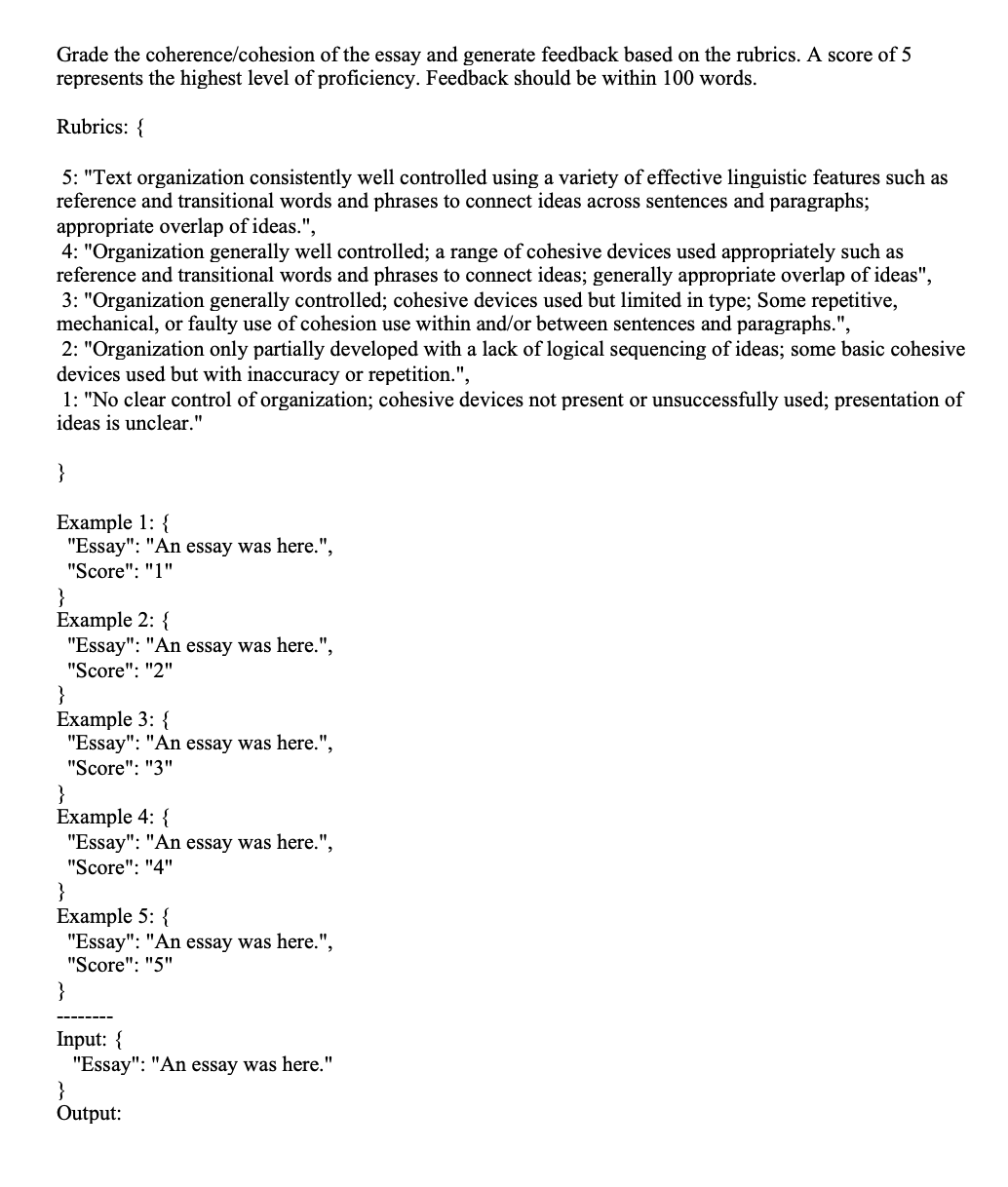
Since its launch in November 2022, ChatGPT has had a transformative effect on education where students are using it to help with homework assignments and teachers are actively employing it in their teaching practices. This includes using ChatGPT as a tool for writing teachers to grade and generate feedback on students' essays. In this study, we evaluated the quality of the feedback generated by ChatGPT regarding the coherence and cohesion of the essays written by English Language Learners (ELLs) students. We selected 50 argumentative essays and generated feedback on coherence and cohesion using the ELLIPSE rubric. During the feedback evaluation, we used a two-step approach: first, each sentence in the feedback was classified into subtypes based on its function (e.g., positive reinforcement, problem statement). Next, we evaluated its accuracy and usability according to these types. Both the analysis of feedback types and the evaluation of accuracy and usability revealed that most feedback sentences were highly abstract and generic, failing to provide concrete suggestions for improvement. The accuracy in detecting major problems, such as repetitive ideas and the inaccurate use of cohesive devices, depended on superficial linguistic features and was often incorrect. In conclusion, ChatGPT, without specific training for the feedback generation task, does not offer effective feedback on ELL students' coherence and cohesion.
研究动机与目标
- 评估评估连贯性/衔接性反馈的准确性与可用性的方法。
- 确定在不进行特定任务调优的情况下,ChatGPT 是否能为 ELL 学习者提供准确且有用的反馈。
- 表征 ChatGPT 反馈的语言类型及其有用性。
- 使用标准化量表(ELLIPSE cohesion rubric)将 ChatGPT 反馈与人工专家反馈进行比较。
- 分析在 ELL 情境中部署基于 ChatGPT 的反馈的成本与可行性。
提出的方法
- 按功能对每条反馈句子进行两步分析(如积极强化、问题陈述、明确示例、间接建议等)。
- 使用 ELLIPSE 连接性量表对数据集中 50 篇高中(grade-12)ELL 作文生成反馈。
- 通过将反馈句子映射到量表类型并与人工判断进行比较,对准确性进行细粒度评估。
- 对四篇示例作文进行 ChatGPT 反馈与专家反馈的整体比较。
- 对 GPT-4 提示进行实验(默认与个性化)以评估与人工评判的一致性(kappa、Pearson 相关)。
- 对不同提示配置的 API 使用成本进行分析。
实验结果
研究问题
- RQ1RQ1: 使用何种方法来评估连贯性/衔接性反馈的准确性与可用性?
- RQ2RQ2: 在不进行任务特定提示调整的情况下,ChatGPT 是否能为 ELL 学生提供准确且有用的连贯性/衔接性反馈?
- RQ3RQ3: 提示设计(默认 vs. 个性化)如何影响与人工分数的一致性以及反馈有用性?
主要发现
- 大多数反馈句子是抽象且通用的,缺乏具体的改进建议。
- 在检测主要问题(如观念重复、衔接手段使用不当)方面的准确性依赖于表层语言特征,且常常不正确。
- 提示设计影响评分一致性:个性化提示相对于默认提示,获得更高的完全/相邻一致性以及与人工分数的更高 Pearson 相关。
- 含示例作文的提示降低评分效果并提高成本。
- 平均反馈长度为 4.1 句(约 62 个单词),每篇作文 3–6 句,长度与衔接分数之间没有强相关性。
- 具体示例很常见(平均约 1.21 句/篇);正向强化较少且对低熟练度作文常常无帮助。
阅读本论文
在 Nubint 阅读器中打开原文,边读边就任意段落提问。
在 Nubint 中阅读本论文本解读由 AI 根据论文原文生成,引用前请核对原文。