
[论文解读] Exploring the Naturalness of AI-Generated Images
该论文使用全新 AGIN 数据库对 AI 生成图像的自然性进行基准测试,并引入 JOINT 与 JOINT++,以联合建模技术层面与理性层面的视角,从而实现与人类评分的最先进对齐。
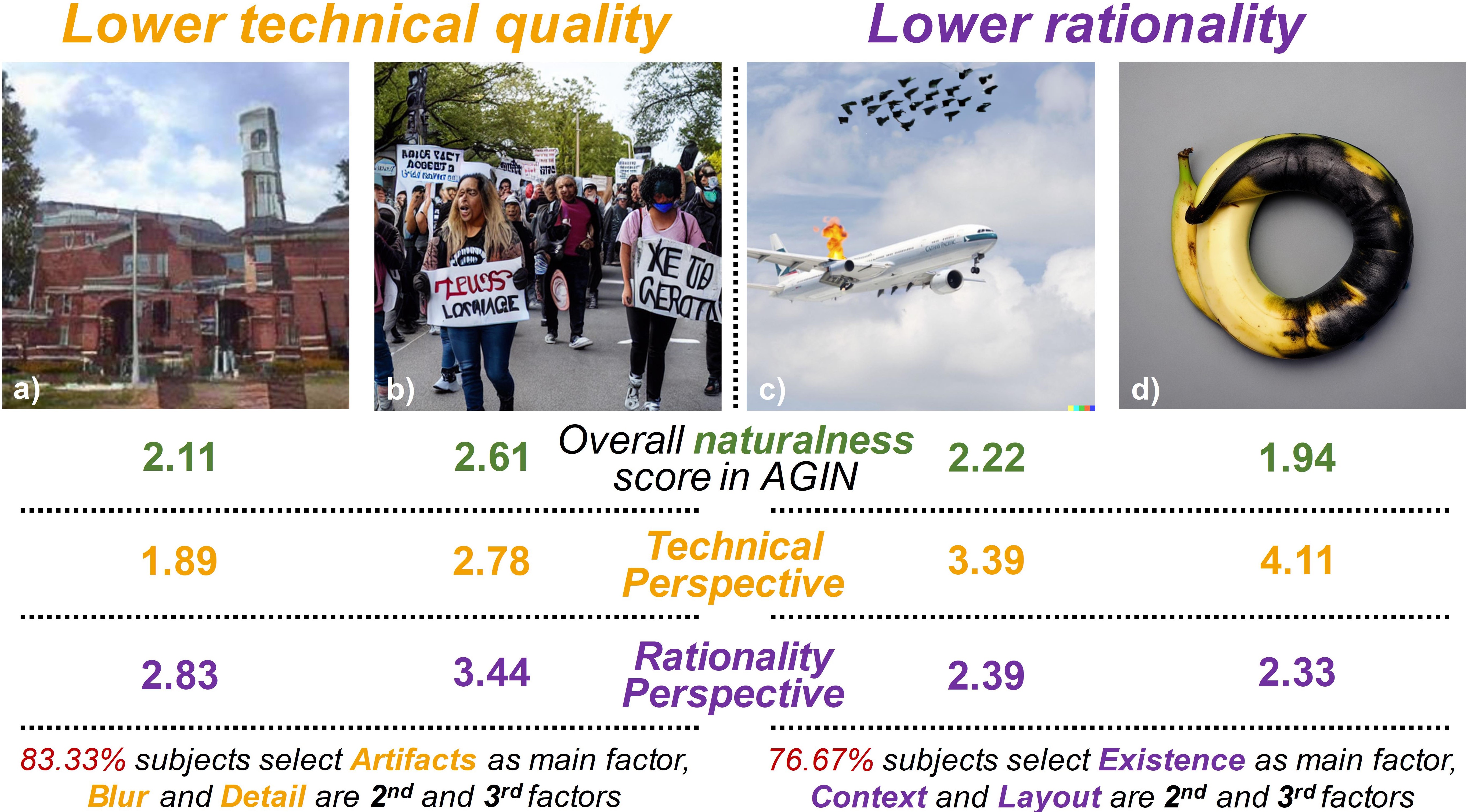
The proliferation of Artificial Intelligence-Generated Images (AGIs) has greatly expanded the Image Naturalness Assessment (INA) problem. Different from early definitions that mainly focus on tone-mapped images with limited distortions (e.g., exposure, contrast, and color reproduction), INA on AI-generated images is especially challenging as it has more diverse contents and could be affected by factors from multiple perspectives, including low-level technical distortions and high-level rationality distortions. In this paper, we take the first step to benchmark and assess the visual naturalness of AI-generated images. First, we construct the AI-Generated Image Naturalness (AGIN) database by conducting a large-scale subjective study to collect human opinions on the overall naturalness as well as perceptions from technical and rationality perspectives. AGIN verifies that naturalness is universally and disparately affected by technical and rationality distortions. Second, we propose the Joint Objective Image Naturalness evaluaTor (JOINT), to automatically predict the naturalness of AGIs that aligns human ratings. Specifically, JOINT imitates human reasoning in naturalness evaluation by jointly learning both technical and rationality features. We demonstrate that JOINT significantly outperforms baselines for providing more subjectively consistent results on naturalness assessment.
研究动机与目标
- Motivate the need for a dedicated naturalness assessment for AI-generated images (AGIs).
- Create AGIN, a comprehensive human-annotated database spanning multiple generation tasks and models.
- Investigate how technical distortions and rationality distortions jointly influence perceived naturalness.
- Propose JOINT/J0INT++ to mimic human reasoning by joint learning of technical and rationality perspectives.
提出的方法
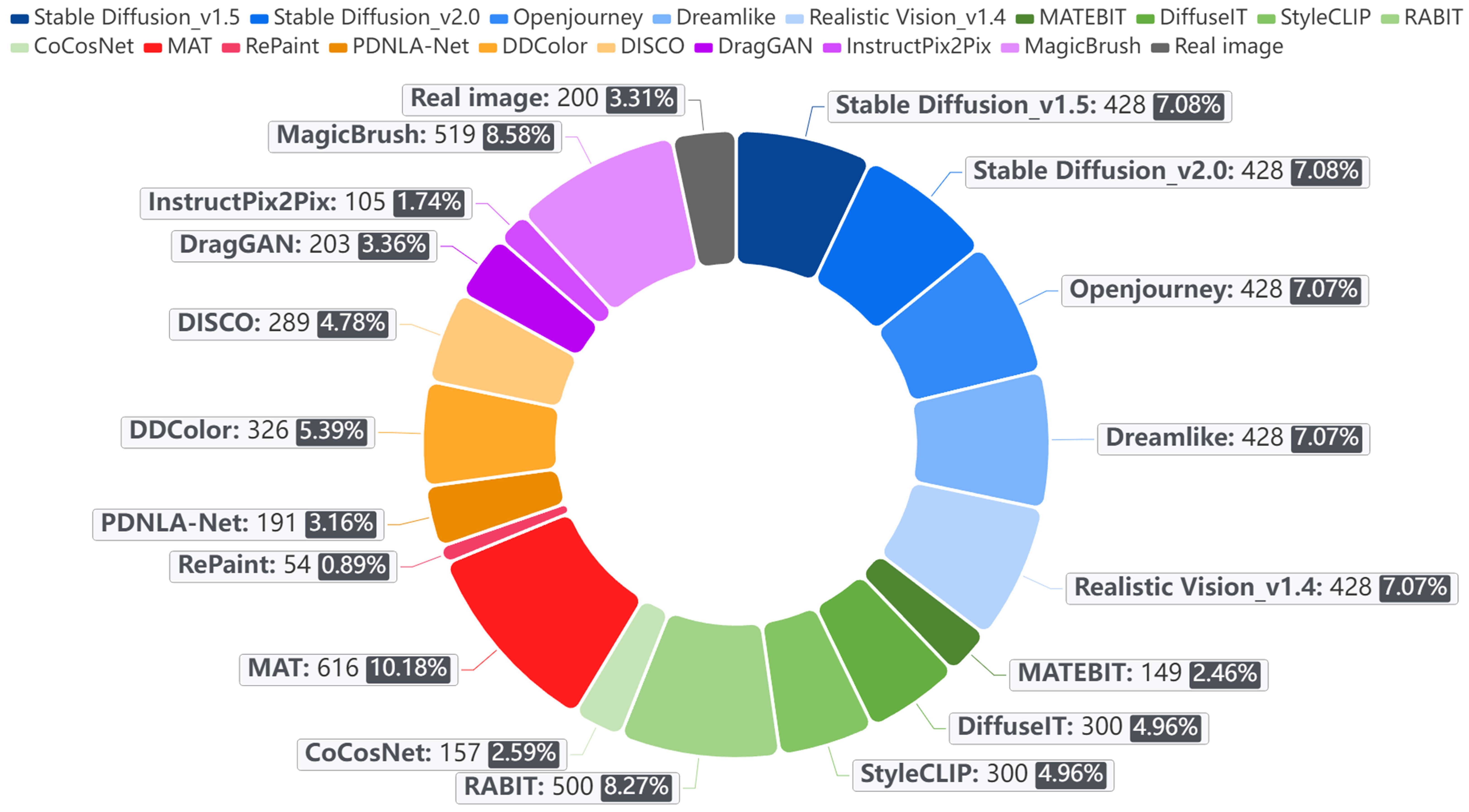
- Construct AGIN with 6,049 AI-generated images from five generation tasks and 18 model variants.
- Collect 907,350 human ratings on overall naturalness and its technical and rationality perspectives from 30 participants.
- Analyze correlations between technical and rationality scores and overall naturalness; observe that MOS ≈ 0.145 MOS_T + 0.769 MOS_R.
- Propose JOINT to jointly learn technical and rationality branches with designs like patch partition and perceptual artifacts-guided processing; use two supervision schemes (overall MOS and per-perspective MOS).
- Introduce JOINT++ with additional fine-grained supervision (using per-perspective MOS) and a subjective weighting strategy to compute final naturalness.
实验结果
研究问题
- RQ1How do technical distortions and high-level rationality distortions each affect the perceived naturalness of AGIs?
- RQ2Can a joint model that learns technical and rationality perspectives better predict human naturalness ratings than single-perspective models?
- RQ3Does an AGI-specific naturalness database (AGIN) improve objective assessment over traditional IQA/IAA datasets?
- RQ4What architectures and training objectives best align automated naturalness scores with human judgments?
主要发现
- AGIN shows naturalness is affected by both technical and rationality distortions, with rationality often having a larger impact on overall naturalness.
- Factors from the two perspectives are related but have disparate effects, leading to potential biases when using single-perspective models.
- Overall naturalness can be well-approximated by a linear combination of technical and rationality scores (MOS ≈ 0.145 MOS_T + 0.769 MOS_R).
- JOINT and JOINT++ outperform baselines on technical, rationality, and overall naturalness prediction, with JOINT++ achieving the best results on AGIN.
- On AGIN, traditional IQA/IAA baselines underperform; JOINT++ trained on AGIN delivers superior SRCC/PLCC for all perspectives and overall naturalness.
阅读本论文
在 Nubint 阅读器中打开原文,边读边就任意段落提问。
在 Nubint 中阅读本论文本解读由 AI 根据论文原文生成,引用前请核对原文。