
[论文解读] Extending the Q-score to an Application-level Quantum Metric Framework
本文将Q-score度量扩展至最大团问题,提出Q-score Max-Clique——一种新型应用级量子度量,可实现对量子退火、门基以及光子量子计算范式的直接比较。结果表明,尽管当前经典求解器在该度量上仍优于量子设备,但混合求解器取得了最高的Q-score Max-Clique(12,500),而量子退火在量子平台中表现最强,其在Advantage系统上的得分为110。
Evaluating the performance of quantum devices is an important step towards scaling quantum devices and eventually using them in practice. The great number of available quantum metrics and the different hardware technologies used to develop quantum computers complicate this evaluation. In addition, different computational paradigms implement quantum operations in different ways. A prominent quantum metric is given by the Q-score metric of Atos. This metric was originally introduced as a standalone way to benchmark devices using the Max-Cut problem. In this work, we show that the Q-score defines a framework of quantum metrics, which allows benchmarking using different problems, user settings and solvers. To showcase the applicability of the framework, we showcase a second Q-score in this framework, called the Q-score Max-Clique. This yields, to our knowledge, the first application-level metric capable of natively comparing three different paradigms of quantum computing. This metric is evaluated on these computational quantum paradigms -- quantum annealing, gate-based quantum computing, and photonic quantum computing -- and the results are compared to those obtained by classical solvers.
研究动机与目标
- 为解决当前缺乏统一、面向应用的度量以比较不同量子计算范式的问题。
- 将Q-score度量从最大割问题扩展至最大团问题,实现对量子退火、门基和光子量子计算机的基准测试。
- 在真实世界优化问题上评估并比较这三种量子范式以及经典求解器的性能。
- 为未来针对特定应用场景的即插即用型量子基准测试提供基础。
提出的方法
- 通过在固定时间限制内,使用混合经典-量子方法在量子和经典硬件上求解最大团问题,定义Q-score Max-Clique度量。
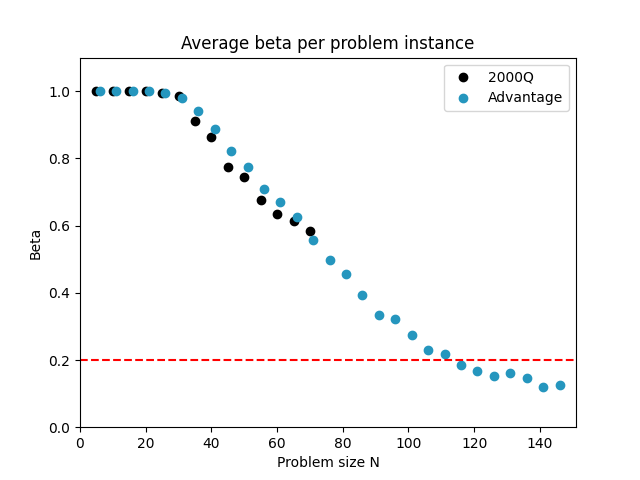
- 基于解的质量参数β评估性能,其中β = 1表示最优解,β* = 0.2作为评分阈值。
- 基准测试流程包括问题编码、量子执行、经典后处理以及对多个问题实例的解质量评估。
- 该方法支持计算无关的评估,允许跨不同量子硬件技术和经典求解器进行比较。
- 该度量应用于量子退火(D-Wave Advantage)、门基(ionQ和Rigetti)以及光子(Xanadu Borealis)系统,以及经典求解器(禁忌搜索、模拟退火)。
- Q-score计算为在时间约束内实现β ≥ β*的最大问题规模N,从而实现跨平台比较。

实验结果
研究问题
- RQ1Q-score度量能否有意义地从最大割问题扩展至最大团问题,以实现跨范式基准测试?
- RQ2在Q-score Max-Clique度量下,量子退火、门基和光子量子计算机的表现如何比较?
- RQ3在该应用级度量下,经典求解器在多大程度上优于量子设备?
- RQ4解质量(β)在不同问题规模和硬件平台之间如何变化?
- RQ5Q-score Max-Clique能否作为面向多样化量子应用场景的即插即用型基准测试框架?
主要发现
- D-Wave的混合求解器取得了最高的Q-score Max-Clique(12,500),优于所有其他求解器,但其黑箱特性限制了对性能归因于量子算法的判断。
- 在D-Wave Advantage系统上,量子退火实现了110的Q-score Max-Clique,是纯量子平台中的最高分,归因于其更高的量子比特数量。
- 门基和光子量子设备的Q-score相近,门基系统略胜一筹,但光子设备在门基系统未能于时限内求解时仍成功找到了解。
- 所有经典求解器在Q-score Max-Clique上均优于最先进的量子硬件,禁忌搜索和模拟退火分别取得了2,300和5,800的得分。
- 与最大割变体相比,经典求解器在Q-score Max-Clique上表现出更低的解质量(β),表明问题选择显著影响基准结果。
- 结果表明,针对不同问题和β*值的Q-score套件对于识别特定应用的最优硬件至关重要。
阅读本论文
在 Nubint 阅读器中打开原文,边读边就任意段落提问。
在 Nubint 中阅读本论文本解读由 AI 根据论文原文生成,引用前请核对原文。