
[论文解读] Face Recognition in the age of CLIP & Billion image datasets
本文使用CelebA数据集和LAION-5B的KNN索引,评估了CLIP模型作为零样本人脸识别器的性能,发现更大的模型并未持续提升准确率。研究表明,基于CLIP的检索引擎可能意外地充当人脸识别系统,由此在生物识别法律(如BIPA)下引发隐私和法律问题。
CLIP (Contrastive Language-Image Pre-training) models developed by OpenAI have achieved outstanding results on various image recognition and retrieval tasks, displaying strong zero-shot performance. This means that they are able to perform effectively on tasks for which they have not been explicitly trained. Inspired by the success of OpenAI CLIP, a new publicly available dataset called LAION-5B was collected which resulted in the development of open ViT-H/14, ViT-G/14 models that outperform the OpenAI L/14 model. The LAION-5B dataset also released an approximate nearest neighbor index, with a web interface for search & subset creation. In this paper, we evaluate the performance of various CLIP models as zero-shot face recognizers. Our findings show that CLIP models perform well on face recognition tasks, but increasing the size of the CLIP model does not necessarily lead to improved accuracy. Additionally, we investigate the robustness of CLIP models against data poisoning attacks by testing their performance on poisoned data. Through this analysis, we aim to understand the potential consequences and misuse of search engines built using CLIP models, which could potentially function as unintentional face recognition engines.
研究动机与目标
- 评估CLIP模型在CelebA数据集上的零样本人脸识别性能。
- 探究增大CLIP模型规模是否能提升人脸识别准确率。
- 评估CLIP模型在使用Fawkes和LowKey扰动进行数据中毒攻击下的鲁棒性。
- 考察基于CLIP的搜索引擎在多大程度上可能意外地充当人脸识别系统。
- 探讨在BIPA等生物识别法律框架下,使用CLIP嵌入进行生物识别身份识别的法律与伦理影响。
提出的方法
- 在CelebA数据集上微调并评估ViT-B/32、ViT-L/14、ViT-H/14和ViT-G/14 CLIP模型的top-1和top-5人脸识别准确率。
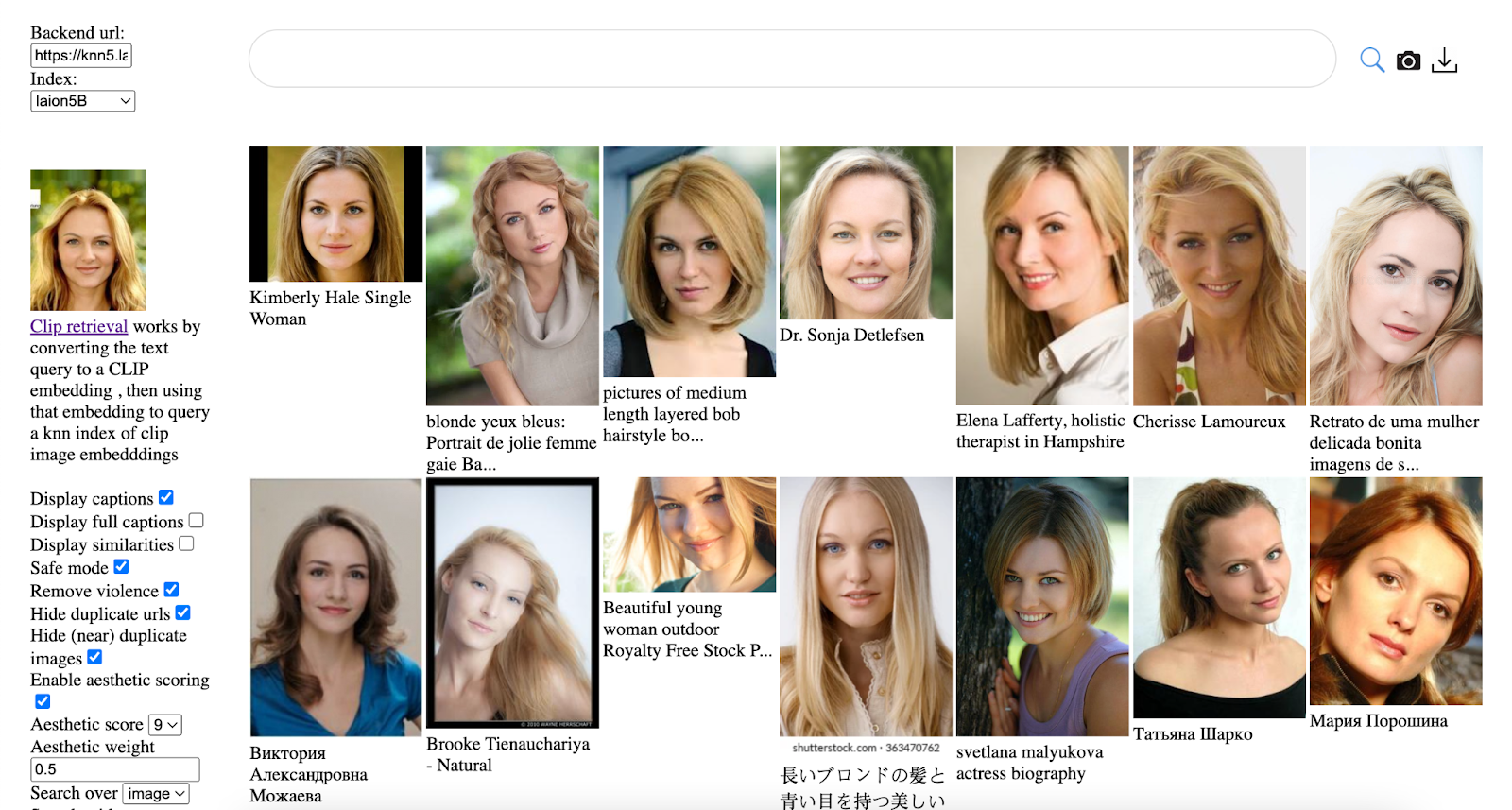
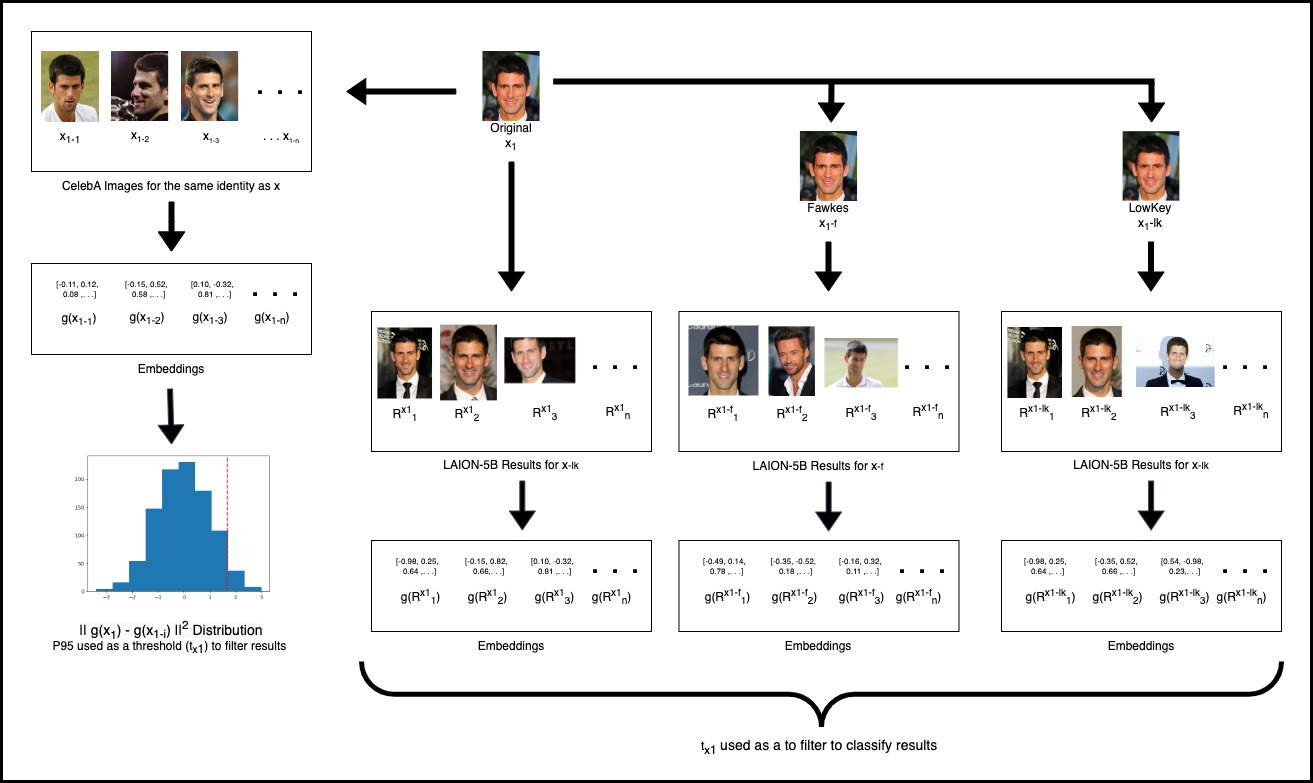
- 使用LAION-5B的KNN索引对原始图像、Fawkes扰动图像和LowKey扰动图像执行图像检索。
- 设置检索参数,包括审美评分(9)、审美权重(0.5)、模态(图像)和结果数量(50)。
- 通过筛选CLIP嵌入之间L2距离低于阈值的结果,确保身份一致性。
- 比较原始图像、Fawkes扰动图像和LowKey扰动图像在有效结果数量(≥3)上的差异,以评估扰动的鲁棒性。
- 将人脸识别Python库的性能作为基准进行对比评估。
实验结果
研究问题
- RQ1CLIP模型在CelebA数据集上作为零样本人脸识别器的性能如何?
- RQ2增大CLIP模型规模是否能提升人脸识别准确率?
- RQ3CLIP模型在使用Fawkes和LowKey扰动进行数据中毒攻击下的鲁棒性如何?
- RQ4基于CLIP的检索系统在多大程度上可被用作意外的人脸识别引擎?
- RQ5在BIPA等法律框架下,使用CLIP嵌入进行生物识别身份识别存在哪些法律与伦理影响?
主要发现
- ViT-L/14模型在所有CLIP模型中达到最高的top-1人脸识别准确率(80.95%),但仍低于人脸识别Python库的87.61%。
- ViT-H/14模型在所有CLIP模型中达到最高的top-5准确率(89.88%),低于人脸识别库的92.27%。
- 人脸识别准确率并未随模型规模单调提升;性能先提升后在更大模型上下降。
- 在728张原始图像中返回≥3个有效结果的图像中,612张(84.07%)在Fawkes扰动图像中也至少返回一个有效结果。
- 在728张图像中,566张(77.75%)在LowKey扰动图像中也至少返回一个有效结果,表明对扰动具有部分鲁棒性。
- 543张图像(74.59%)在Fawkes和LowKey扰动图像中均至少返回一个有效结果,表明扰动无法完全破坏检索性能。
阅读本论文
在 Nubint 阅读器中打开原文,边读边就任意段落提问。
在 Nubint 中阅读本论文本解读由 AI 根据论文原文生成,引用前请核对原文。