
[论文解读] FactPICO: Factuality Evaluation for Plain Language Summarization of Medical Evidence
FactPICO 为随机对照试验(RCT)摘要的简明语言摘要引入一个事实性基准,评估多种大型语言模型(LLMs)和事实性指标,并揭示在医学文本简化中实现简明性与事实准确性之间的权衡所面临的挑战。
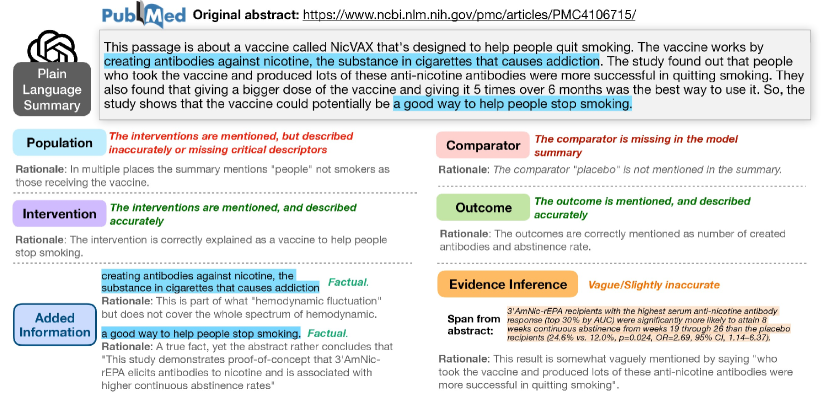
Plain language summarization with LLMs can be useful for improving textual accessibility of technical content. But how factual are these summaries in a high-stakes domain like medicine? This paper presents FactPICO, a factuality benchmark for plain language summarization of medical texts describing randomized controlled trials (RCTs), which are the basis of evidence-based medicine and can directly inform patient treatment. FactPICO consists of 345 plain language summaries of RCT abstracts generated from three LLMs (i.e., GPT-4, Llama-2, and Alpaca), with fine-grained evaluation and natural language rationales from experts. We assess the factuality of critical elements of RCTs in those summaries: Populations, Interventions, Comparators, Outcomes (PICO), as well as the reported findings concerning these. We also evaluate the correctness of the extra information (e.g., explanations) added by LLMs. Using FactPICO, we benchmark a range of existing factuality metrics, including the newly devised ones based on LLMs. We find that plain language summarization of medical evidence is still challenging, especially when balancing between simplicity and factuality, and that existing metrics correlate poorly with expert judgments on the instance level.
研究动机与目标
- 在高风险领域优先考虑事实准确性的同时,推动医学证据的可获取性强、易懂的简明语言摘要。
- 定义一个聚焦于 PICO 元素(人群、干预、对比、结局)及对证据推断的细粒度事实性基准,用于RCT摘要。
- 提供专家推理以将事实性判断置于情境中,并评估摘要中的附加信息。
- 评估现有自动指标和基于LLM的评估者在实例级事实性上与专家判断的一致性。
- 提供关于生成医学摘要中简明性与事实性之间权衡的见解。
提出的方法
- 从由三种LLM(GPT-4、Llama-2-Chat、Alpaca)在零-shot提示下生成的115份RCT摘要的345份简明语言摘要构建 FactPICO。
- 使用专家注释来评定PICO元素、证据推断和附加信息的事实性,并给出自然语言的推理。
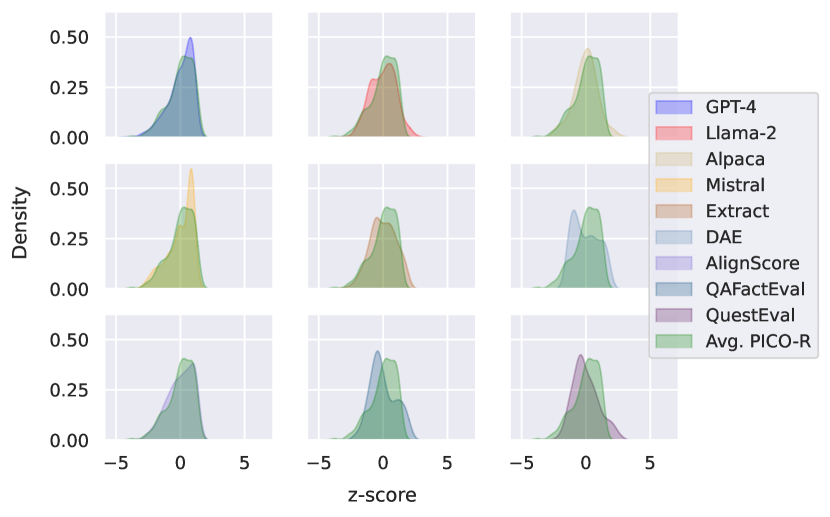
- 评估现有事实性指标(DAE、QuestEval、QAFactEval、AlignScore)以及基于LLM的评估者在实例级和系统级与专家判断的相关性。
- 分析LLM生成的推理以评估解释质量及与评估标准的潜在不一致。
- 比较流水线方法(基于LLM的评估与显式PICO-R提取),以确定哪种方法最能追踪专家判断。
实验结果
研究问题
- RQ1就PICO元素及证据推断而言,RCT摘要的简明语言摘要有多么事实性?
- RQ2在评估医学简明语言摘要时,现有自动事实性指标是否与专家判断相关?
- RQ3基于LLM的评估(有或没有显式PICO提取)能否在实例级别可靠地评估事实性?
- RQ4附加解释性内容对医学简明语言摘要的事实性和可信度有何影响?
- RQ5专家推理是否为评估和改进医学简明语言摘要中的事实性提供有用的指导?
主要发现
- 医学证据的简明语言摘要在干预和结局方面的事实性高于在人群和对比方面,存在显著的遗漏和过度概括。
- 大量摘要中包含非事实性添加内容,其中包括GPT-4的输出(约三分之一的附加内容),这对零-shot使用的可信度构成担忧。
- 现有自动事实性指标在系统层面与专家判断相关,但在实例层面相关性较差;带PICO定位的LLM基评估在实例层面相关性最强。
- 一个PICO-R提取流水线(使用GPT-4提取PICO-R然后评估)在所评估的方法中与专家评分的对齐度最高。
- LLM生成的推理常常为评估提供错误正当性,凸显将自由文本推理作为唯一可靠性信号的局限性。
- Alpaca 往往产生更具提取性的(高 ROUGE-L)但质量较低、事实性较差的摘要,而 GPT-4 和 Llama-2 则呈现更多简化,但也存在更多事实性挑战和幻觉。
阅读本论文
在 Nubint 阅读器中打开原文,边读边就任意段落提问。
在 Nubint 中阅读本论文本解读由 AI 根据论文原文生成,引用前请核对原文。