
[论文解读] Fairness and Privacy-Preserving in Federated Learning: A Survey
本综述对联邦学习(FL)中的公平性与隐私挑战提供了全面分析,识别了客户端选择、激励分配、贡献评估以及群体公平性方面的关键问题。它评估了现有的隐私保护技术,如差分隐私和安全多方计算,并提出了一套统一框架,以在联邦学习系统中平衡隐私、公平性与模型准确性。
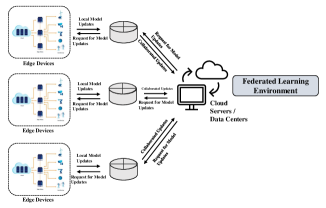
Federated learning (FL) as distributed machine learning has gained popularity as privacy-aware Machine Learning (ML) systems have emerged as a technique that prevents privacy leakage by building a global model and by conducting individualized training of decentralized edge clients on their own private data. The existing works, however, employ privacy mechanisms such as Secure Multiparty Computing (SMC), Differential Privacy (DP), etc. Which are immensely susceptible to interference, massive computational overhead, low accuracy, etc. With the increasingly broad deployment of FL systems, it is challenging to ensure fairness and maintain active client participation in FL systems. Very few works ensure reasonably satisfactory performances for the numerous diverse clients and fail to prevent potential bias against particular demographics in FL systems. The current efforts fail to strike a compromise between privacy, fairness, and model performance in FL systems and are vulnerable to a number of additional problems. In this paper, we provide a comprehensive survey stating the basic concepts of FL, the existing privacy challenges, techniques, and relevant works concerning privacy in FL. We also provide an extensive overview of the increasing fairness challenges, existing fairness notions, and the limited works that attempt both privacy and fairness in FL. By comprehensively describing the existing FL systems, we present the potential future directions pertaining to the challenges of privacy-preserving and fairness-aware FL systems.
研究动机与目标
- 识别并系统化联邦学习系统中确保公平性与隐私性的关键挑战。
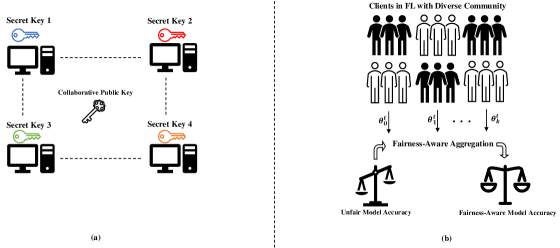
- 在联邦学习背景下,分析现有的隐私保护技术,如差分隐私、安全多方计算和可信执行环境。
- 研究联邦学习中客户端选择、激励分配和群体偏差方面的公平性问题。
- 评估联邦学习中隐私、公平性与模型准确性之间的权衡,并识别现有研究中的空白。
- 提出未来研究方向,以构建具备更高效率与鲁棒性的隐私保护、公平性感知的联邦学习系统。
提出的方法
- 对150余篇近期关于联邦学习中隐私与公平性的研究工作进行系统性综述,按技术方法与应用领域分类。
- 将隐私保护技术分类为密码学方法(如SMC、同态加密)、统计方法(如差分隐私)和基于硬件的方法(如TEE)。
- 分析个体公平性、群体公平性与基于贡献的公平性等公平性概念,重点关注客户端选择与激励机制。
- 利用比较框架评估不同隐私保护技术在隐私、准确性与通信效率之间的权衡。
- 整合持续学习与知识蒸馏技术,以降低动态联邦学习环境中的训练成本并提升模型适应性。
- 提出一个多维评估框架,结合隐私度量(如差分隐私中的隐私预算)、公平性度量(如人口均等性、机会均等性)与准确性基准。
实验结果
研究问题
- RQ1联邦学习中的主要隐私威胁是什么?现有技术如何缓解这些威胁?
- RQ2公平性问题在联邦学习的客户端选择、激励分配与模型收敛过程中如何体现?
- RQ3联邦学习系统中隐私、公平性与模型准确性之间的关键权衡是什么?
- RQ4哪些隐私保护技术在平衡安全性、效率与模型性能方面最为有效?
- RQ5为构建可扩展、公平且隐私保护的联邦学习系统,未来需要哪些研究方向?
主要发现
- 现有的隐私保护技术,如差分隐私与安全多方计算,通常引入显著的计算开销并降低模型准确性。
- 联邦学习中的公平性问题主要源于客户端选择偏差、奖励分配均等化以及贡献评估不准确,导致低能力客户端参与度下降。
- 当在模型训练过程中未显式考虑性别或种族等敏感属性时,群体公平性违规现象普遍存在,导致预测结果产生偏差。
- 整合持续学习与知识蒸馏方法可降低动态联邦学习环境中的训练成本,并提升模型适应性。
- 单一隐私保护技术无法在所有指标上实现最优性能;结合密码学、统计与硬件方法的混合方案展现出更大潜力。
- 缺乏标准化的隐私与公平性评估指标,阻碍了联邦学习系统间的可复现性与可比性,亟需根据具体领域选择合适的度量指标。
阅读本论文
在 Nubint 阅读器中打开原文,边读边就任意段落提问。
在 Nubint 中阅读本论文本解读由 AI 根据论文原文生成,引用前请核对原文。