
[论文解读] Followback Clusters, Satellite Audiences, and Bridge Nodes: Coengagement Networks for the 2020 US Election
本文提出共参与网络(coengagement networks)作为一种方法,用于可视化和分析2020年美国大选期间大规模的Twitter话语,将转发数据转化为可解释的网络可视化图,揭示了诸如互关集群、卫星受众和桥梁节点等隐藏结构。主要贡献在于识别出这些网络结构——尤其是平台精英行为和大规模账号删除对协调性虚假信息网络的影响——并提供了开源工具以支持复现与分析。
The 2020 United States presidential election was, and has continued to be, the focus of pervasive and persistent mis- and disinformation spreading through our media ecosystems, including social media. This event has driven the collection and analysis of large, directed social network datasets, but such datasets can resist intuitive understanding. In such large datasets, the overwhelming number of nodes and edges present in typical representations create visual artifacts, such as densely overlapping edges and tightly-packed formations of low-degree nodes, which obscure many features of more practical interest. We apply a method, coengagement transformations, to convert such networks of social data into tractable images. Intuitively, this approach allows for parameterized network visualizations that make shared audiences of engaged viewers salient to viewers. Using the interpretative capabilities of this method, we perform an extensive case study of the 2020 United States presidential election on Twitter, contributing an empirical analysis of coengagement. By creating and contrasting different networks at different parameter sets, we define and characterize several structures in this discourse network, including bridging accounts, satellite audiences, and followback communities. We discuss the importance and implications of these empirical network features in this context. In addition, we release open-source code for creating coengagement networks from Twitter and other structured interaction data.
研究动机与目标
- 为解决在传统可视化中因节点和边重叠而导致有意义结构被遮蔽的大规模密集社交媒体网络的可视化挑战。
- 开发并应用共参与网络转换方法,使大规模Twitter话语数据中的共享受众和参与模式更加显著。
- 对2020年美国总统大选期间的Twitter话语进行实证分析,重点关注平台精英和协调性虚假信息活动的作用。
- 识别并描述在选举虚假信息语境下反复出现的网络结构,如互关集群、卫星受众和桥梁节点。
- 发布开源代码和数据,以支持未来研究对共参与网络分析的复现与拓展。
提出的方法
- 对转发数据应用共参与转换,将共享受众投射为网络,其中节点代表用户,边代表共享的转发行为。
- 该方法使用参数化网络可视化,调整对共享参与的敏感度,从而在不同阈值下实现对比分析。
- 使用Gephi中的ForceAtlas2算法生成网络,并对边进行稀疏化处理,以减少密集连接子图中的视觉杂乱。
- 通过不同的参数集创建三个独立的共参与网络,以探索不同参与显著性和结构可见度水平。
- 混合方法分析结合视觉检查与定性解读,以识别并标注如互关集群和卫星受众等网络结构。
- 通过三角验证方法进行验证——在多个网络可视化之间对比洞察,以增强解释的稳健性。
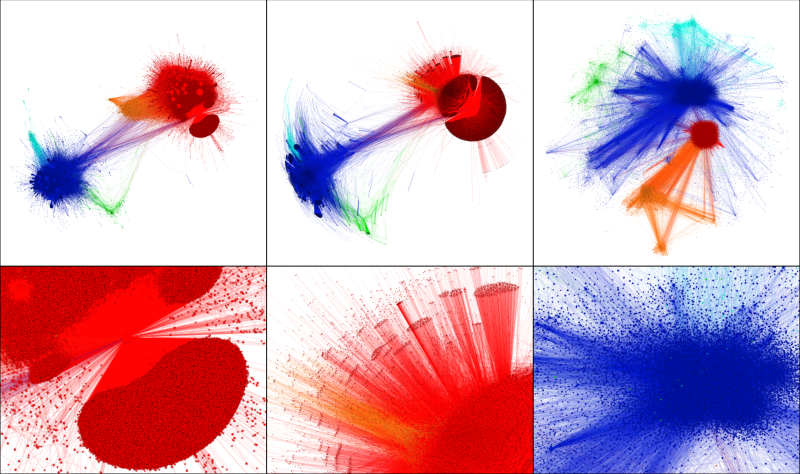
实验结果
研究问题
- RQ1共参与网络如何揭示在标准网络可视化中被遮蔽的大规模Twitter话语中隐藏的结构特征?
- RQ2在2020年美国大选话语中,桥梁节点在连接不同政治群体方面发挥什么作用?
- RQ3互关集群——即自我指涉的转发社区——如何形成,并如何对平台干预(如大规模账号删除)作出反应?
- RQ4卫星受众具有哪些特征?它们在选举虚假信息语境下如何与主流政治话语互动?
- RQ5与单一网络可视化相比,使用三角化共参与网络如何提升解释性理解?
主要发现
- 识别出互关集群为高度活跃、自我指涉的社区,其反复转发彼此及少量主流账号,表明存在协调性参与。
- 2021年Twitter实施的大规模账号删除显著扰乱了互关集群,特别是那些由传播虚假信息的平台精英主导的集群。
- 桥梁节点被发现是连接意识形态迥异受众的关键,通常在选举相关虚假信息传播中充当有影响力的中介。
- 卫星受众表现为松散连接的群体,选择性地参与主流话语,通常在未广泛融入社区的情况下放大特定叙事。
- 共参与网络显示,高转发量用户——尤其是平台精英——在传播选举欺诈虚假信息方面承担了不成比例的责任。
- 该方法成功减少了大规模网络中的视觉杂乱,使此前在标准网络可视化中被遮蔽的结构性现象得以清晰识别。
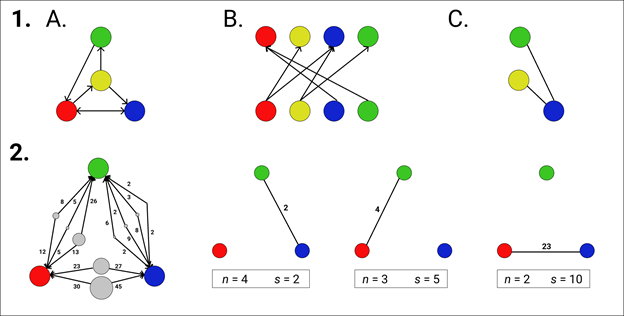
阅读本论文
在 Nubint 阅读器中打开原文,边读边就任意段落提问。
在 Nubint 中阅读本论文本解读由 AI 根据论文原文生成,引用前请核对原文。