
[论文解读] GAIA: Rethinking Action Quality Assessment for AI-Generated Videos
本文提出了GAIA,一个大规模、基于因果推理的视频-动作配对数据集,包含9,180个AI生成的视频-动作对及971,244个人工评分,可实现对文本到视频生成中动作质量的全面评估。研究发现,现有自动评估方法与人类判断的相关性较差,暴露出当前动作质量评估(AQA)基准和模型在AI生成视频中存在关键性差距。
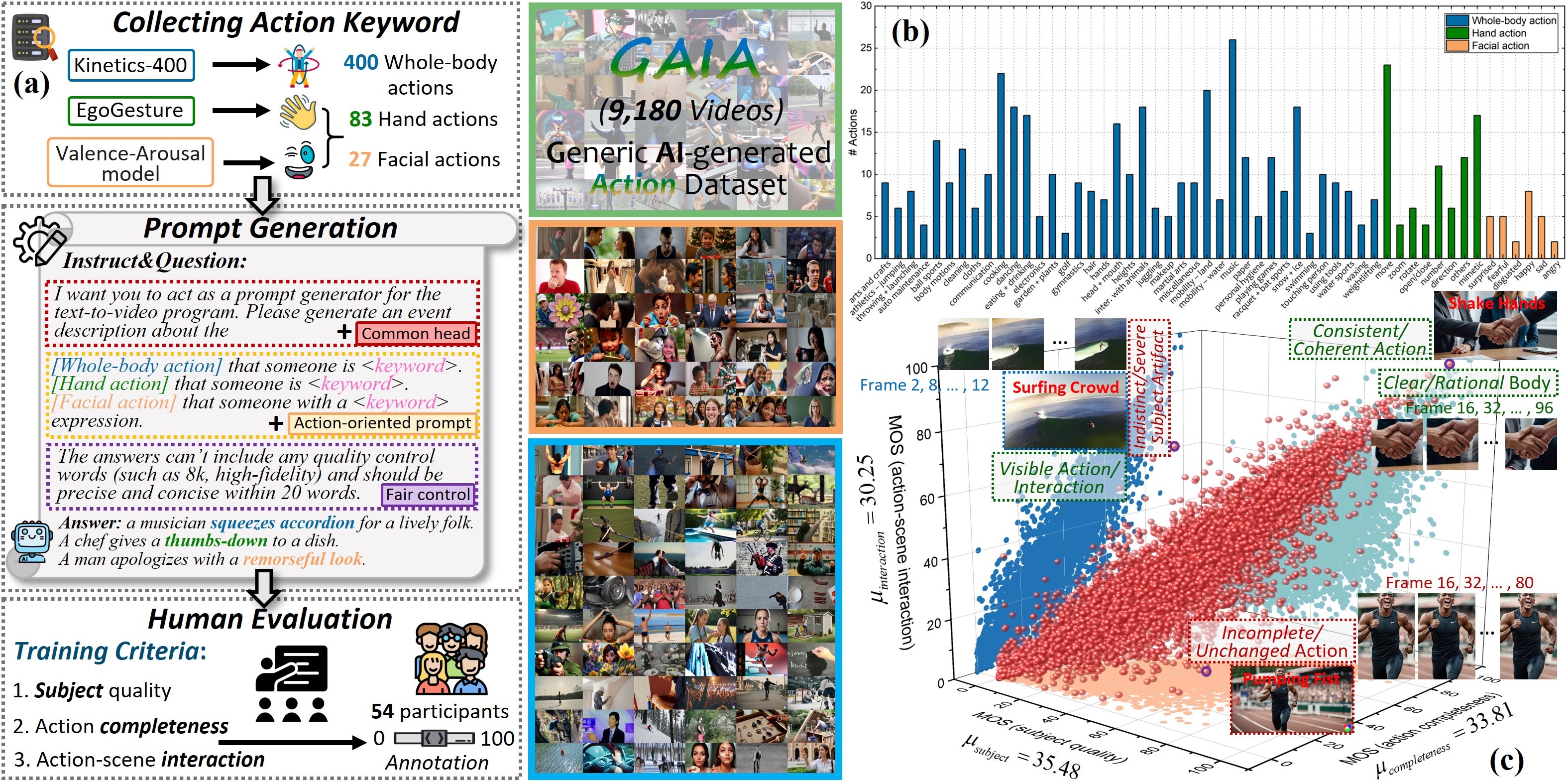
Assessing action quality is both imperative and challenging due to its significant impact on the quality of AI-generated videos, further complicated by the inherently ambiguous nature of actions within AI-generated video (AIGV). Current action quality assessment (AQA) algorithms predominantly focus on actions from real specific scenarios and are pre-trained with normative action features, thus rendering them inapplicable in AIGVs. To address these problems, we construct GAIA, a Generic AI-generated Action dataset, by conducting a large-scale subjective evaluation from a novel causal reasoning-based perspective, resulting in 971,244 ratings among 9,180 video-action pairs. Based on GAIA, we evaluate a suite of popular text-to-video (T2V) models on their ability to generate visually rational actions, revealing their pros and cons on different categories of actions. We also extend GAIA as a testbed to benchmark the AQA capacity of existing automatic evaluation methods. Results show that traditional AQA methods, action-related metrics in recent T2V benchmarks, and mainstream video quality methods perform poorly with an average SRCC of 0.454, 0.191, and 0.519, respectively, indicating a sizable gap between current models and human action perception patterns in AIGVs. Our findings underscore the significance of action quality as a unique perspective for studying AIGVs and can catalyze progress towards methods with enhanced capacities for AQA in AIGVs.
研究动机与目标
- 为评估AI生成视频(AIGVs)中的动作质量,解决现有基准在全面性、多样性及人工标注方面的不足。
- 探究当前最先进文本到视频(T2V)模型在多样化动作类别中生成视觉合理且物理上可信动作的能力。
- 评估现有自动动作质量评估(AQA)方法在AIGVs中与人类感知的相关性。
- 识别当前AQA度量指标和视频质量评估方法在捕捉人类对生成内容动作质量感知方面的局限性。
- 为未来开发针对AIGVs独特挑战的稳健、与人类对齐的AQA方法,建立新的基准。
提出的方法
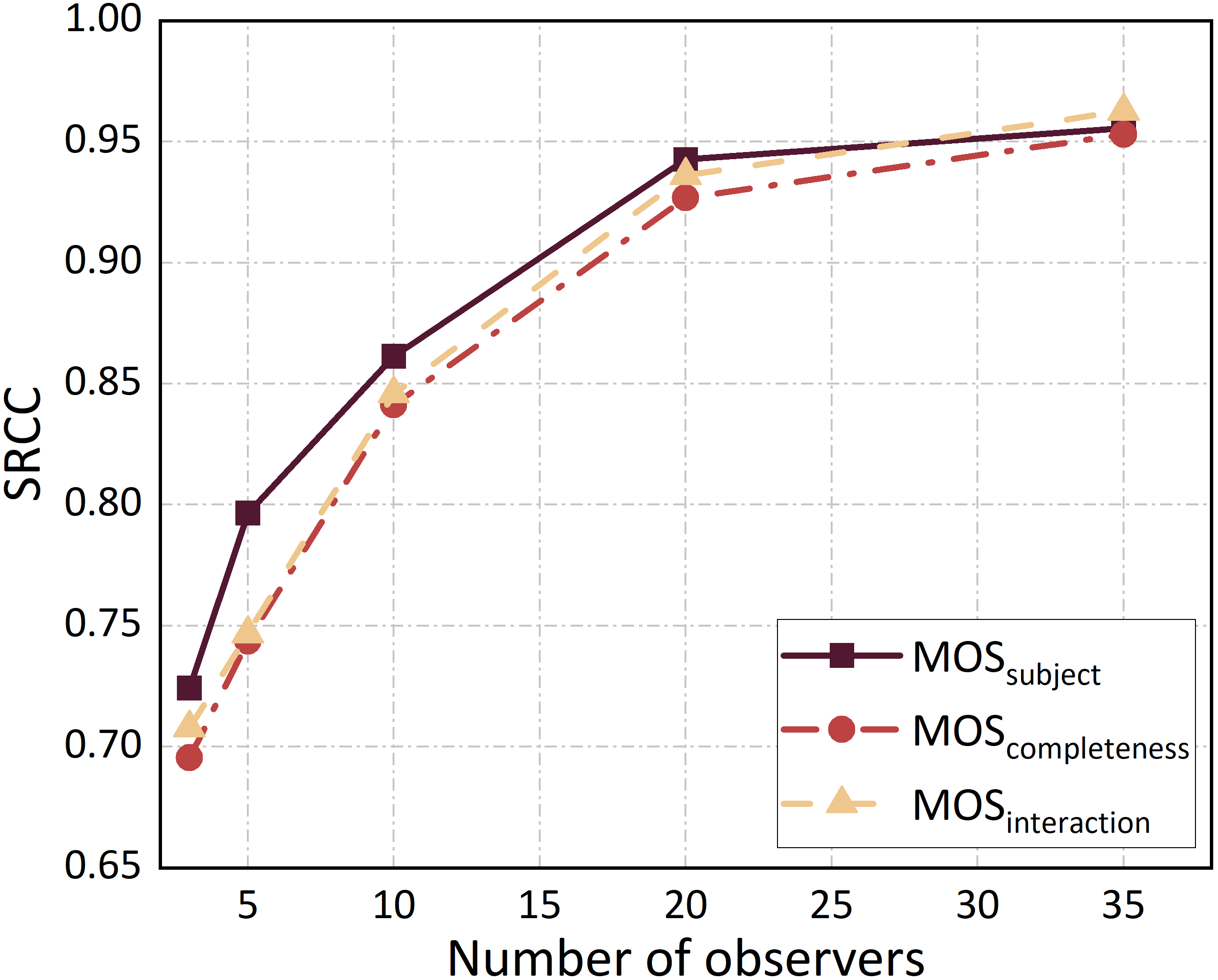
- GAIA通过一项大规模主观评估构建,涉及54名参与者,采用一种基于因果推理的创新框架,从三个维度评估动作质量:主体质量、动作完整性及动作与场景的互动性。
- 该数据集包含来自18种多样化T2V模型的9,180个AI生成视频片段,涵盖实验室级与商业平台,覆盖83种全身动作、27种手部动作和27种面部动作。
- 人工评分者提供了971,244次评分的平均意见分(MOS),支持对动作质量的细粒度、多维评估。
- 本研究将GAIA扩展为一个基准,用于评估12种现有的AQA与视频质量度量指标,并比较其与人类判断的相关性。
- 评估框架强调感知真实感、物理合理性及情境一致性,反映人类在动作感知中的认知推理过程。
- 该方法可系统分析T2V模型在不同动作类别中的优劣势,揭示其在运动、物体和身体一致性方面的模型特异性失败模式。
实验结果
研究问题
- RQ1当前文本到视频模型在多样化动作类别中生成视觉合理且物理上可信动作的能力如何?
- RQ2现有自动动作质量评估(AQA)方法在AI生成视频中与人类感知的相关性达到何种程度?
- RQ3T2V模型在生成动作时的主要失败模式是什么,特别是在身体关节运动、物体一致性及运动合理性方面?
- RQ4基于因果推理的多维人工评估框架如何提升AIGVs中动作质量评估的可靠性与粒度?
- RQ5GAIA能否作为稳健基准,用于识别并量化现有AQA与视频质量度量在生成视频场景中的局限性?
主要发现
- GAIA数据集包含9,180个AI生成的视频-动作对及971,244个人工评分,覆盖83种全身动作、27种手部动作和27种面部动作类别,支持对动作质量的细粒度评估。
- 现有AQA方法,包括在真实世界动作数据集上预训练的姿态相关与视觉相关模型,在AIGVs中与人类判断的相关性较差,表明存在显著性能差距。
- 当前T2V基准中与动作相关的度量指标以及主流视频质量评估(VQA)方法,与人类感知的相关性也较弱,凸显其在评估AIGV动作质量方面的不足。
- T2V模型在生成涉及复杂身体运动、物体交互及物理上不可能的运动(如异常肢体数量或不合理物体形状)时表现出系统性弱点。
- 研究表明,基于真实世界数据训练的模型无法泛化至扩散模型生成的AIGVs中常见的多样化且不稳定的伪影,凸显了针对特定领域进行AQA训练的必要性。
- GAIA提供了一个基础性基准,揭示了当前评估流程中的关键缺陷,并为开发更符合人类感知、基于因果推理的AQA方法铺平了道路,适用于生成视频领域。
阅读本论文
在 Nubint 阅读器中打开原文,边读边就任意段落提问。
在 Nubint 中阅读本论文本解读由 AI 根据论文原文生成,引用前请核对原文。