
[论文解读] Generalist Multimodal AI: A Review of Architectures, Challenges and Opportunities
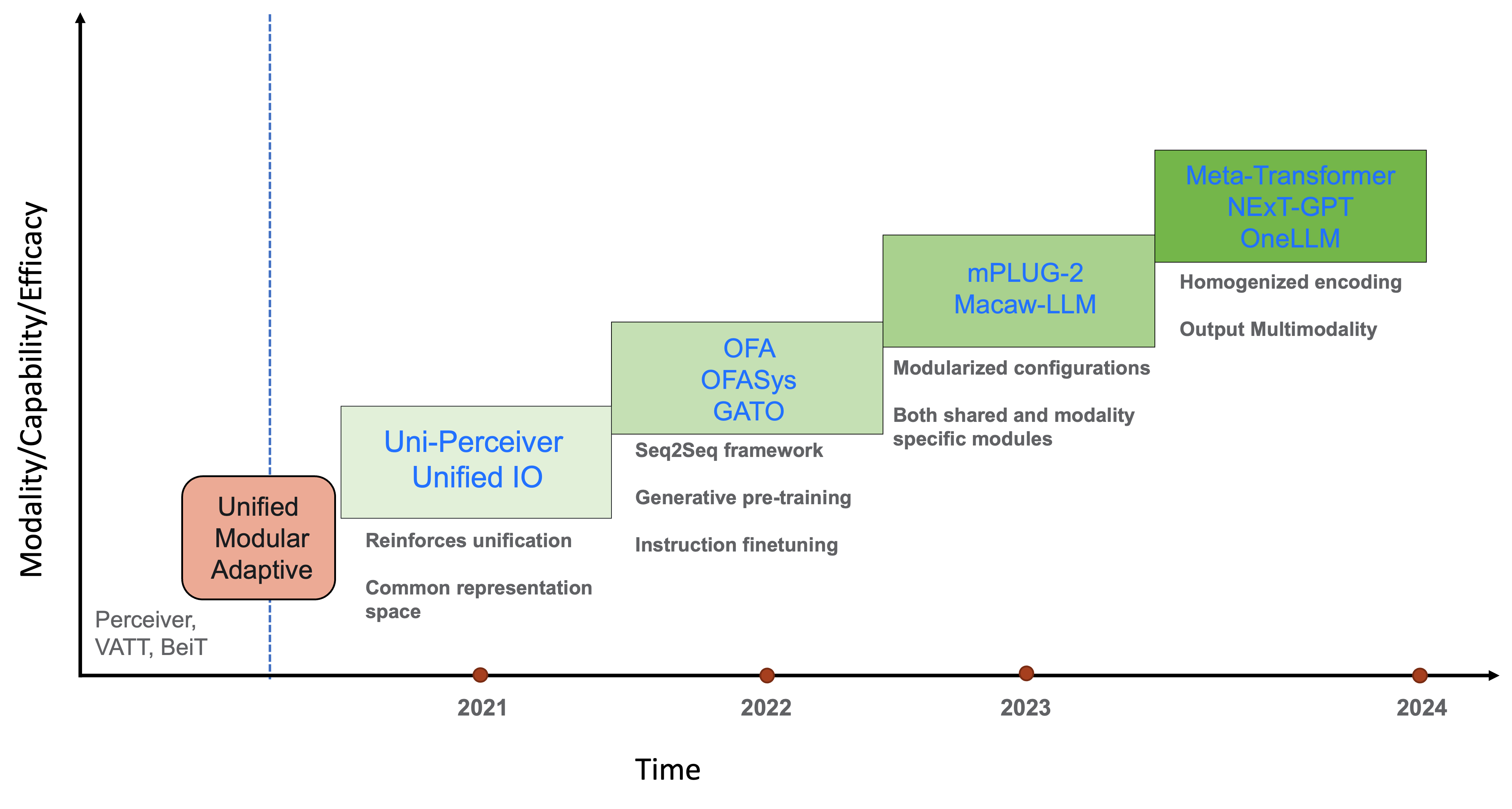
本文提出了一套新颖的分类体系——统一性、模块化与可适应性,以系统性地分析超越文本与视觉模态的通用多模态人工智能(GMMs)。论文回顾了近期的模型架构与训练策略,识别出关键挑战,如基准测试薄弱与扩展性限制,并勾勒出未来研究方向,旨在推动具备强大零样本能力与人类可解释性的多模态模型发展。
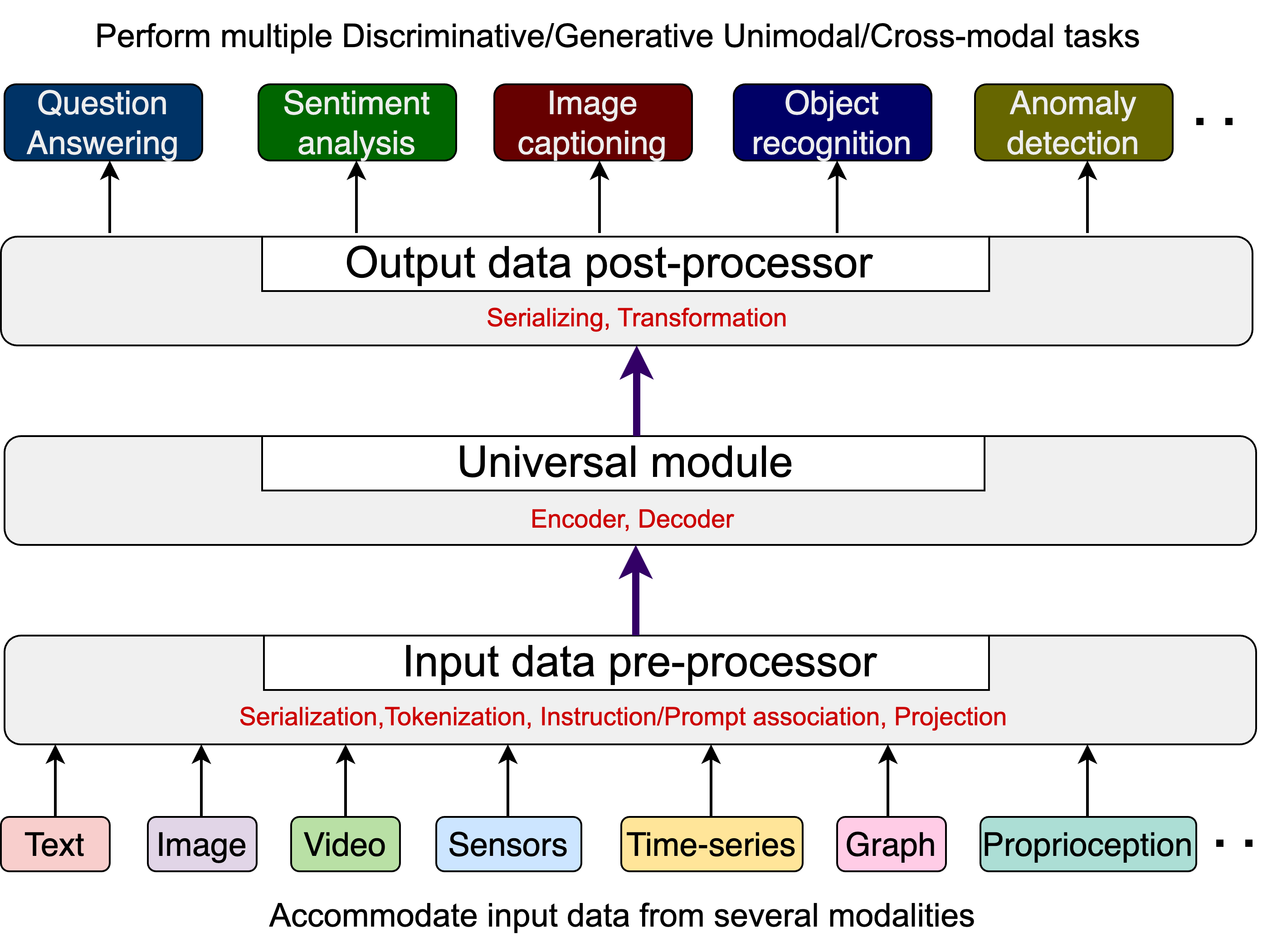
Multimodal models are expected to be a critical component to future advances in artificial intelligence. This field is starting to grow rapidly with a surge of new design elements motivated by the success of foundation models in natural language processing (NLP) and vision. It is widely hoped that further extending the foundation models to multiple modalities (e.g., text, image, video, sensor, time series, graph, etc.) will ultimately lead to generalist multimodal models, i.e. one model across different data modalities and tasks. However, there is little research that systematically analyzes recent multimodal models (particularly the ones that work beyond text and vision) with respect to the underling architecture proposed. Therefore, this work provides a fresh perspective on generalist multimodal models (GMMs) via a novel architecture and training configuration specific taxonomy. This includes factors such as Unifiability, Modularity, and Adaptability that are pertinent and essential to the wide adoption and application of GMMs. The review further highlights key challenges and prospects for the field and guide the researchers into the new advancements.
研究动机与目标
- 为解决现有对通用多模态模型(GMMs)在文本与视觉模态之外的系统性分析不足的问题。
- 识别并分类新兴GMMs中的关键架构与训练设计模式。
- 提出一个专为GMMs量身定制的新分类体系——统一性、模块化与可适应性,以指导未来研究。
- 突出关键挑战,如多模态基准测试薄弱、扩展效率低下以及零样本泛化能力有限。
- 勾勒新兴研究方向,包括检索增强生成、人-模型交互以及世界模型集成。
提出的方法
- 基于三个核心属性提出新分类体系:统一性(跨模态的统一表征学习)、模块化(灵活的组件复用)与可适应性(对零样本和少样本泛化的鲁棒性)。
- 通过所提分类体系分析近期GMMs,如GATO、OFA、META-TRANSFORMER与NEXT-GPT。
- 考察架构选择,包括统一编码器/解码器、交叉注意力机制以及模态特定的标记化策略。
- 评估训练配置,如多任务预训练(使用多样化数据流)与基于提示的微调以实现零样本迁移。
- 探索新兴框架如检索增强生成,即在生成前检索相关多模态输入。
- 考虑将GMMs作为世界模型集成于具身人工智能中,以支持机器人与仿真环境中的持续学习与策略生成。
实验结果
研究问题
- RQ1如何基于其架构与训练设计原则,对通用多模态模型进行系统性分类?
- RQ2在统一性、模块化与可适应性这些建筑属性中,哪些对GMMs的性能与泛化能力具有最显著影响?
- RQ3预训练过程中不同模态序列的排列如何影响下游任务表现与表征对齐?
- RQ4GMMs在多样化单模态与跨模态任务中,能在多大程度上实现高精度的零样本或少样本泛化?
- RQ5评估GMMs时面临的关键挑战是什么?如何改进基准测试以更真实地反映多模态复杂性?
主要发现
- 所提出的统一性、模块化与可适应性分类体系,有效捕捉了最先进通用多模态模型的核心设计原则。
- OFA、GATO与META-TRANSFORMER等GMMs在包括文本、图像、视频、传感器与时间序列在内的多种模态中,展现出强大的零样本泛化能力。
- 模块化架构支持对单模态与多模态任务的灵活组件组合,显著提升可重用性与可扩展性。
- 尽管已有进展,当前基准测试在评估多模态泛化能力方面仍显薄弱,尤其针对传感器与时间序列等非视觉模态。
- 新兴框架如检索增强生成与世界模型集成,在提升推理能力与长序列任务表现方面展现出巨大潜力。
- 人与GMMs的交互仍研究不足,尤其在信任建立、幻觉缓解以及通过注意力图与自然语言推理过程提升可解释性方面。
阅读本论文
在 Nubint 阅读器中打开原文,边读边就任意段落提问。
在 Nubint 中阅读本论文本解读由 AI 根据论文原文生成,引用前请核对原文。