
[论文解读] Generative AI for Medical Imaging: extending the MONAI Framework
本文介绍 MONAI Generative Models,这是一个开源平台,扩展 MONAI 用于在 2D/3D 模态下训练、评估和部署多种医学影像生成模型(扩散、变换器、GANs),包含预训练模型和模块化组件。
Recent advances in generative AI have brought incredible breakthroughs in several areas, including medical imaging. These generative models have tremendous potential not only to help safely share medical data via synthetic datasets but also to perform an array of diverse applications, such as anomaly detection, image-to-image translation, denoising, and MRI reconstruction. However, due to the complexity of these models, their implementation and reproducibility can be difficult. This complexity can hinder progress, act as a use barrier, and dissuade the comparison of new methods with existing works. In this study, we present MONAI Generative Models, a freely available open-source platform that allows researchers and developers to easily train, evaluate, and deploy generative models and related applications. Our platform reproduces state-of-art studies in a standardised way involving different architectures (such as diffusion models, autoregressive transformers, and GANs), and provides pre-trained models for the community. We have implemented these models in a generalisable fashion, illustrating that their results can be extended to 2D or 3D scenarios, including medical images with different modalities (like CT, MRI, and X-Ray data) and from different anatomical areas. Finally, we adopt a modular and extensible approach, ensuring long-term maintainability and the extension of current applications for future features.
研究动机与目标
- 促使使用生成式 AI 以促进隐私保护的数据共享和多样化的医学影像任务。
- 提供一个标准化、模块化的平台,用于在医学影像中训练、评估和部署生成模型。
- 展示跨模态和跨数据集的适用性(CT、MRI、X-ray;2D/3D)。
- 提供预训练模型和组件,以简化可重复性和与最先进方法的对比。
提出的方法
- 实现 DiffusionModelUNet,结合时间步条件和用于条件信息的空间变换器。
- 引入带 DDIMScheduler 和 PNDMScheduler 的 Scheduler 抽象,以及多种噪声配置(线性、缩放线性、余弦)。
- 利用 AutoencoderKL 和 VQVAE 支撑潜在空间生成的潜在扩散模型(Latent Diffusion Models)。
- 整合 ControlNets 与 PatchDiscriminator 变体(PatchDiscriminator、MultiScalePatchDiscriminator),用于条件化和对抗性训练。
- 提供自回归变换器及 Ordering 类,将高维数据 Adapt 为 1D 变换器。
- 整合类似 SPADE 的自适应归一化用于图像合成,并与对抗性组件结合。
- 包含损失函数(谱损失、基于补丁的对抗损失、感知损失)和 MONAI 预训练网络(2D RadImageNet、3D MedicalNet)。
- 支持评估指标(FID、MMD、MS-SSIM)以及通过 2.5D 方法实现的三维感知损失,以平衡计算量。
实验结果
研究问题
- RQ1MONAI Generative Models 是否能够在统一的 MONAI 框架内复现并扩展医学影像中的最先进生成方法(扩散、 transformers、GANs)?
- RQ2这些模型是否能够跨 2D/3D 医学数据以及多种模态(CT、MRI、X-ray)和解剖区域进行泛化?
- RQ3条件信号(文本提示、语义布局)如何影响生成图像的保真度及与参考的对齐?
- RQ4在该平台中,压缩模块(VQ-VAE、AutoencoderKL)与生成组件(扩散、变换器)的模块化与互换性如何?
- RQ5该平台能否支持下游任务,如异常检测、图像翻译和医学影像超分辨率?
主要发现
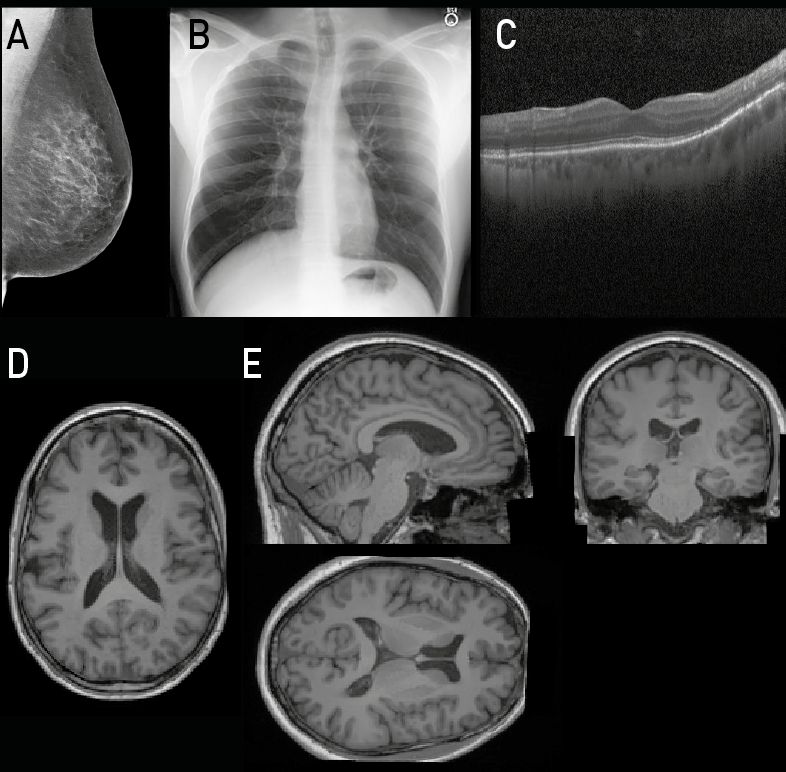
- 在多样数据集上训练的潜在扩散模型(MIMIC-CXR、CSAW-M、UK Biobank、retinal OCT)能够在 2D 和 3D 数据上产生高质量、多样化的样本。
- FID 得分在不同数据集上从低到中等(例如 3D UK Biobank brain MRI 为 0.0051;CSAW-M 为 1.9061),MS-SSIM 重建指示了忠实重建(例如 3D Brain MRI 为 0.9820)。
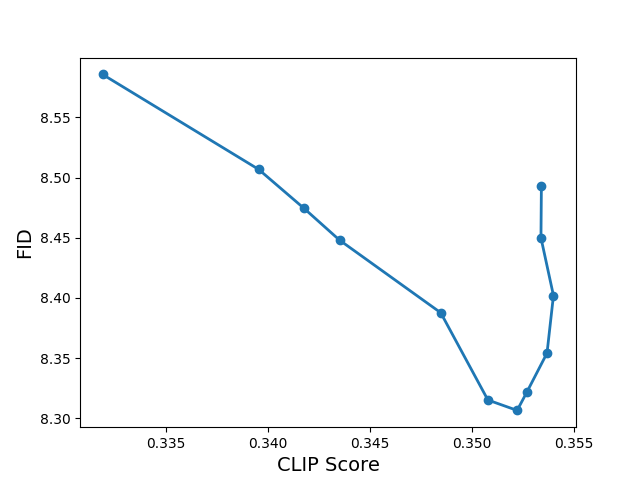
- 基于文本提示的条件采样实现了高 CLIP 对齐(BiomedCLIP)的同时保持可接受的 FID,显示可控生成。
- 模块化:VQ-VAE + Transformer 与 VQ-VAE + Diffusion Model 变体在 MIMIC-CXR 上显示有竞争力的 FID(9.1995 对 8.0457),表明潜在生成骨干的可互换性。
- 演示包括异常检测(在几个 Decathlon 数据集上 Transformer 基方法的 AUC 为 1.0)和图像翻译(FLAIR 转 T1 加权 MRI),具有高保真度指标(PSNR、MAE、MS-SSIM)。
- 通过级联扩散方法实现的图像超分辨率在 3D 数据上获得较强的保真度和多样性(FID 接近 0,PSNR 约 29.8,MS-SSIM 约 0.98)。
阅读本论文
在 Nubint 阅读器中打开原文,边读边就任意段落提问。
在 Nubint 中阅读本论文本解读由 AI 根据论文原文生成,引用前请核对原文。