
[论文解读] GPT-4 as an Agronomist Assistant? Answering Agriculture Exams Using Large Language Models
论文评估 GPT-4、GPT-3.5 和 Llama 模型在 CCA、Embrapa 与 AgriExams 数据集的农业问题上的表现,使用 RAG(检索增强生成)和集成精炼提升性能,其中 GPT-4 实现最高准确率,并具备通过作物学考试的潜力。
Large language models (LLMs) have demonstrated remarkable capabilities in natural language understanding across various domains, including healthcare and finance. For some tasks, LLMs achieve similar or better performance than trained human beings, therefore it is reasonable to employ human exams (e.g., certification tests) to assess the performance of LLMs. We present a comprehensive evaluation of popular LLMs, such as Llama 2 and GPT, on their ability to answer agriculture-related questions. In our evaluation, we also employ RAG (Retrieval-Augmented Generation) and ER (Ensemble Refinement) techniques, which combine information retrieval, generation capabilities, and prompting strategies to improve the LLMs' performance. To demonstrate the capabilities of LLMs, we selected agriculture exams and benchmark datasets from three of the largest agriculture producer countries: Brazil, India, and the USA. Our analysis highlights GPT-4's ability to achieve a passing score on exams to earn credits for renewing agronomist certifications, answering 93% of the questions correctly and outperforming earlier general-purpose models, which achieved 88% accuracy. On one of our experiments, GPT-4 obtained the highest performance when compared to human subjects. This performance suggests that GPT-4 could potentially pass on major graduate education admission tests or even earn credits for renewing agronomy certificates. We also explore the models' capacity to address general agriculture-related questions and generate crop management guidelines for Brazilian and Indian farmers, utilizing robust datasets from the Brazilian Agency of Agriculture (Embrapa) and graduate program exams from India. The results suggest that GPT-4, ER, and RAG can contribute meaningfully to agricultural education, assessment, and crop management practice, offering valuable insights to farmers and agricultural professionals.
研究动机与目标
- 评估大型语言模型在主要生产国(美国、巴西、印度)的农业相关问题的解答能力。
- 研究检索增强生成(RAG)和集成精炼(ER)对模型性能的影响。
- 探讨 GPT-4 通过农业学认证风格考试并提供作物管理建议的潜力。
提出的方法
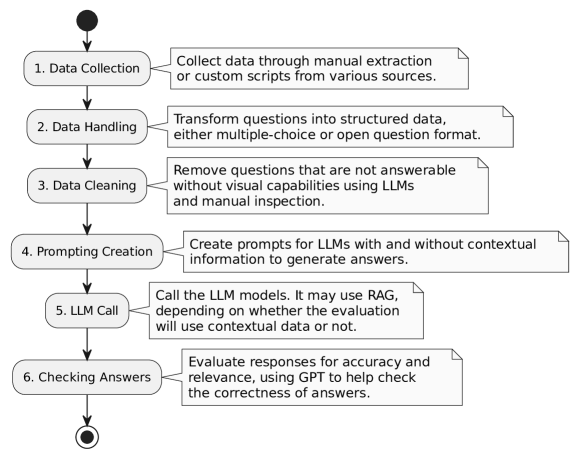
- 收集并整理来自 CCA、Embrapa 与 AgriExams 数据集的领域特定问题。
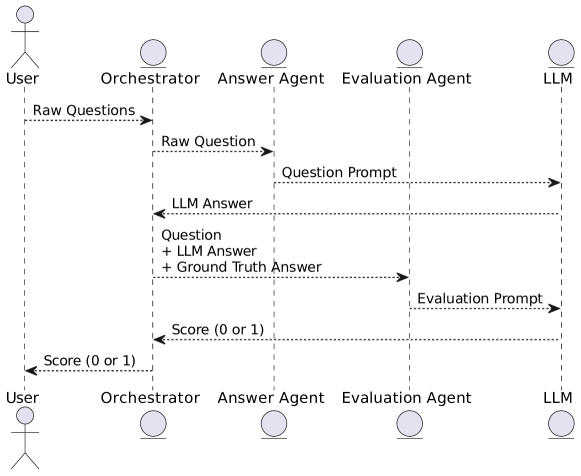
- 应用 prompts 工程,通过上下文提供与由编排者协协调的两个代理(回答、评估)的设置。
- 使用 RAG 与 ER 技术提升答案,USA/India 数据集的上下文来自 Llama Index。
- 使用专门的评估提示和评分机制将答案与真实答案对比。
- 比较多种模型(Llama2-13B、Llama2-70B、GPT-3.5、GPT-4)在有无 RAG/ER/前文的情景下的表现。
- 分析准确性提升与计算成本之间的权衡。
实验结果
研究问题
- RQ1GPT-4、GPT-3.5 与 Llama 模型在来自多样数据集(CCA、Embrapa、AgriExams)的农业相关问题上的回答能力如何?
- RQ2检索(RAG)与集成精炼(ER)对农业问答任务中模型准确性的影响是什么?
- RQ3LLM 是否能够通过农业学认证风格考试并提供可执行的作物管理指南?
- RQ4上下文提供(前置文本、Llama Index)如何影响模型在领域特定农业问题上的表现?
主要发现
- GPT-4 在所测试的模型中,在基于视频和文本的农业问题上达到最高基线准确率。
- 前置文本和 ER 提高 GPT-4 在 CCA 文本问题上的表现(在某些情景下从 79% 提升到 84%)。
- RAG 在多项选择题 CCA 问题上显著提升 GPT-3.5 和 GPT-4 的表现,GPT-4 在某些设置下达到最高 97%。
- ER 在文本问题上为 GPT-4 和 GPT-3.5 带来提升,尽管提升因模型和情境而异。
- 在抽样的多项选择题中,结合 RAG 和 ER 取得最强表现(GPT-4 在某情景下 97%)。
- GPT-4 的表现有时接近或超越某些数据集上的人类表现,表明在考试和农业认证场景中的潜力。
阅读本论文
在 Nubint 阅读器中打开原文,边读边就任意段落提问。
在 Nubint 中阅读本论文本解读由 AI 根据论文原文生成,引用前请核对原文。