
[论文解读] Grand Challenge On Detecting Cheapfakes
本文提出了一项大型挑战,聚焦于检测上下文无关(OOC)的廉价伪造内容——即对真实图像进行虚假或矛盾描述的图文配对——使用增强版COSMOS数据集。该挑战提出两项任务:检测图文三元组中的矛盾(OOC 对 NOOC)以及识别单个虚假的标题,通过公开测试集和隐藏测试集进行评估,旨在通过自动化检测工具支持事实核查人员。
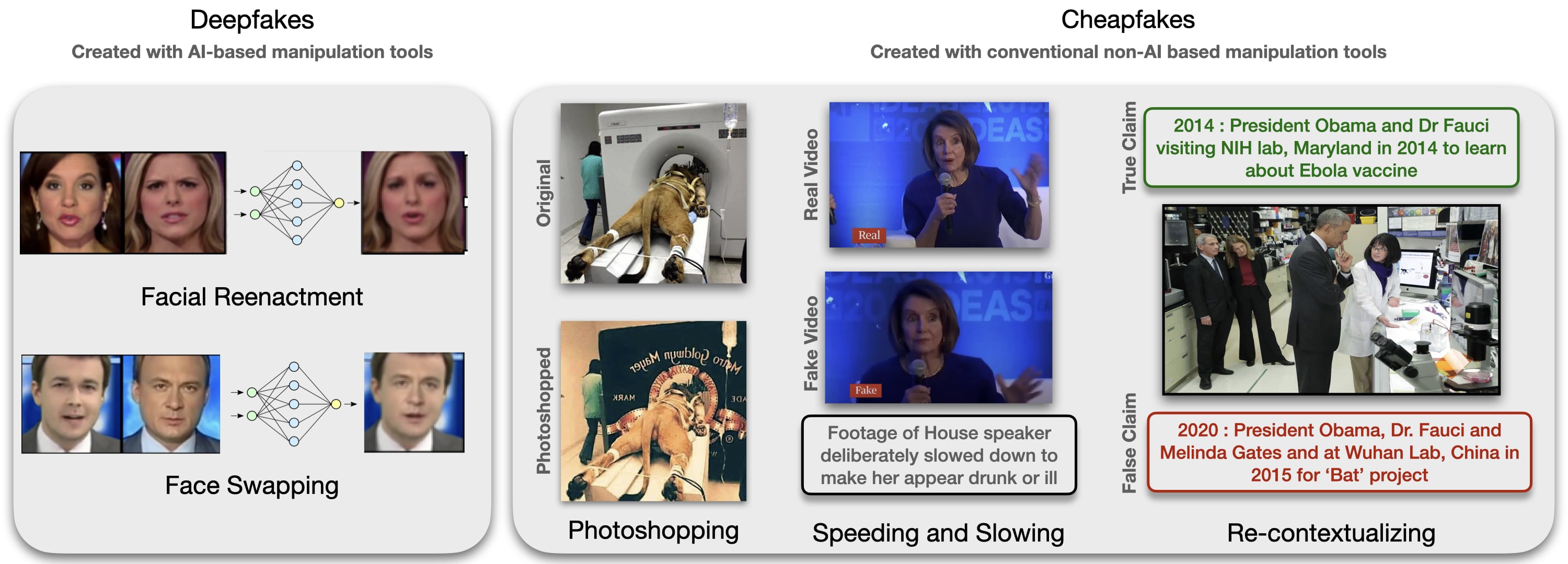
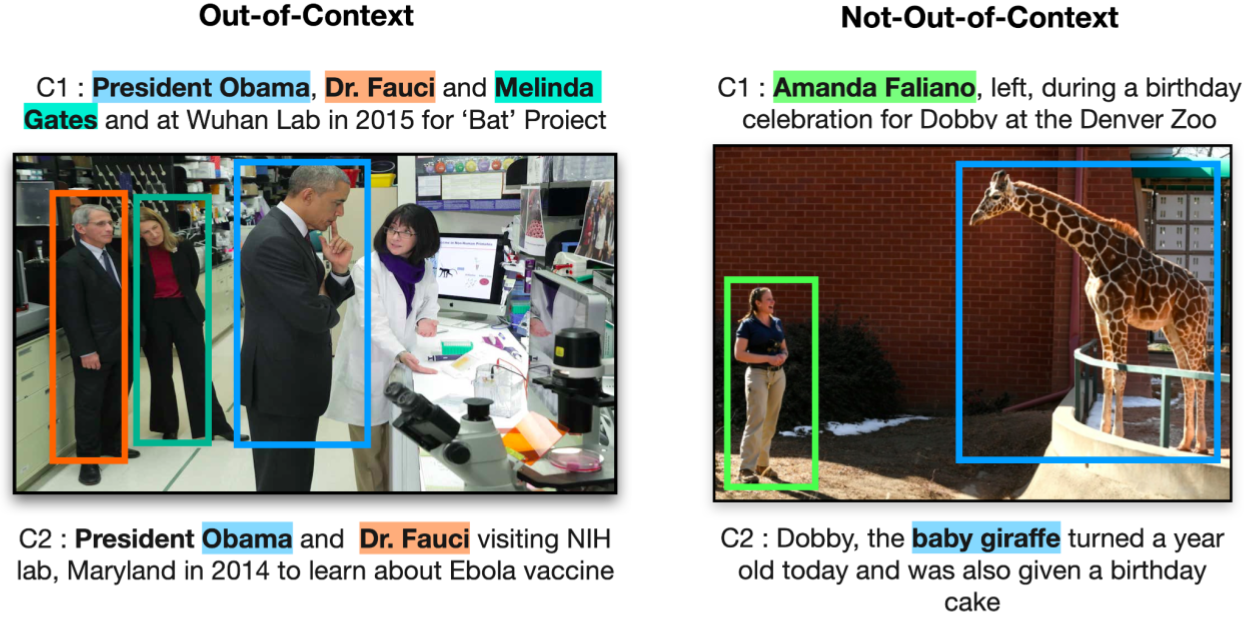
Cheapfake is a recently coined term that encompasses non-AI ("cheap") manipulations of multimedia content. Cheapfakes are known to be more prevalent than deepfakes. Cheapfake media can be created using editing software for image/video manipulations, or even without using any software, by simply altering the context of an image/video by sharing the media alongside misleading claims. This alteration of context is referred to as out-of-context (OOC) misuse of media. OOC media is much harder to detect than fake media, since the images and videos are not tampered. In this challenge, we focus on detecting OOC images, and more specifically the misuse of real photographs with conflicting image captions in news items. The aim of this challenge is to develop and benchmark models that can be used to detect whether given samples (news image and associated captions) are OOC, based on the recently compiled COSMOS dataset.
研究动机与目标
- 应对廉价伪造内容日益增长的威胁——即非AI生成的媒体篡改,如重新语境化的图像——这些内容比深度伪造更普遍但研究较少。
- 聚焦于真实图像的上下文无关(OOC)滥用,即真实照片被配以虚假或无关的标题以误导受众。
- 开发自动化模型以检测新闻媒体中的OOC滥用,通过识别矛盾的图文对来支持事实核查人员。
- 为检测矛盾三元组(图像,标题1,标题2)以及孤立的虚假标题提供基准测试。
- 通过公开训练/验证/测试集和隐藏测试集,维持可持续、可演进的挑战框架。
提出的方法
- 使用增强版COSMOS数据集,其中包含真实世界新闻帖子中的图像及两个相关标题。
- 对于任务1,若两个标题尽管指向同一张图像却描述了冲突事件,则将图文三元组分类为OOC(1);若语义一致,则分类为NOOC(0)。
- 对于任务2,将单个图文对分类为虚假(1)或真实(0),且不依赖于图像来源的先验知识。
- 参赛者需以Docker容器、标准Python项目(含requirements.txt)或Jupyter笔记本形式提交模型,且可配置输入路径以适配公开和隐藏测试集。
- 评估在未公开发布的隐藏测试集上进行,以确保对泛化性能的公平基准测试。
- 通过标准化的提交格式和版本控制的软件依赖,支持可复现性和兼容性。
实验结果
研究问题
- RQ1模型能否有效检测真实图像的上下文无关滥用,即同一图像关联的两个标题描述了冲突事件?
- RQ2当缺乏其他标题用于对比时,模型在识别单个虚假标题方面的表现如何?
- RQ3自动化系统在未见的OOC滥用案例中,其泛化能力在多大程度上超越公开训练和验证集?
- RQ4不同架构和方法在检测图文之间细微语义不一致方面的表现如何比较?
- RQ5所提出的挑战框架能否支持长期、可持续的廉价伪造检测方法基准测试,以应对不断演变的媒体篡改趋势?
主要发现
- 该挑战使用增强版COSMOS数据集,包含用于训练和验证的公开数据集,以及用于最终评估的隐藏测试集。
- 参赛者在公开测试集和隐藏测试集上均接受评估,隐藏测试集上的表现决定最终排名。
- 公开测试集允许参赛者在最终提交前验证其模型,确保稳健性和可复现性。
- 该挑战此前已在ACM MMSys 2021和ACM ACM-MM 2022举办,已建立OOC滥用检测的基准测试记录。
- 在无搜索引擎辅助的情况下,人工评估者的虚假标题检测准确率仅约65%,凸显了该任务的难度。
- 挑战支持多种提交格式(Docker、Python、Jupyter),并采用严格的依赖管理,以确保可复现性和兼容性。
阅读本论文
在 Nubint 阅读器中打开原文,边读边就任意段落提问。
在 Nubint 中阅读本论文本解读由 AI 根据论文原文生成,引用前请核对原文。