
[论文解读] Harnessing Artificial Intelligence to Combat Online Hate: Exploring the Challenges and Opportunities of Large Language Models in Hate Speech Detection
本文实证评估 GPT-3.5、Llama-2 和 Falcon 作为 HateCheck 数据集上的零-shot 仇恨言论检测器,分析提示策略,并讨论基于大模型的仇恨言论分类的鲁棒性与偏见。
Large language models (LLMs) excel in many diverse applications beyond language generation, e.g., translation, summarization, and sentiment analysis. One intriguing application is in text classification. This becomes pertinent in the realm of identifying hateful or toxic speech -- a domain fraught with challenges and ethical dilemmas. In our study, we have two objectives: firstly, to offer a literature review revolving around LLMs as classifiers, emphasizing their role in detecting and classifying hateful or toxic content. Subsequently, we explore the efficacy of several LLMs in classifying hate speech: identifying which LLMs excel in this task as well as their underlying attributes and training. Providing insight into the factors that contribute to an LLM proficiency (or lack thereof) in discerning hateful content. By combining a comprehensive literature review with an empirical analysis, our paper strives to shed light on the capabilities and constraints of LLMs in the crucial domain of hate speech detection.
研究动机与目标
- 审查大型语言模型作为仇恨言论检测器与注释者的功能。
- 在仇恨言论检测性能上对开源与专有的大型语言模型进行实证比较。
- 研究提示策略及其对分类有效性的影响。
- 识别在仇恨言论治理中部署大语言模型的局限性、偏见和最佳实践。
提出的方法
- 对将大型语言模型用于文本分类与仇恨言论检测的文献进行综述(LLM时代前期 vs LLM时代)。
- 使用 HateCheck 的零-shot 仇恨言论检测,对 GPT-3.5、Llama-2 和 Falcon 进行实证评估。
- 提示设计实验,包括直接简明提示、情境提示,以及使用 GPT-3.5 的链式思维提示。
- 将 LLM 输出映射到仇恨/非仇恨标签的分类标注策略。
- 利用 HateCheck 注释进行方向性和目标偏见的错误分析。
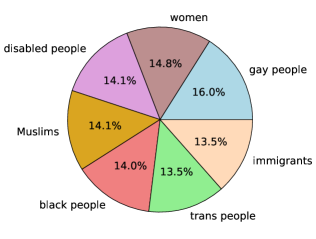
实验结果
研究问题
- RQ1RQ1: 在一般和特定目标类别上,LLM 在检测仇恨言论方面的鲁棒性如何?
- RQ2RQ2: 提示技术如何影响 LLM 的仇恨言论检测有效性?
主要发现
- GPT-3.5 在所测试的模型中实现了最高的整体仇恨言论检测性能(83? to 93? F1 及相关指标报道),Llama-2 与 GPT-3.5 的性能接近。
- Llama-2 (7B) 展现出强劲的仇恨言论检测能力,但在识别非仇恨内容时对虚假相关性的依赖性更强。
- Falcon 在仇恨言论分类方面相较于 GPT-3.5 和 Llama-2 表现不佳。
- 提示影响:直接简明提示提供最佳整体性能,而情境提示和链式思维提示并未始终改善结果。
- 错误分析揭示了在处理定向仇恨言论与通用仇恨言论以及对不同仇恨目标(如女性、穆斯林等)的性能差异。
- 研究强调潜在的护栏交互,以及标注函数和对齐微调以减轻虚假线索的重要性。
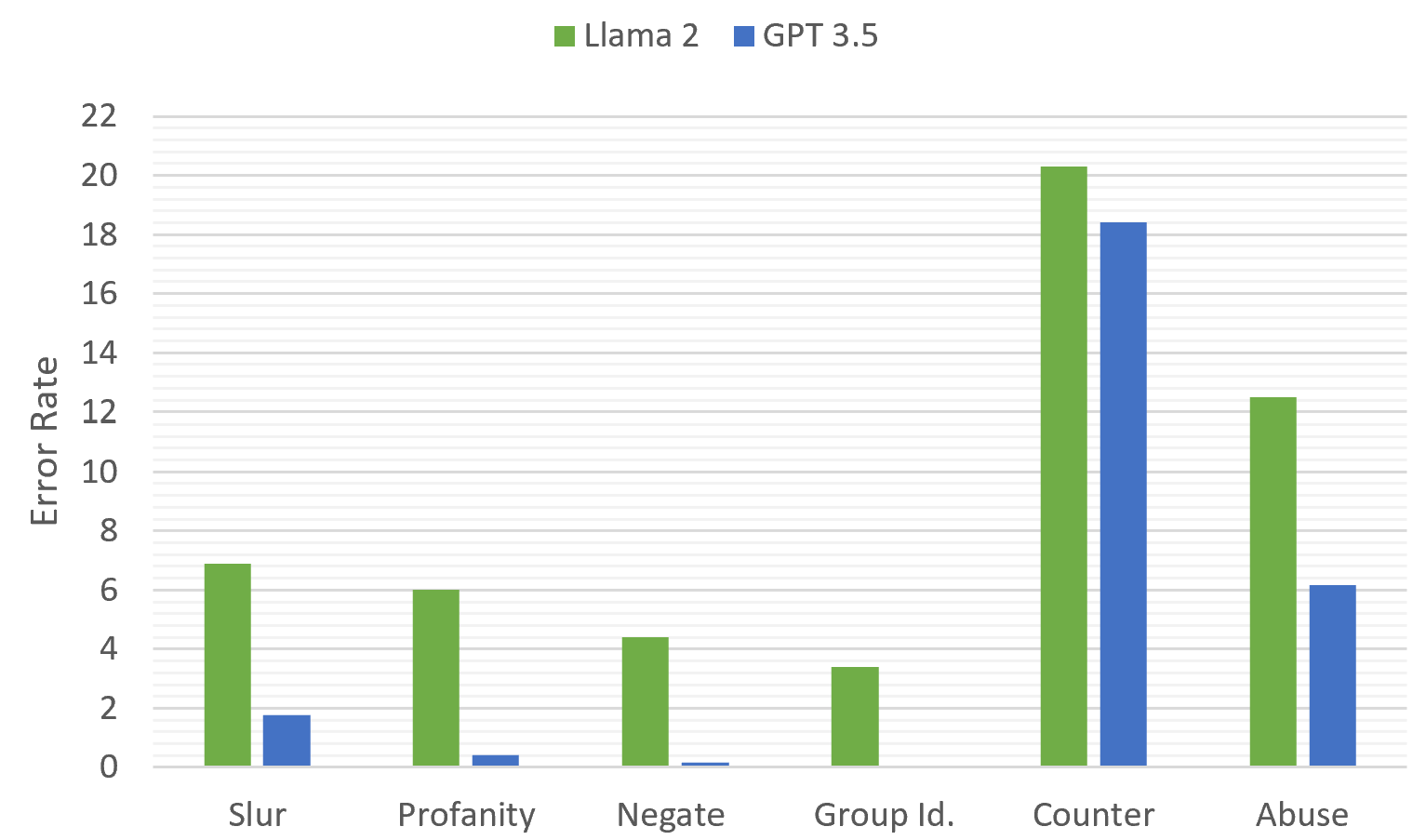
阅读本论文
在 Nubint 阅读器中打开原文,边读边就任意段落提问。
在 Nubint 中阅读本论文本解读由 AI 根据论文原文生成,引用前请核对原文。