
[论文解读] HEAL-ViT: Vision Transformers on a spherical mesh for medium-range weather forecasting
HEAL-ViT 提出了一种新颖的架构,将视觉变换器(ViT)应用于球形网格以实现中长期天气预报,结合了图模型的空间均匀性与 ViT 的高效注意力机制。其在关键指标上优于 ECMWF IFS,减少了偏差累积和模糊现象,同时保持更低的计算开销,适合实际运行。
In recent years, a variety of ML architectures and techniques have seen success in producing skillful medium range weather forecasts. In particular, Vision Transformer (ViT)-based models (e.g. Pangu-Weather, FuXi) have shown strong performance, working nearly "out-of-the-box" by treating weather data as a multi-channel image on a rectilinear grid. While a rectilinear grid is appropriate for 2D images, weather data is inherently spherical and thus heavily distorted at the poles on a rectilinear grid, leading to disproportionate compute being used to model data near the poles. Graph-based methods (e.g. GraphCast) do not suffer from this problem, as they map the longitude-latitude grid to a spherical mesh, but are generally more memory intensive and tend to need more compute resources for training and inference. While spatially homogeneous, the spherical mesh does not lend itself readily to be modeled by ViT-based models that implicitly rely on the rectilinear grid structure. We present HEAL-ViT, a novel architecture that uses ViT models on a spherical mesh, thus benefiting from both the spatial homogeneity enjoyed by graph-based models and efficient attention-based mechanisms exploited by transformers. HEAL-ViT produces weather forecasts that outperform the ECMWF IFS on key metrics, and demonstrate better bias accumulation and blurring than other ML weather prediction models. Further, the lowered compute footprint of HEAL-ViT makes it attractive for operational use as well, where other models in addition to a 6-hourly prediction model may be needed to produce the full set of operational forecasts required.
研究动机与目标
- 解决标准视觉变换器在天气建模中使用矩形网格时固有的空间非均匀性与极地失真问题。
- 结合球形网格表示的优势——空间均匀性——与视觉变换器的长程注意力能力。
- 相比图模型(如 GraphCast)降低计算与内存开销,实现实际运行部署。
- 通过减少偏差累积与模糊,提升预报质量,尤其在小尺度大气特征方面。
- 使标准 ViT 架构可应用于球形网格,便于与计算机视觉领域的进展集成。
提出的方法
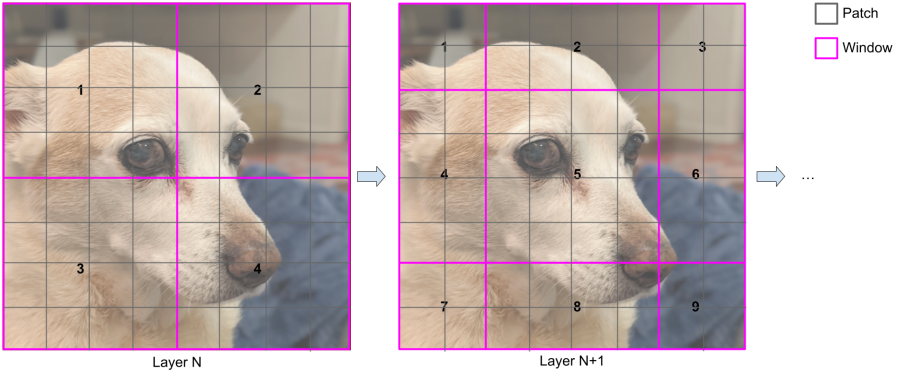
- 将 SWIN 变压器架构适配至 HEALPix 球形网格,而非矩形网格运行。
- 使用图编码器将经度-纬度网格数据映射至具有均匀节点分布的球形二十面体网格。
- 在球形网格上应用标准视觉变换器处理器,高效建模大气长程遥相关。
- 采用图解码器将处理后的网格映射回原始经度-纬度预报网格。
- 引入网格到网格的注意力机制,在编码与解码过程中保持空间结构。
- 利用 HEALPix 网格的规则环状结构,支持局部注意力与上下文窗口机制。
实验结果
研究问题
- RQ1视觉变换器能否有效应用于球形网格,以改善中长期天气预报?
- RQ2与基于矩形网格的 ViT 模型相比,使用空间均匀的球形网格是否能减少偏差累积与模糊?
- RQ3在球形网格上运行时,能否保持 ViT 模型的计算效率,实现实际部署?
- RQ4在 RMSE、偏差与谱能谱分布方面,HEAL-ViT 与 SOTA 模型(如 ECMWF IFS 和 GraphCast)相比表现如何?
- RQ5编码器与网格结构的选择在多大程度上影响预报质量与谱保真度?
主要发现
- HEAL-ViT 在关键预报质量指标上优于 ECMWF IFS 模型,包括多种大气变量的 RMSE 降低。
- 与其它机器学习天气预报模型相比,HEAL-ViT 显著减少了随时间累积的偏差。
- 模型生成的预报模糊程度更低,表现为更小尺度下的更高经向能量谱——尤其在 WS10 和 Z500 上表现明显,表明对小尺度大气特征的保留更佳。
- HEAL-ViT 在不同预报时效下保持相对恒定的能量谱,与 ERA5-IFS 基线相似,表明预报动力学稳定。
- 该模型的内存与计算开销低于图模型(如 GraphCast),适合需要并行运行多个预报的运行环境。
- 编码器采用球形网格减少了补丁式编码器(如 FuXi)中常见的谱峰,表明由网格到网格离散化带来的伪影更少。

阅读本论文
在 Nubint 阅读器中打开原文,边读边就任意段落提问。
在 Nubint 中阅读本论文本解读由 AI 根据论文原文生成,引用前请核对原文。