
[论文解读] How Interpretable are Reasoning Explanations from Prompting Large Language Models?
本文评估通过提示大型语言模型获得的推理链的可解释性,覆盖忠实性、鲁棒性和实用性,并引入 SEA-CoT 以提高解释与上下文及答案的一致性。
Prompt Engineering has garnered significant attention for enhancing the performance of large language models across a multitude of tasks. Techniques such as the Chain-of-Thought not only bolster task performance but also delineate a clear trajectory of reasoning steps, offering a tangible form of explanation for the audience. Prior works on interpretability assess the reasoning chains yielded by Chain-of-Thought solely along a singular axis, namely faithfulness. We present a comprehensive and multifaceted evaluation of interpretability, examining not only faithfulness but also robustness and utility across multiple commonsense reasoning benchmarks. Likewise, our investigation is not confined to a single prompting technique; it expansively covers a multitude of prevalent prompting techniques employed in large language models, thereby ensuring a wide-ranging and exhaustive evaluation. In addition, we introduce a simple interpretability alignment technique, termed Self-Entailment-Alignment Chain-of-thought, that yields more than 70\% improvements across multiple dimensions of interpretability. Code is available at https://github.com/SenticNet/CoT_interpretability
研究动机与目标
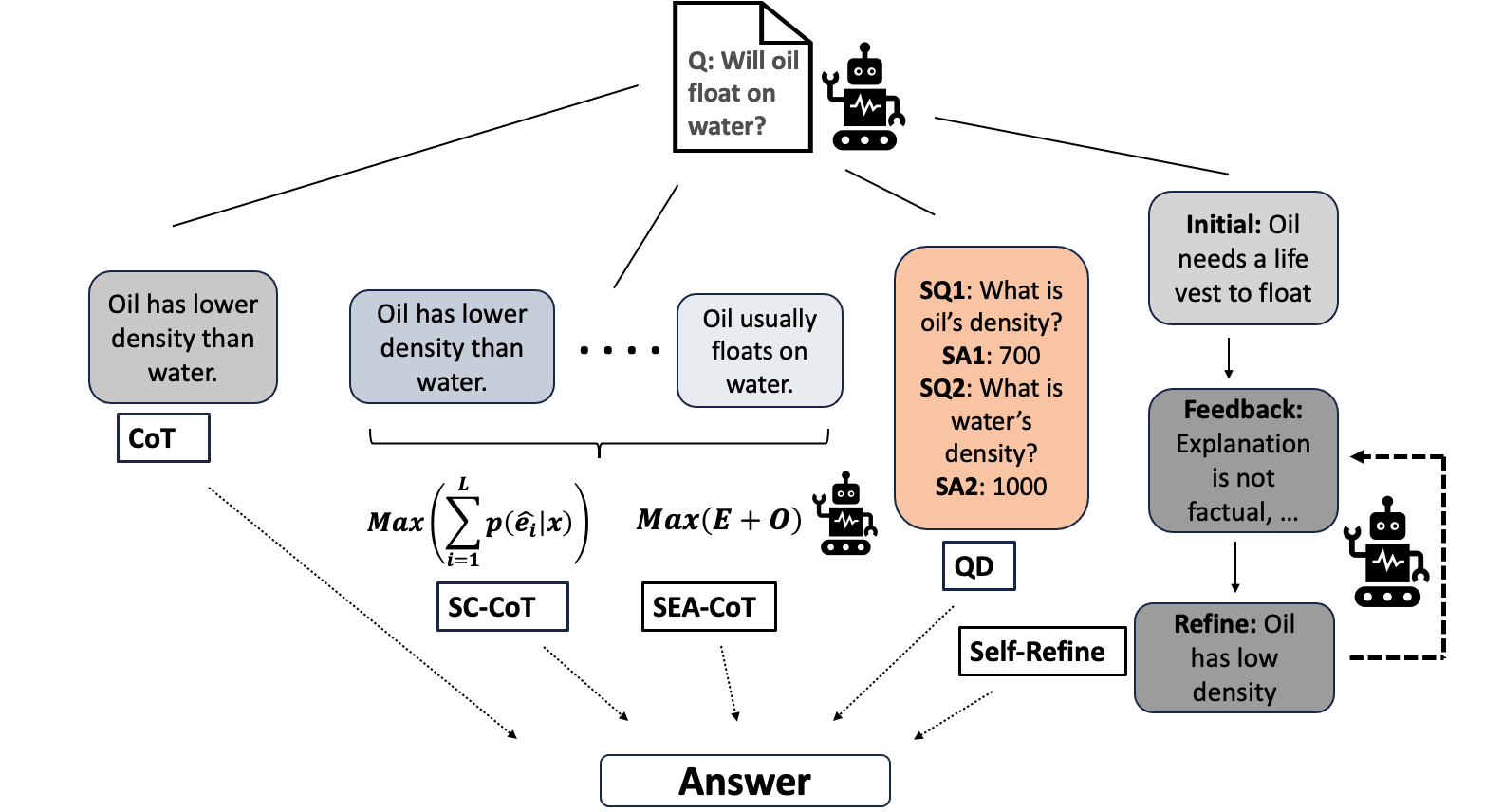
- 评估来自多种提示技术(Chain-of-Thought,SC-CoT,SEA-CoT,QD,SR)的推理链的可解释性。
- 在常识推理基准上评估三大可解释性维度:忠实性、鲁棒性和实用性。
- 提出 SEA-CoT 以提升解释与上下文的对齐和可解释性。
提出的方法
- 审查用于推理链的提示技术(CoT、SC-CoT、QD、SR)。
- 提出 SEA-CoT:通过 S_T = S_e + S_o 使用蕴涵 S_e 和重叠 S_o 对多种解释进行排序。
- 使用少-shot 的NLI提示来估计解释与上下文之间的蕴涵关系。
- 通过反事实和错误来评估忠实性,通过改写来评估鲁棒性,通过可仿真性(LAS)来评估实用性。
- 使用70B Llama-2 模型(GPTQ 量化)对 CSQA、OBQA、StrategyQA 进行扰动测试。
实验结果
研究问题
- RQ1这些推理解释相对于模型实际决策过程的忠实程度如何?
- RQ2对改写和引入的错误,这些解释有多鲁棒?
- RQ3解释是否提高下游学习的实用性(可仿真性)?
- RQ4SEA-CoT 是否在多个数据集和提示变体上提升可解释性?
- RQ5模型规模对可解释性特征有何影响?
主要发现
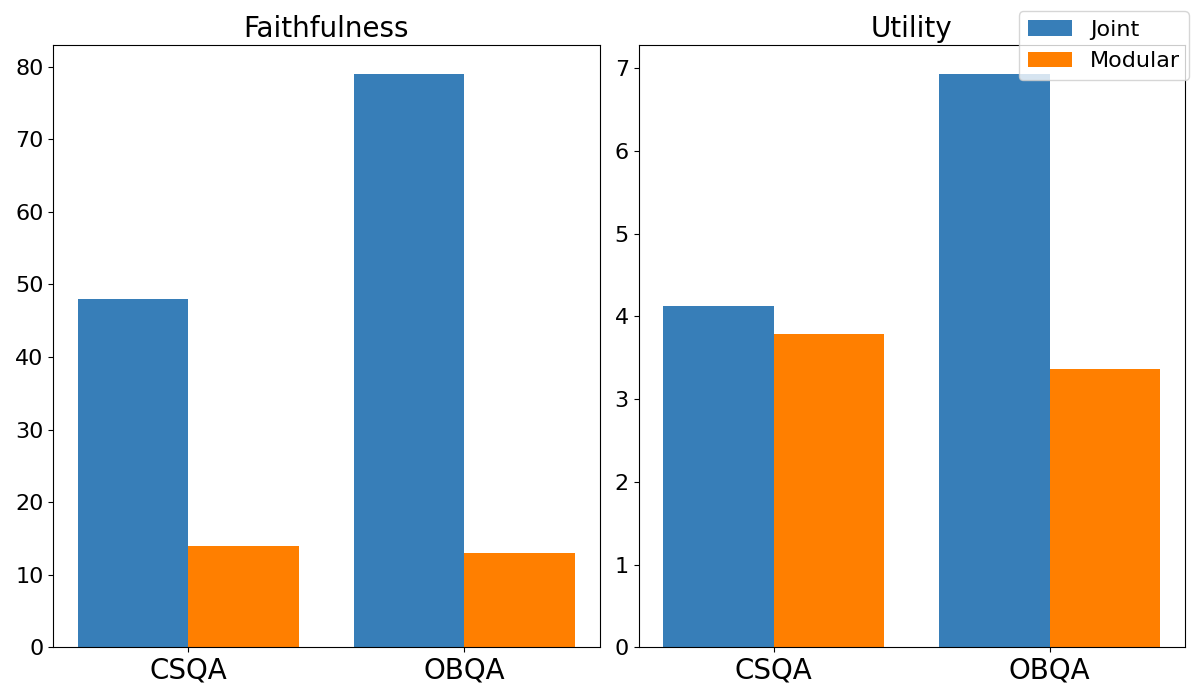
- SEA-CoT 在常识问答、OpenBookQA、StrategyQA 的鲁棒性、忠实性和实用性综合得分最高。
- SEA-CoT 在 OBQA 上获得显著更大提升(相对改进超过 75% 相对于多基线)。
- 相比 SC-CoT,SEA-CoT 在不牺牲任务表现的前提下持续提升可解释性。
- 逐项消融显示同时使用蕴涵和重叠(O&E)在选择解释时优于单独使用任一。
- 较大模型(70B)通常提高可解释性分数,但 SEA-CoT 也能使较小模型(如 7B)在可解释性方面与其他提示具有竞争力。
- Table 1 表示推理选择方法的消融结果;Table 2 显示模型尺寸对可解释性指标的影响。
阅读本论文
在 Nubint 阅读器中打开原文,边读边就任意段落提问。
在 Nubint 中阅读本论文本解读由 AI 根据论文原文生成,引用前请核对原文。