
[论文解读] Hybrid Quantum Graph Neural Network for Molecular Property Prediction
本文提出了一种新型无梯度混合量子-经典图神经网络(HyQCGNN),用于预测钙钛矿材料的生成能,通过幅值编码和参数量子电路将量子特征编码整合到图卷积架构中。尽管当前量子硬件存在局限,该模型在生成能预测任务中取得了0.674的R²,性能与经典GNN和XGBoost相当,表明未来在材料性质预测中具备实现量子优势的潜力。
To accelerate the process of materials design, materials science has increasingly used data driven techniques to extract information from collected data. Specially, machine learning (ML) algorithms, which span the ML discipline, have demonstrated ability to predict various properties of materials with the level of accuracy similar to explicit calculation of quantum mechanical theories, but with significantly reduced run time and computational resources. Within ML, graph neural networks have emerged as an important algorithm within the field of machine learning, since they are capable of predicting accurately a wide range of important physical, chemical and electronic properties due to their higher learning ability based on the graph representation of material and molecular descriptors through the aggregation of information embedded within the graph. In parallel with the development of state of the art classical machine learning applications, the fusion of quantum computing and machine learning have created a new paradigm where classical machine learning model can be augmented with quantum layers which are able to encode high dimensional data more efficiently. Leveraging the structure of existing algorithms, we developed a unique and novel gradient free hybrid quantum classical convoluted graph neural network (HyQCGNN) to predict formation energies of perovskite materials. The performance of our hybrid statistical model is competitive with the results obtained purely from a classical convoluted graph neural network, and other classical machine learning algorithms, such as XGBoost. Consequently, our study suggests a new pathway to explore how quantum feature encoding and parametric quantum circuits can yield drastic improvements of complex ML algorithm like graph neural network.
研究动机与目标
- 开发一种混合量子-经典图神经网络,将量子特征编码与经典图卷积结合,用于分子性质预测。
- 评估无梯度优化策略在训练量子增强图神经网络时于材料数据集上的性能。
- 评估量子增强GNN在预测复杂材料性质(如生成能)方面的可行性与竞争力。
- 探索量子机器学习在材料科学中增强经典图神经网络的潜力。
- 为未来基于希尔伯特空间嵌入的全量子图神经网络研究提供基础。
提出的方法
- 该模型采用混合架构,结合经典图卷积神经网络(GCNN)与利用幅值编码将经典特征映射为量子态的量子层。
- 在编码后的量子态上应用参数化量子电路(ansatz),以实现可训练变换与特征提取。
- 采用非梯度优化方法(Nelder-Mead)训练量子电路参数,避免对可微分量子电路的依赖。
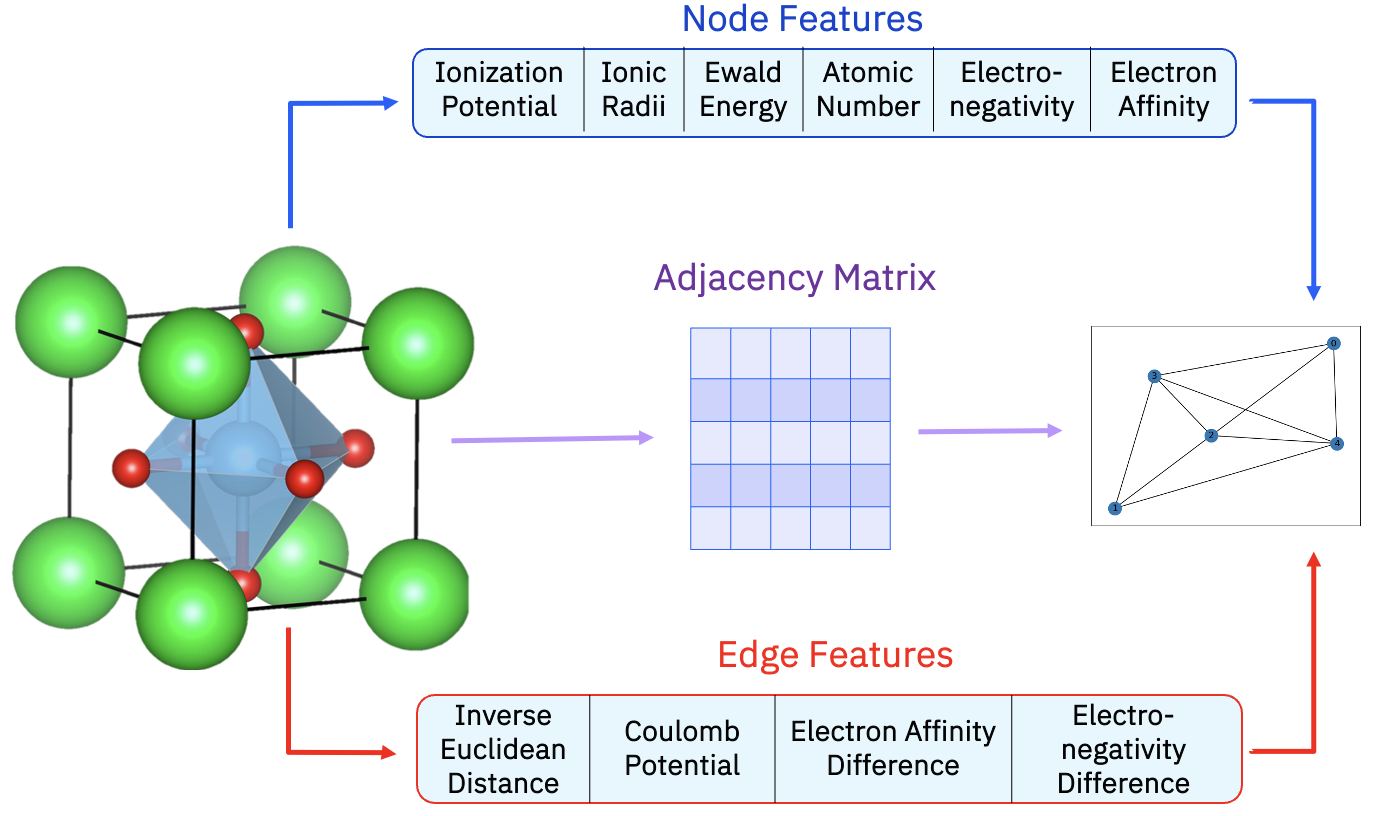
- 通过电负性、电离能和原子序数等原子描述符对钙钛矿材料的图结构进行编码,并通过消息传递机制聚合。
- 使用R²、平均绝对误差(MAE)和均方根误差(RMSE)评估模型性能,并与经典GNN和XGBoost进行比较。
- 利用XGBoost分析特征重要性,识别影响生成能的关键原子描述符。
实验结果
研究问题
- RQ1与最先进的经典模型相比,混合量子-经典图神经网络在预测钙钛矿生成能方面能否实现具有竞争力的性能?
- RQ2无梯度优化在图神经网络架构中训练量子层方面有多高效?
- RQ3哪些原子描述符最能预测钙钛矿生成能?其结果是否与已知物理原理一致?
- RQ4量子特征编码在多大程度上增强了图神经网络在材料科学中的表征学习能力?
- RQ5量子增强GNN当前存在哪些局限性?未来实现量子优势需要哪些改进?
主要发现
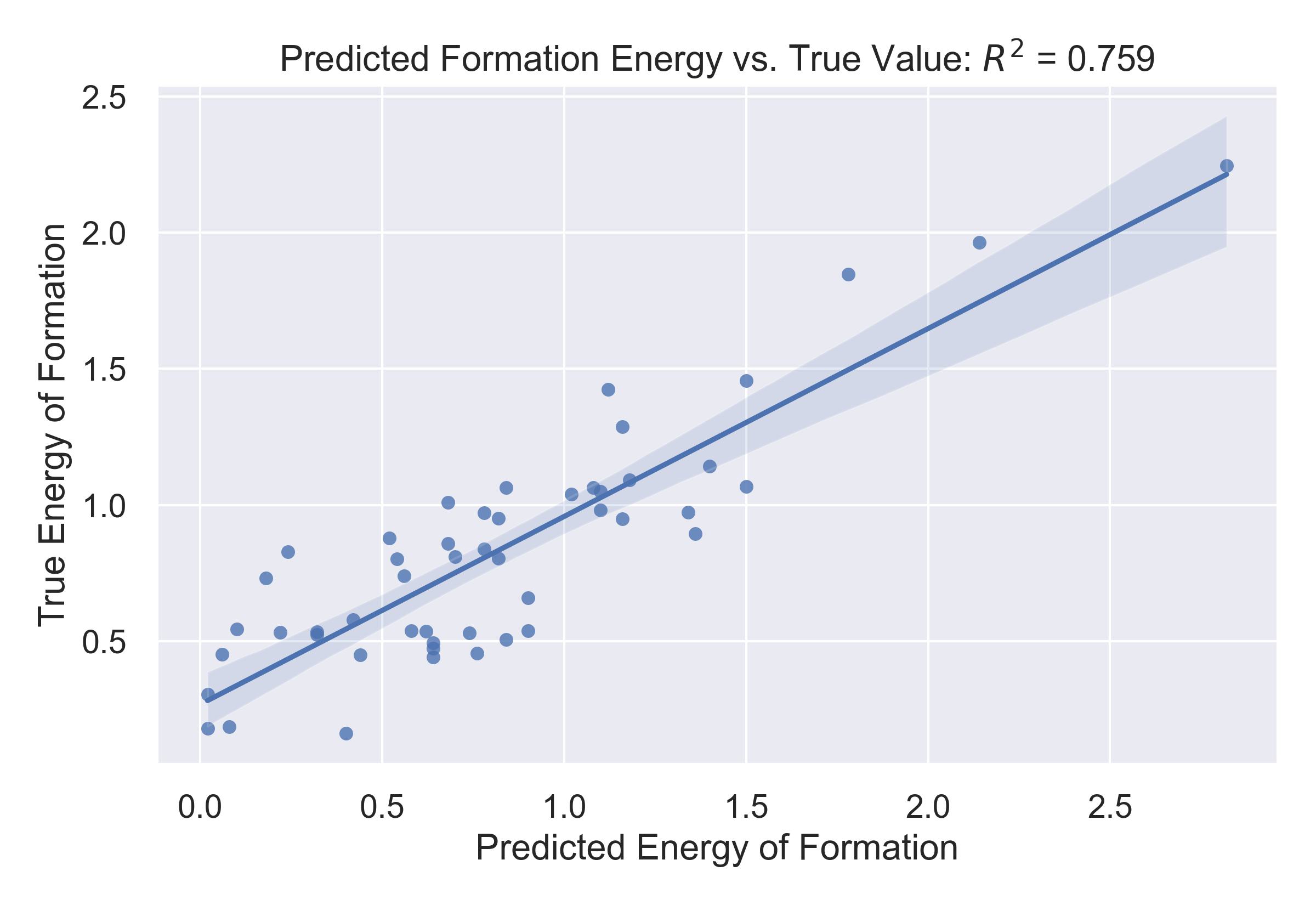
- 混合量子-经典图神经网络在预测钙钛矿生成能方面取得了0.674的R²得分,性能与经典模型相当。
- 经典GCNN和XGBoost模型优于混合模型,其中XGBoost达到最高的R²,表明当前经典模型在该任务中仍更具优势。
- 特征重要性分析表明,钙钛矿结构中A位的第一电离能是影响最大的描述符,与已知的钙钛矿稳定性趋势一致。
- 采用无梯度优化使量子电路在无需可微分量子硬件的情况下实现有效训练,拓展了量子增强模型的适用范围。
- 尽管性能低于经典基线,混合模型的结果表明,随着未来量子硬件和电路设计的改进,该方法为实现材料性质预测中的量子优势提供了可行路径。
- 本研究凸显了量子幅值编码在输入维度增加时的高效扩展潜力,支持未来对全量子图神经网络的探索。
阅读本论文
在 Nubint 阅读器中打开原文,边读边就任意段落提问。
在 Nubint 中阅读本论文本解读由 AI 根据论文原文生成,引用前请核对原文。