
[论文解读] Image-Based Virtual Try-on System With Clothing-Size Adjustment
本文提出了一种基于图像的虚拟试穿系统,通过将人体和衣物的测量数据整合到分割图生成过程中,实现衣物尺寸的动态调整。该方法利用OpenPose进行关键点检测,并基于比例对衣物区域进行缩放,从而在重缩放过程中纠正边界失真,生成比VITON-HD更准确、更符合实际尺寸的贴合图像,尤其在领口和肢体重叠区域表现更优。
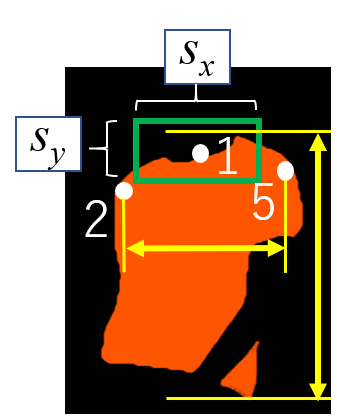
The conventional image-based virtual try-on method cannot generate fitting images that correspond to the clothing size because the system cannot accurately reflect the body information of a person. In this study, an image-based virtual try-on system that could adjust the clothing size was proposed. The size information of the person and clothing were used as the input for the proposed method to visualize the fitting of various clothing sizes in a virtual space. First, the distance between the shoulder width and height of the clothing in the person image is calculated based on the coordinate information of the key points detected by OpenPose. Then, the system changes the size of only the clothing area of the segmentation map, whose layout is estimated using the size of the person measured in the person image based on the ratio of the person and clothing sizes. If the size of the clothing area increases during the drawing, the details in the collar and overlapping areas are corrected to improve visual appearance.
研究动机与目标
- 解决现有虚拟试穿系统在生成图像中无法反映实际衣物尺寸的局限性。
- 改善衣物区域重缩放后的视觉保真度,尤其在领口和肢体重叠区域。
- 通过将实测的人体与衣物尺寸作为输入参数,实现精确的虚拟试穿。
- 在尺寸缩放过程中保持衣物与身体部位之间的结构一致性,避免视觉伪影。
- 开发一种方法,生成针对特定衣物尺寸定制的逼真试穿图像,而无需依赖输入图像中原始衣物的尺寸。
提出的方法
- 利用OpenPose从人体图像中检测关键点坐标(如肩部、躯干),以估算身体尺寸。
- 通过计算人体测量的肩宽与身高之比,以及对应衣物尺寸的比例,确定缩放因子。
- 仅对分割图中的衣物区域应用基于比例的重缩放,同时保留人体的分割结果。
- 通过在放大前后追踪衣物与身体部位之间的最短距离,纠正重叠区域(如领口、手臂交界处)的边界失真。
- 根据放大前后最短距离差异,调整衣物区域的中心坐标,以维持空间一致性。
- 将修改后的分割图集成到VITON-HD框架中,生成尺寸调整后的高分辨率虚拟试穿图像。
实验结果
研究问题
- RQ1虚拟试穿系统能否生成反映实际衣物尺寸的贴合图像,而非默认采用输入衣物的尺寸?
- RQ2如何在不扭曲领口和手臂重叠等关键结构特征的前提下对衣物区域进行重缩放?
- RQ3将实测的人体与衣物尺寸纳入系统,能在多大程度上提升虚拟试穿结果的逼真度与准确性?
- RQ4边界校正技术能否在尺寸缩放过程中保持衣物与身体部位之间的空间关系?
- RQ5在用户评估中,该方法是否在尺寸准确性和视觉自然度方面优于VITON-HD?
主要发现
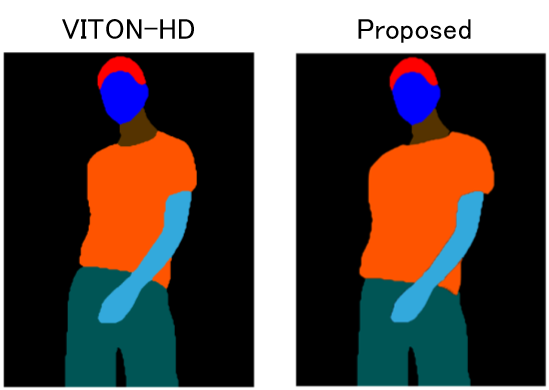
- 所提方法成功生成了反映目标衣物实际尺寸的虚拟试穿图像,而VITON-HD则默认采用输入衣物的尺寸。
- 主观评估显示,10名用户中有10名更偏好本方法在尺寸准确性方面,每名测试者中有8至10人评分其在自然度与贴合度上更优。
- 通过最短距离追踪与坐标调整,系统在领口和手臂重叠等关键区域有效纠正了边界失真,维持了视觉质量。
- 基于人体与衣物尺寸比例的分割图有效重缩放,实现了准确的尺寸映射,同时不改变原始姿态或身体结构。
- 该方法通过解耦衣物尺寸与输入衣物的原始尺寸,使尺寸调整可动态独立于图像中原始衣物实现,优于VITON-HD。
- 校正机制确保在放大过程中衣物与身体部位(如手臂与领口)之间的距离得以保持,防止出现不自然的分离或重叠。
阅读本论文
在 Nubint 阅读器中打开原文,边读边就任意段落提问。
在 Nubint 中阅读本论文本解读由 AI 根据论文原文生成,引用前请核对原文。