
[论文解读] Improving accuracy of GPT-3/4 results on biomedical data using a retrieval-augmented language model
本研究提出了一种检索增强型(RetA)语言模型,通过在生成响应前从聚焦的弥漫性大B细胞淋巴瘤(DLBCL)语料库中检索特定领域的上下文,提升了GPT-3.5和GPT-4在生物医学问答任务中的准确性和相关性。RetA模型在准确度(12/19道题获得3/3分)和相关性(13/19)方面均优于所有基线大语言模型(LLM),且幻觉现象显著少于通用模型。
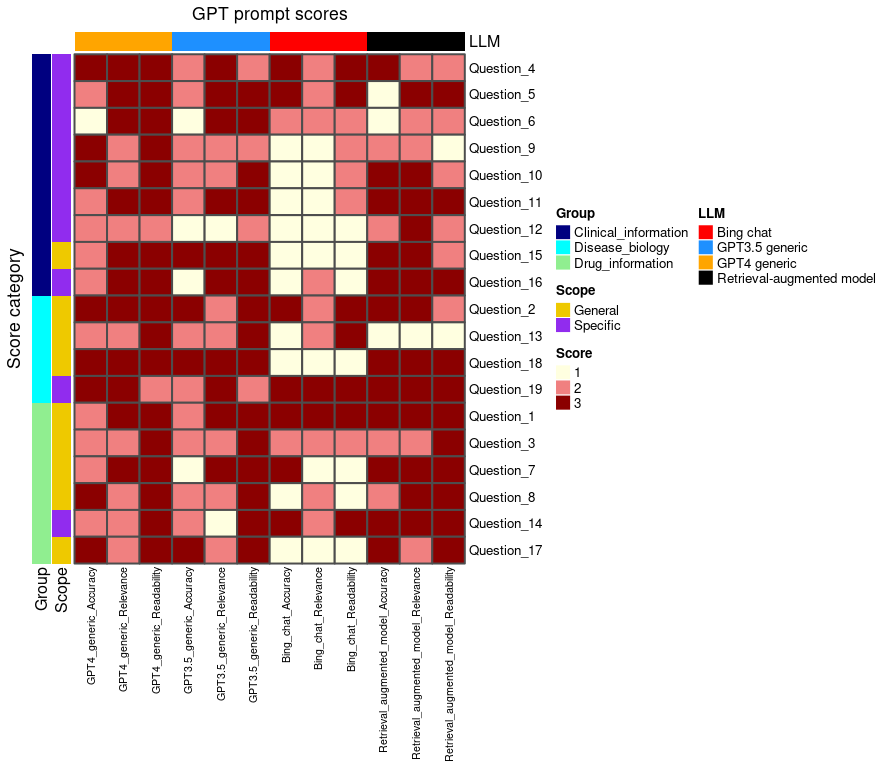
Large language models (LLMs) have made significant advancements in natural language processing (NLP). Broad corpora capture diverse patterns but can introduce irrelevance, while focused corpora enhance reliability by reducing misleading information. Training LLMs on focused corpora poses computational challenges. An alternative approach is to use a retrieval-augmentation (RetA) method tested in a specific domain. To evaluate LLM performance, OpenAI's GPT-3, GPT-4, Bing's Prometheus, and a custom RetA model were compared using 19 questions on diffuse large B-cell lymphoma (DLBCL) disease. Eight independent reviewers assessed responses based on accuracy, relevance, and readability (rated 1-3). The RetA model performed best in accuracy (12/19 3-point scores, total=47) and relevance (13/19, 50), followed by GPT-4 (8/19, 43; 11/19, 49). GPT-4 received the highest readability scores (17/19, 55), followed by GPT-3 (15/19, 53) and the RetA model (11/19, 47). Prometheus underperformed in accuracy (34), relevance (32), and readability (38). Both GPT-3.5 and GPT-4 had more hallucinations in all 19 responses compared to the RetA model and Prometheus. Hallucinations were mostly associated with non-existent references or fabricated efficacy data. These findings suggest that RetA models, supplemented with domain-specific corpora, may outperform general-purpose LLMs in accuracy and relevance within specific domains. However, this evaluation was limited to specific questions and metrics and may not capture challenges in semantic search and other NLP tasks. Further research will explore different LLM architectures, RetA methodologies, and evaluation methods to assess strengths and limitations more comprehensively.
研究动机与目标
- 评估检索增强型语言模型(RetA)是否能相较于通用大语言模型,提升大语言模型在生物医学问答任务中的事实准确性与相关性。
- 探究在回答复杂生物医学问题时,GPT-3.5、GPT-4以及Bing的Prometheus在幻觉现象(如虚构参考文献或不存在的疗效数据)方面发生的程度。
- 评估特定领域检索对减少噪声、提升临床与生物学问题中大语言模型生成回答的可靠性的效果。
- 使用标准化评估框架并由专家评审员参与,比较多种大语言模型在可读性、准确性和相关性方面的表现。
提出的方法
- 通过收集和预处理相关生物医学文献,构建了一个聚焦于弥漫性大B细胞淋巴瘤(DLBCL)的特定领域语料库。
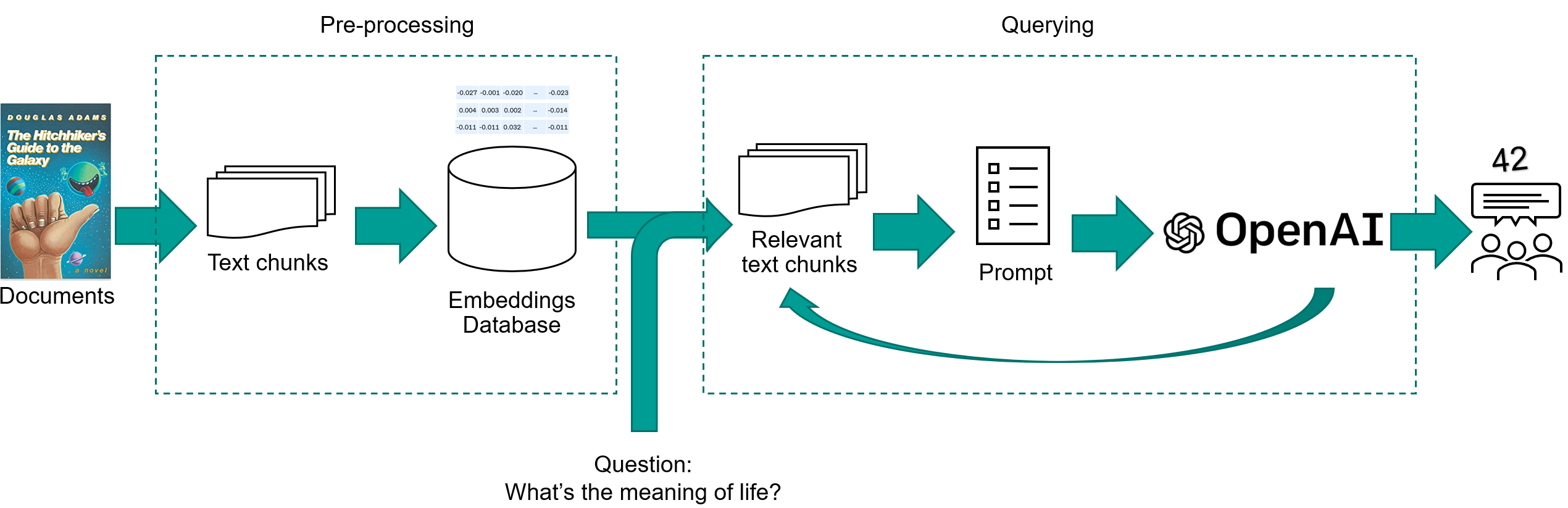
- 将语料库分割为较小的文本块,并使用预训练嵌入模型(如OpenAI嵌入)进行嵌入,存储于向量数据库中,以实现高效检索。
- 实施两阶段检索增强提示工作流:首先,基于查询嵌入的语义相似性(如余弦相似度)检索最相关的文档块;其次,将检索到的上下文输入基础大语言模型(如text-davinci-003或gpt-3.5-turbo)以生成有依据的回答。
- 采用自定义的RetA流程,提示大语言模型仅基于所提供上下文作答,减少对内部知识的依赖,从而降低幻觉现象。
- 在19道涵盖DLBCL诊断、治疗、亚型和生物标志物的标准化生物医学问题上,评估了多种大语言模型(包括GPT-3.5、GPT-4、Bing的Prometheus以及自定义RetA模型)。
- 采用三点评分制(1–3分)评估准确度、相关性和可读性,由八名独立评审员进行评分,以确保客观性与一致性。
实验结果
研究问题
- RQ1与GPT-3.5和GPT-4等通用大语言模型相比,检索增强型语言模型是否能提升生物医学问答中的事实准确性?
- RQ2在回答复杂的DLBCL相关问题时,GPT-3.5、GPT-4和Bing的Prometheus在幻觉现象(如虚构参考文献或不存在的临床数据)方面发生的程度如何?
- RQ3在临床与生物学背景下,整合特定领域检索到的上下文如何影响大语言模型生成回答的相关性与可读性?
- RQ4与完全基于广泛预训练分布的自回归生成相比,RetA方法是否能降低大语言模型输出中的信噪比?
主要发现
- 检索增强型(RetA)模型在准确度上表现最佳(12/19道题获得3/3分),显著优于GPT-4(8/19)和GPT-3.5(7/19),在事实正确性方面优势明显。
- RetA模型在相关性方面得分最高(13/19道题获得3/3分),表明检索到的上下文使回答更具话题聚焦性与针对性。
- GPT-4在可读性方面得分最高(17/19道题获得3/3分),其次为GPT-3.5(15/19),而RetA模型得分为11/19,表明检索并未损害表达的清晰度。
- Bing的Prometheus在所有指标上表现欠佳,准确度与相关性总分为34/57,可读性得分为38,表明其在生物医学问答任务中可靠性有限。
- 所有通用大语言模型(GPT-3.5与GPT-4)在全部19次响应中均产生幻觉内容,主要表现为虚构参考文献或编造的疗效数据,而RetA模型显著减少了此类错误。
- RetA模型通过严格基于检索到的特定领域文档来生成回答,有效减少了幻觉现象,证明检索增强方法能提升专业生物医学应用中的真实性。
阅读本论文
在 Nubint 阅读器中打开原文,边读边就任意段落提问。
在 Nubint 中阅读本论文本解读由 AI 根据论文原文生成,引用前请核对原文。