
[论文解读] Incipient Fault Detection in Power Distribution System: A Time-Frequency Embedded Deep Learning Based Approach
本文提出一种AD-TFM-AT模型,将自适应小波变换与注意力增强型LSTM相结合,用于检测配电系统中的早期故障。通过学习小波的尺度和位移参数以实现多分辨率时频分析,并采用相位切换与时间滑动的数据增强技术,该模型在SGAH数据集上达到99%的最先进准确率,在IFPD数据集上达到97%。
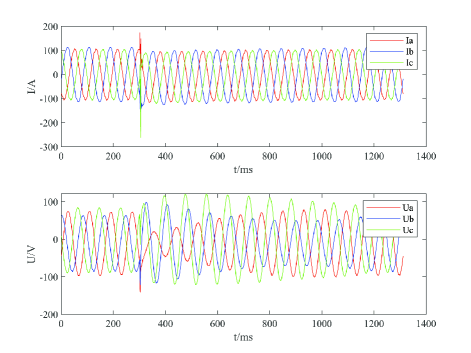
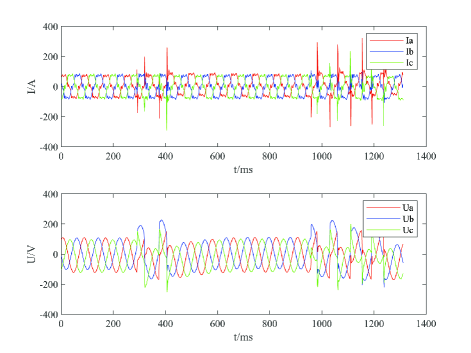
Incipient fault detection in power distribution systems is crucial to improve the reliability of the grid. However, the non-stationary nature and the inadequacy of the training dataset due to the self-recovery of the incipient fault signal, make the incipient fault detection in power distribution systems a great challenge. In this paper, we focus on incipient fault detection in power distribution systems and address the above challenges. In particular, we propose an ADaptive Time-Frequency Memory(AD-TFM) cell by embedding wavelet transform into the Long Short-Term Memory (LSTM), to extract features in time and frequency domain from the non-stationary incipient fault signals.We make scale parameters and translation parameters of wavelet transform learnable to adapt to the dynamic input signals. Based on the stacked AD-TFM cells, we design a recurrent neural network with ATtention mechanism, named AD-TFM-AT model, to detect incipient fault with multi-resolution and multi-dimension analysis. In addition, we propose two data augmentation methods, namely phase switching and temporal sliding, to effectively enlarge the training datasets. Experimental results on two open datasets show that our proposed AD-TFM-AT model and data augmentation methods achieve state-of-the-art (SOTA) performance of incipient fault detection in power distribution system. We also disclose one used dataset logged at State Grid Corporation of China to facilitate future research.
研究动机与目标
- 解决由于标注训练数据有限,导致在配电系统中检测非平稳、自恢复性早期故障的挑战。
- 克服传统基于特征的方法和标准LSTM模型在捕捉复杂、瞬态、非平稳故障信号方面的局限性。
- 通过将可学习的小波变换嵌入LSTM架构,提升时间域与频率域的特征提取能力。
- 通过新颖的注意力机制与数据增强策略,提升模型泛化能力与故障检测准确率。
提出的方法
- 提出一种自适应时频记忆单元(AD-TFM)单元,将小波变换嵌入LSTM隐藏状态,以联合建模时间与频谱特征。
- 使小波变换的尺度与位移参数可学习,以动态适应输入信号特性,实现多分辨率分析。
- 堆叠多个AD-TFM单元,构建具备更强长期依赖建模能力的深层循环网络。
- 将注意力机制集成到AD-TFM架构中(形成AD-TFM-AT),以聚焦关键的时间-频率特征,提升决策能力。
- 设计两种数据增强技术——相位切换与时间滑动,以增加训练数据多样性并缓解数据稀缺问题。
- 在两个公开数据集SGAH与IFPD上训练并评估AD-TFM-AT模型,开展消融实验并与最先进模型进行对比。
实验结果
研究问题
- RQ1尽管早期故障具有非平稳与自恢复特性,端到端深度学习模型是否能有效检测配电系统中的早期故障?
- RQ2将可学习的小波变换集成到LSTM中,如何提升对早期故障信号时频表示的特征提取能力?
- RQ3注意力机制在多大程度上增强了模型聚焦于噪声环境中瞬态信号中显著故障特征的能力?
- RQ4在训练数据稀缺的情况下,相位切换与时间滑动等数据增强技术是否能显著提升模型泛化能力?
- RQ5所提出的AD-TFM-AT模型在真实世界早期故障数据集上的准确率、精确率、召回率与F1分数方面,是否优于现有最先进方法?
主要发现
- AD-TFM-AT模型在SGAH数据集上达到99%的测试准确率,在IFPD数据集上达到97%,优于所有基线模型。
- 该模型在两个数据集上的F1分数均为0.97,展现出精确率与召回率之间的良好平衡。
- AD-TFM-AT模型在HRGF故障类别上的AUC达到0.97,显著优于TFM-AT(0.89)与AD-TFM(0.85),表明其具备更优的检测能力。
- 相位切换与时间滑动数据增强方法有效提升了训练数据多样性,并增强了模型鲁棒性。
- 消融实验证实,自适应小波组件与注意力机制对高性能至关重要,完整模型展现出最佳泛化能力。
- 与卷积神经网络模型如SLI-CNN和Minirocket相比,AD-TFM-AT的F1分数显著更高(0.97 vs. 0.78与0.80),证明其在处理非平稳信号方面的优越性。
阅读本论文
在 Nubint 阅读器中打开原文,边读边就任意段落提问。
在 Nubint 中阅读本论文本解读由 AI 根据论文原文生成,引用前请核对原文。