
[论文解读] Integrating Edge-AI in Structural Health Monitoring domain
本文提出了一种新颖的边缘-AI框架,用于实时结构健康监测,特别是使用Kneron KL520边缘AI芯片进行桥梁裂缝检测。通过应用后量化和模型优化技术,作者将每幅图像的推理时间从3秒减少至20毫秒,同时保持92.4%的准确率,实现了关键基础设施安全所需的设备端、低延迟决策。
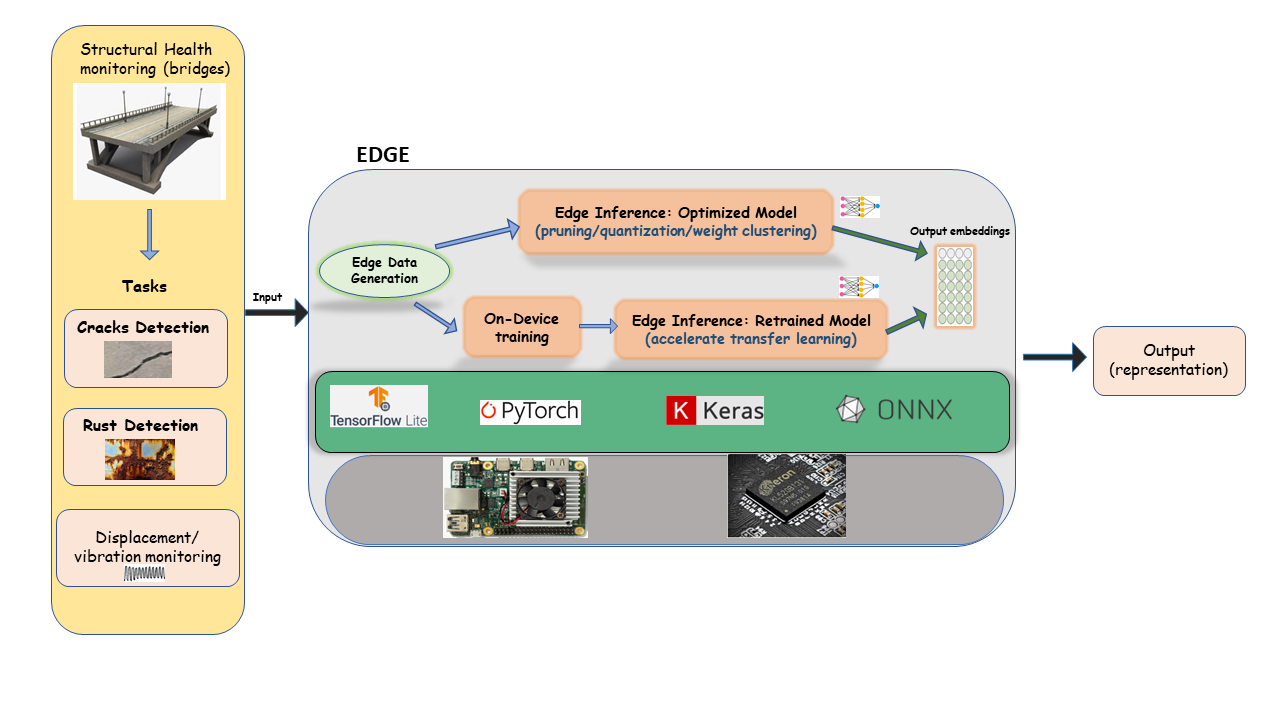
Structural health monitoring (SHM) tasks like damage detection are crucial for decision-making regarding maintenance and deterioration. For example, crack detection in SHM is crucial for bridge maintenance as crack progression can lead to structural instability. However, most AI/ML models in the literature have low latency and late inference time issues while performing in real-time environments. This study aims to explore the integration of edge-AI in the SHM domain for real-time bridge inspections. Based on edge-AI literature, its capabilities will be valuable integration for a real-time decision support system in SHM tasks such that real-time inferences can be performed on physical sites. This study will utilize commercial edge-AI platforms, such as Google Coral Dev Board or Kneron KL520, to develop and analyze the effectiveness of edge-AI devices. Thus, this study proposes an edge AI framework for the structural health monitoring domain. An edge-AI-compatible deep learning model is developed to validate the framework to perform real-time crack classification. The effectiveness of this model will be evaluated based on its accuracy, the confusion matrix generated, and the inference time observed in a real-time setting.
研究动机与目标
- 解决基于AI的结构健康监测(SHM)系统中高延迟和推理延迟的问题。
- 通过边缘-AI平台实现在桥梁检测中设备端的实时裂缝分类。
- 针对低功耗边缘设备(如Kneron KL520)优化轻量级CNN模型以实现部署。
- 在保持分类准确率的前提下,将每幅图像的推理时间从3秒减少至20毫秒以下。
- 使用真实世界图像数据验证该框架,并展示其在现场决策支持系统中的可行性。
提出的方法
- 研究使用一个公开的裂缝数据集,包含40,000张图像(20,000张正样本,20,000张负样本),预处理为227×227 RGB格式。
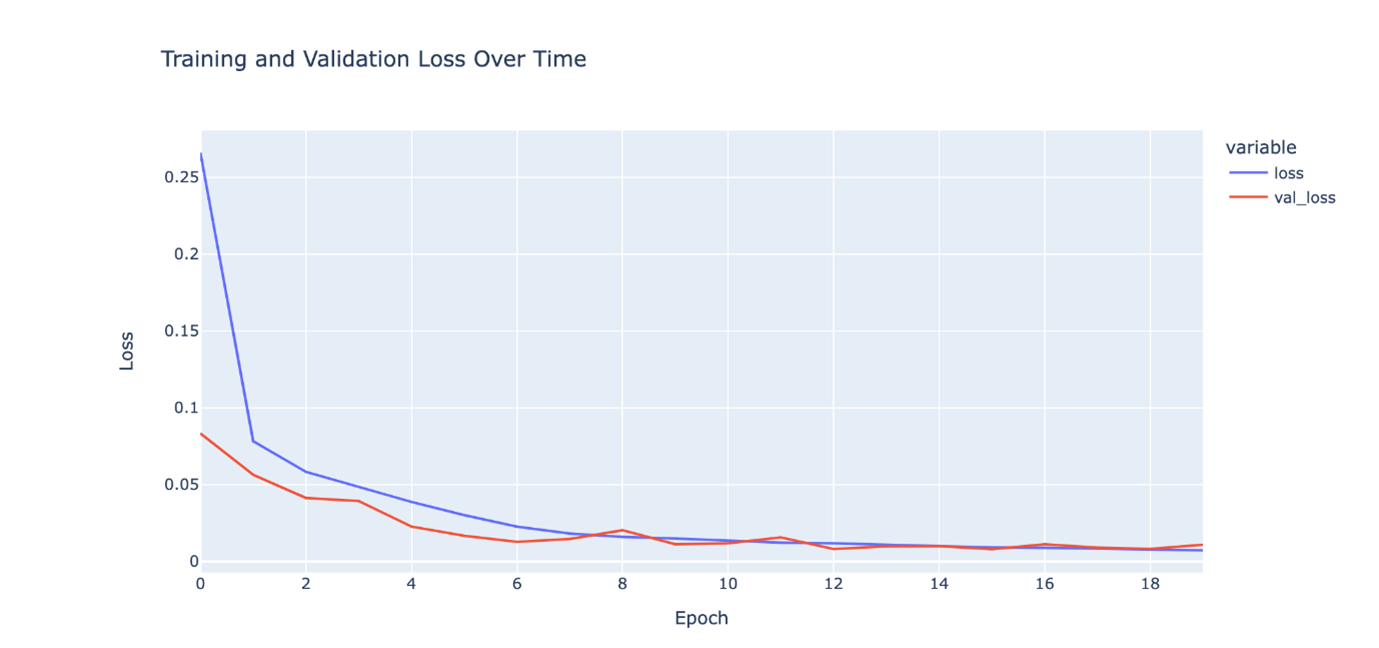
- 在80-20的训练-验证划分上训练CNN模型,共20个周期,训练准确率达到99.54%,验证准确率达到99.52%。
- 将模型转换为ONNX格式以确保与边缘硬件的兼容性,并在设备部署前移除不支持的Softmax层。
- 应用8位整数表示的后量化,以减小模型大小并在Kneron KL520的NPU上加速推理。
- 将优化后的模型编译为NEF(NPU可执行格式)并部署在Kneron KL520芯片上,实现实时推理。
- 由于NPU的限制,预处理和后处理在主机设备上执行,包括图像缩放和类别概率计算。
实验结果
研究问题
- RQ1边缘-AI平台(如Kneron KL520)是否能够实现在结构健康监测中低延迟的实时裂缝检测?
- RQ2后量化和模型优化在显著降低推理时间的同时,对准确率损失的影响有多大?
- RQ3轻量级CNN模型在边缘硬件上对多样化真实世界裂缝图像的性能表现如何?
- RQ4在人工采集的测试图像中,数据分布偏移在多大程度上影响边缘设备上的模型准确率?
- RQ5在真实SHM场景中,通过迁移学习进行设备端微调是否能进一步提升推理性能?
主要发现
- 优化后的边缘-AI模型实现了每幅图像20毫秒的实时推理时间,相比原始的3秒降低了150倍。
- 在包含355张图像的多样化测试集上(包括100张人工采集的样本,具有不同的裂缝和背景特征),模型保持了92.4%的测试准确率。
- 混淆矩阵证实了模型具有出色的分类性能,尽管存在数据分布偏移,仍保持极低的误报和漏报率。
- Kneron KL520实现了每瓦0.35 TOPS的能效,展示了其在设备端AI推理中的强大能效表现。
- 移除Softmax层并进行8位表示的后量化,是实现硬件兼容性和速度提升的关键因素。
- 该框架支持安全、低带宽、低延迟的设备端推理,适用于实时桥梁检测系统。
阅读本论文
在 Nubint 阅读器中打开原文,边读边就任意段落提问。
在 Nubint 中阅读本论文本解读由 AI 根据论文原文生成,引用前请核对原文。