
[论文解读] Introduction to Transformers: an NLP Perspective
本文介绍了基本的Transformer架构、关键改进和应用,概述了Transformer模型在NLP视角下的核心思想、优点与局限。
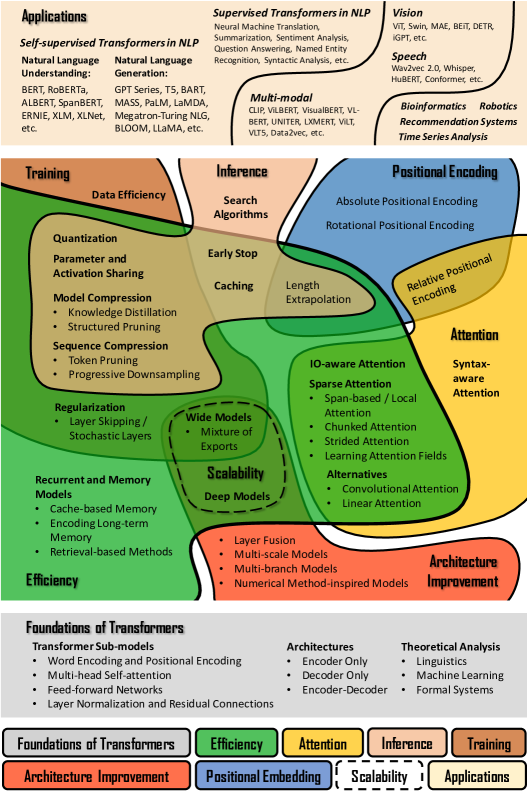
Transformers have dominated empirical machine learning models of natural language processing. In this paper, we introduce basic concepts of Transformers and present key techniques that form the recent advances of these models. This includes a description of the standard Transformer architecture, a series of model refinements, and common applications. Given that Transformers and related deep learning techniques might be evolving in ways we have never seen, we cannot dive into all the model details or cover all the technical areas. Instead, we focus on just those concepts that are helpful for gaining a good understanding of Transformers and their variants. We also summarize the key ideas that impact this field, thereby yielding some insights into the strengths and limitations of these models.
研究动机与目标
- 解释标准的 Transformer 编码器–解码器架构及其子层(自注意力、FFN、层归一化)以及位置编码的使用方式。
- 调查在NLP任务中提高效率、可扩展性和性能的主要改进与变体。
- 概述代表性应用(语言建模、文本编码、翻译、多模态模型)及实际权衡。
提出的方法
- 描述 Transformer 架构及其子层,并给出自注意力、FFN 和跨注意力的方程。
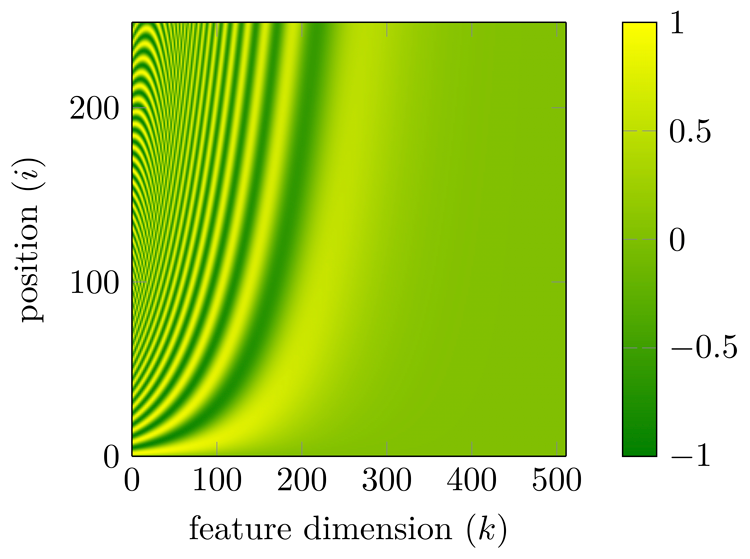
- 解释位置编码,包括正弦波的绝对编码及其在输入表示中的作用。
- 引入多头注意力、QKV 形式及多头的理论基础。
- 讨论训练/推理流程以及 post-norm 与 pre-norm 的残差结构的权衡。
- 给出一个关于编码器/解码器模块的参数量和时间复杂度的表格,以说明效率考量。
实验结果
研究问题
- RQ1构成核心的 Transformer 编码器–解码器架构是什么,以及它的主要子层如何计算?
- RQ2位置编码如何实现 Transformer 的序列顺序?
- RQ3在 NLP 系统中,Transformer 组件的实际效率考虑因素(参数量、时间复杂度)是什么?
- RQ4哪些变体与改进已在不同 NLP 任务中改进了 Transformer 模型?
- RQ5如综述所述,基于 Transformer 的模型的典型应用和局限性是什么?
主要发现
- Transformer 的编码器和解码器使用带有自注意力和前馈网络的堆叠层,配以层归一化和残差连接。
- 多头注意力(QKV)使得能够从多个子空间学习,并提升对全局上下文的建模。
- 正弦位置编码为嵌入提供绝对位置信息,有助于序列建模。
- Pre-norm 与 post-norm 架构在优化与表征学习方面存在权衡。
- FFNs 与更大隐藏维度(例如 dffn ~ 4d)在实际性能上提升,但会增加参数数量。
- 一个汇总的参数/时间复杂度表格突出显示在编码器和解码器模块中的计算瓶颈所在。
阅读本论文
在 Nubint 阅读器中打开原文,边读边就任意段落提问。
在 Nubint 中阅读本论文本解读由 AI 根据论文原文生成,引用前请核对原文。