
[论文解读] Jet Diffusion versus JetGPT -- Modern Networks for the LHC
本论文提出两种扩散模型和一个自回归变换器用于LHC物理仿真,并引入用于不确定性控制的贝叶斯变体,并将它们与在 Z+jets 事件上的归一化流进行比较。
We introduce two diffusion models and an autoregressive transformer for LHC physics simulations. Bayesian versions allow us to control the networks and capture training uncertainties. After illustrating their different density estimation methods for simple toy models, we discuss their advantages for Z plus jets event generation. While diffusion networks excel through their precision, the transformer scales best with the phase space dimensionality. Given the different training and evaluation speed, we expect LHC physics to benefit from dedicated use cases for normalizing flows, diffusion models, and autoregressive transformers.
研究动机与目标
- 基于第一性原理,推动快速、精确且灵活的LHC仿真。
- 开发并评估三种现代生成网络架构用于相空间密度估计。
- 引入贝叶斯形式以量化训练和模型的不确定性。
- 在 toy 和 Z+jets 的 LHC 事件上,将扩散模型和自回归变换器与 INNs 进行基准比较。
- 突出归一化流、扩散模型和自回归变换器各自擅长的情景。
提出的方法
- 引入两种扩散模型(DDPM 和 Conditional Flow Matching),具有离散和连续时间演化。
- 提出一个自回归变换器(JetGPT),具有改进的维度扩展性。
- 为三种网络中的密度估计开发贝叶斯版本,以量化不确定性。
- 推导 DDPM(Eq. 17/11/13)和 CFMs(Eq. 34/37)的损失函数,并概述训练/采样过程。
- 展示 toy 模型和 LHC Z+jets 事件的训练设置和超参数(表1)。
实验结果
研究问题
- RQ1基于扩散的生成模型是否能够达到可逆神经网络在LHC相空间密度估计中的精度?
- RQ2离散 DDPM、连续时间 CFMs 和自回归变换器在相空间维度增加时的扩展性如何?
- RQ3在LHC仿真中,归一化流、扩散模型和自回归变换器在训练和采样速度上的权衡是什么?
- RQ4贝叶斯不确定性量化如何影响这些网络的密度估计的可靠性?
- RQ5在如 Z+jets 生成等LHC类任务中,每种架构会涌现出哪些专用用例?
主要发现
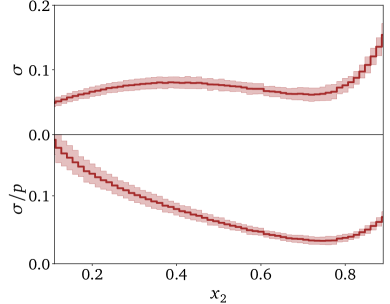
- 扩散网络在接近LHC类相空间的密度估计中提供了高精度。
- 自回归变换器在更高的相空间维度下的扩展性更有利。
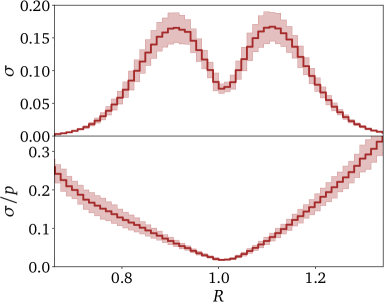
- 三种网络的贝叶斯版本为学习到的密度提供不确定性量化。
- 与 INNs 和 VAE/GANs 相比,扩散模型需要更长的采样时间,但提供基于似然的强大训练。
- CFM 通过求解用于样本生成的 ODE 提供了样本生成的双射式映射。
- 本文在 toy 问题和 Z+jets 事件上对三种模型进行了基准测试,以比较优点和用例匹配度。
阅读本论文
在 Nubint 阅读器中打开原文,边读边就任意段落提问。
在 Nubint 中阅读本论文本解读由 AI 根据论文原文生成,引用前请核对原文。