
[论文解读] Just Another Day on Twitter: A Complete 24 Hours of Twitter Data
论文展示了第一组完整的24小时Twitter数据集(2022年9月21日的3.75亿条推文),通过全面的查询收集,以研究活跃度、机器人普遍性、语言、主题和用户特征,并在平台所有权变更前建立基线。
At the end of October 2022, Elon Musk concluded his acquisition of Twitter. In the weeks and months before that, several questions were publicly discussed that were not only of interest to the platform's future buyers, but also of high relevance to the Computational Social Science research community. For example, how many active users does the platform have? What percentage of accounts on the site are bots? And, what are the dominating topics and sub-topical spheres on the platform? In a globally coordinated effort of 80 scholars to shed light on these questions, and to offer a dataset that will equip other researchers to do the same, we have collected all 375 million tweets published within a 24-hour time period starting on September 21, 2022. To the best of our knowledge, this is the first complete 24-hour Twitter dataset that is available for the research community. With it, the present work aims to accomplish two goals. First, we seek to answer the aforementioned questions and provide descriptive metrics about Twitter that can serve as references for other researchers. Second, we create a baseline dataset for future research that can be used to study the potential impact of the platform's ownership change.
研究动机与目标
- 提供一个完整的24小时Twitter数据集,以解决先前研究中的采样偏差和数据质量问题。
- 描述数据收集流程与方法,尽量减少时间偏差并提高代表性。
- 提供描述性指标,作为研究者的参考与平台所有权变更前的基线。
- 促进未来在平台动态、机器人普遍性、语言分布和内容主题方面的研究。
提出的方法
- 使用Academic API以按时间切片的1秒任务设计收集24小时的Twitter数据(UTC 21日15:00–22日14:59),以降低时间偏差。
- 采用包含负语言的查询策略以覆盖窗口内的所有推文,利用Twitter语言标记(lang:代码)和长OR语言构造。
- 将一天分成86,400个任务,每个任务代表一秒的活跃性,创建时间后10分钟启动以稳定样本。
- 实现多并行API令牌(80个进程)以避免积压并确保高时间覆盖。
- 按FAIR原则通过推文ID提供数据集以支持隐私和可重复性(CC BY 4.0)。
实验结果
研究问题
- RQ1一个具有代表性日的完整24小时内,Twitter活跃度的规模与构成是什么?
- RQ2在整日内活跃账户、语言和内容类型(文本、媒体、地理标签)的分布情况如何?
- RQ3所收集日的机器人式行为的普遍性及特征如何?
- RQ4由话题标签和内容类别体现的24小时话语中,哪些主题与社区占主导?
- RQ5这些基线指标如何为未来研究提供参考,特别是在平台所有权变更的背景下?
主要发现
- 数据集包含374,937,971条推文,来自40,199,195个账户;约1%的用户生成约350万条推文,50%的推文来自175,000个账户。
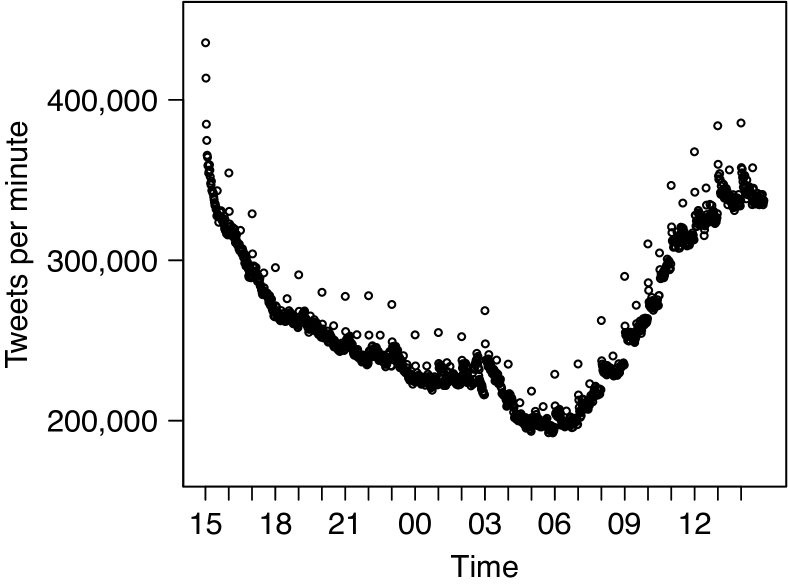
- 平均每秒约收集4,340条推文(范围2,989–8,955);每小时的第一分钟推文活跃度高出约15.5%。
- 79.2%的推文为转发、引用或回复,20.8%为原创推文;全天的总转发次数达4,010亿次。
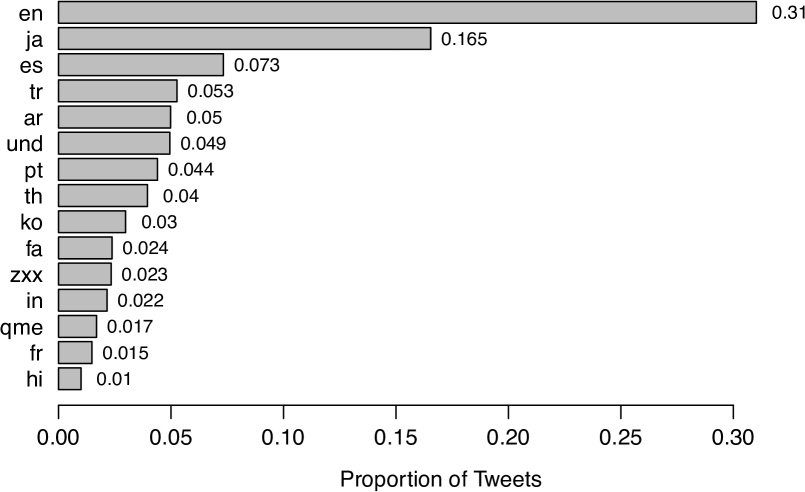
- 语言:15种语言占比92.5%;全球地理标记推文占0.5%,地理标记国家前五为美国、巴西、日本、沙特阿拉伯和印度。
- 媒体:共1,127,792,66条媒体附件(76.9%为图片,20.7%为视频,2.4%为GIF);地理标记推文占0.5%。
- 机器人普遍性(通过BotometerLite测算):约20%的活跃账户机器人分数>0.5;机器人行为在年龄较大、推文数量较多的账户中更高。
阅读本论文
在 Nubint 阅读器中打开原文,边读边就任意段落提问。
在 Nubint 中阅读本论文本解读由 AI 根据论文原文生成,引用前请核对原文。