
[论文解读] Keyframer: Empowering Animation Design using Large Language Models
Keyframer 是一款基于大语言模型(LLM)的动画工具,允许用户通过自然语言提示和直接代码编辑,从静态 SVG 图像生成并迭代优化 CSS 动画。该系统通过分解提示、生成变体以及混合提示/编辑工作流支持创意迭代,展示了 LLM 如何在保持用户控制的前提下,赋能初学者与专家进行动画设计。
Creating 2D animations is a complex, iterative process requiring continuous adjustments to movement, timing, and coordination of multiple elements within a scene. To support designers of varying levels of experience with animation design and implementation, we developed Keyframer, a design tool that generates animation code in response to natural language prompts, enabling users to preview rendered animations inline and edit them directly through provided editors. Through a user study with 13 novices and experts in animation design and programming, we contribute 1) a categorization of semantic prompt types for describing motion and identification of a 'decomposed' prompting style where users continually adapt their goals in response to generated output; and 2) design insights on supporting iterative refinement of animations through the combination of direct editing and natural language interfaces.
研究动机与目标
- 解决 LLM 在动画设计中应用不足的问题,因为运动描述相较于静态图像生成面临独特的挑战。
- 通过与 9 名专业人士的形成性访谈,了解动画设计师的实际痛点及对 AI 辅助的需求。
- 开发并评估一种结合 LLM 提示与直接代码编辑的交互式动画原型工具,以支持迭代优化。
- 描述用户在动画生成中使用提示策略的特点,特别是描述运动语义和时间控制的方式。
- 探索 LLM 如何通过生成设计变体和提供响应式反馈,支持创意构思与探索。
提出的方法
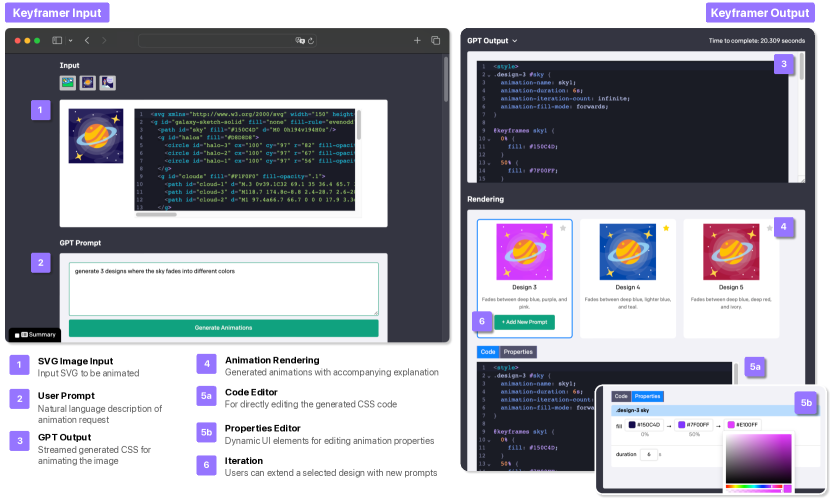
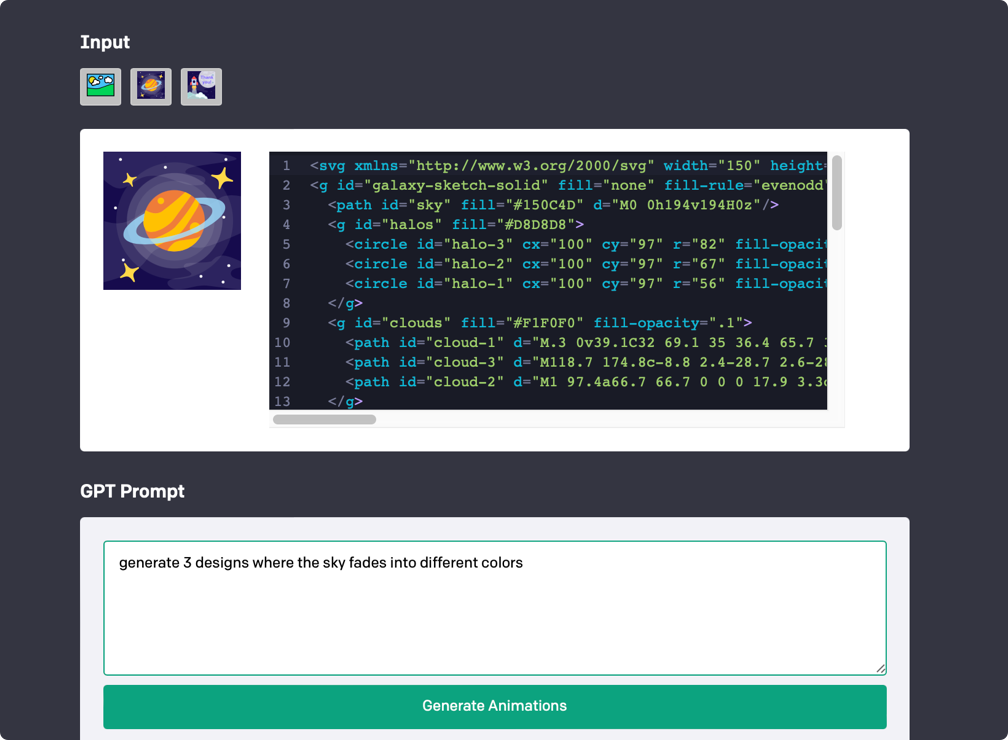
- Keyframer 集成 GPT-4,将应用于输入 SVG 的自然语言提示转换为语义清晰、人类可读的 CSS 动画代码。
- 系统提供多种编辑界面:一个用于输入文本指令的提示输入框,以及一个用于直接修改生成的动画属性和关键帧的代码编辑器。
- 用户可通过 LLM 提示请求设计变体,从而探索同一提示的多种解释方向。
- 界面支持“分解式”提示工作流,用户可逐个元素迭代动画,而非一次性指定完整动画。
- 通过内联动画预览和描述性代码(如 'flameFlicker'、'opacity')帮助用户理解并调试 LLM 生成的结果。
- 通过 13 名不同经验水平的参与者收集用户研究数据,分析提示行为与迭代设计工作流。
实验结果
研究问题
- RQ1动画设计师面临哪些痛点?他们对 AI 如何辅助这些流程有何设想?
- RQ2用户在使用自然语言提示 LLM 生成动画时采取了哪些设计策略?
- RQ3Keyframer 如何通过结合提示与直接编辑支持动画设计的迭代?
- RQ4用户如何理解并回应 LLM 生成的意外或偶然的动画输出?
- RQ5设计变体在动画原型开发过程中如何支持创意构思与探索?
主要发现
- 用户主要采用‘分解式’提示策略,逐个元素迭代动画,而非一次性在单一提示中指定完整动画。
- 形成了一套语义提示风格的分类体系,包括对时间控制的描述、元素间协调性的说明,以及开放式的创意提示,如‘让它看起来很酷’。
- 提示与直接代码编辑的结合使用户能够保持创作控制力,并突破单次提示界面的限制,实现更精细的动画优化。
- 设计变体生成被视作一种有价值的构思工具,帮助用户探索提示的多种解释,发现意想不到的创意方向。
- 用户强烈希望提升可解释性,例如对 SVG 标识符添加语法高亮,或在生成前由 LLM 提供确认问题。
- 尽管存在局限,用户仍认为偶然生成的 LLM 输出具有创意启发性,尤其在探索变体或通过迭代优化进行调试时。
阅读本论文
在 Nubint 阅读器中打开原文,边读边就任意段落提问。
在 Nubint 中阅读本论文本解读由 AI 根据论文原文生成,引用前请核对原文。