
[论文解读] Knowledge AI: Fine-tuning NLP Models for Facilitating Scientific Knowledge Extraction and Understanding
本文介绍了 Knowledge AI,一种经过微调的大语言模型(LLM)框架,可提升在四个自然语言处理任务——摘要生成、文本生成、问答和命名实体识别——中对科学知识的提取与理解能力。通过在领域特定的科学数据集上对 BART、BERT、SciBERT 和 distilGPT-2 等模型进行微调,该框架显著提升了性能,尤其在低数据场景和非专家用户中表现突出,证明了领域适配的 LLM 能够有效弥合科学传播中的可及性鸿沟。
This project investigates the efficacy of Large Language Models (LLMs) in understanding and extracting scientific knowledge across specific domains and to create a deep learning framework: Knowledge AI. As a part of this framework, we employ pre-trained models and fine-tune them on datasets in the scientific domain. The models are adapted for four key Natural Language Processing (NLP) tasks: summarization, text generation, question answering, and named entity recognition. Our results indicate that domain-specific fine-tuning significantly enhances model performance in each of these tasks, thereby improving their applicability for scientific contexts. This adaptation enables non-experts to efficiently query and extract information within targeted scientific fields, demonstrating the potential of fine-tuned LLMs as a tool for knowledge discovery in the sciences.
研究动机与目标
- 通过为非专家创建统一的 AI 框架,弥合科学知识传播中的可及性差距。
- 通过领域特定的微调,提升 LLM 在科学 NLP 任务中的性能。
- 评估参数高效微调(LoRA)与全量微调在科学文本生成中的有效性。
- 研究数据集大小和类别不平衡对科学文本中命名实体识别性能的影响。
- 证明微调后的 LLM 能够以准确、可解释且对普通受众可访问的方式提取和呈现科学知识。
提出的方法
- 使用自适应分词和动态采样技术,微调序列到序列模型(BART、LED)以实现科学论文摘要生成。
- 对 distilGPT-2 应用低秩适应(LoRA)以实现高效文本生成,并对比全量微调与参数高效微调(PEFT)方法。
- 在 SQuAD 和 PubMedQA 数据集上,使用基于提示的方法和编码器-解码器架构,对 BERT 和 SciBERT 进行抽取式与生成式问答任务的微调。
- 在逐步复杂的科学命名实体识别数据集(CoNLL2003、SciERC、GENIA)上训练 BERT、SciBERT 和 SciDeBERTa,结合后处理提升结果可解释性。
- 使用 Hugging Face 库进行模型训练、评估与部署,代码已公开发布于佐治亚理工学院 GitHub 仓库。
- 通过多核处理、策略性数据采样和硬件感知计算优化训练效率,以缓解 Transformer 模型的复杂性问题。
实验结果
研究问题
- RQ1领域特定微调在多大程度上影响 LLM 在科学论文摘要生成任务中的性能?
- RQ2基于 LoRA 的参数高效微调在科学文本生成中与全量微调相比,性能表现如何?
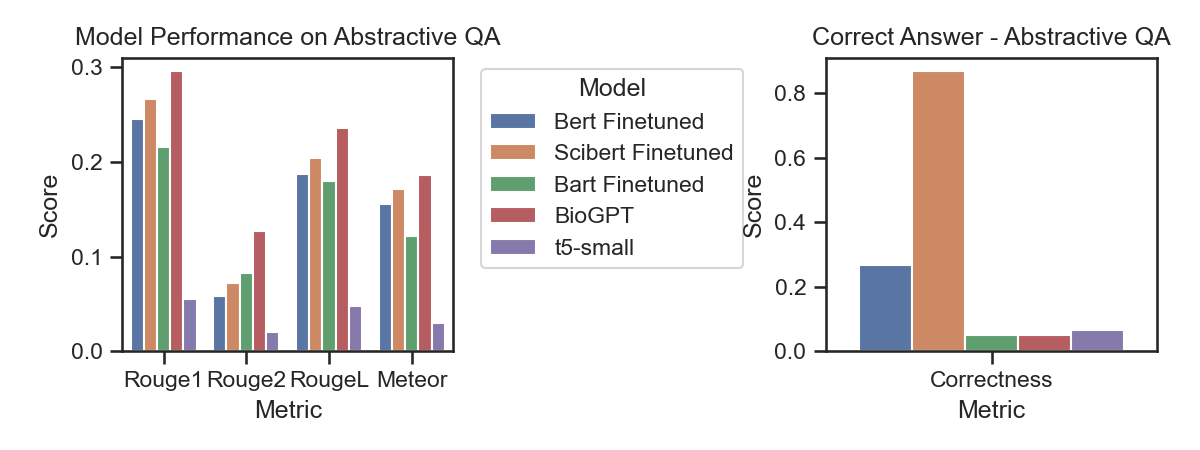
- RQ3预训练模型如 SciBERT 和 BERT 在科学数据集上的抽取式与生成式问答任务中表现如何?
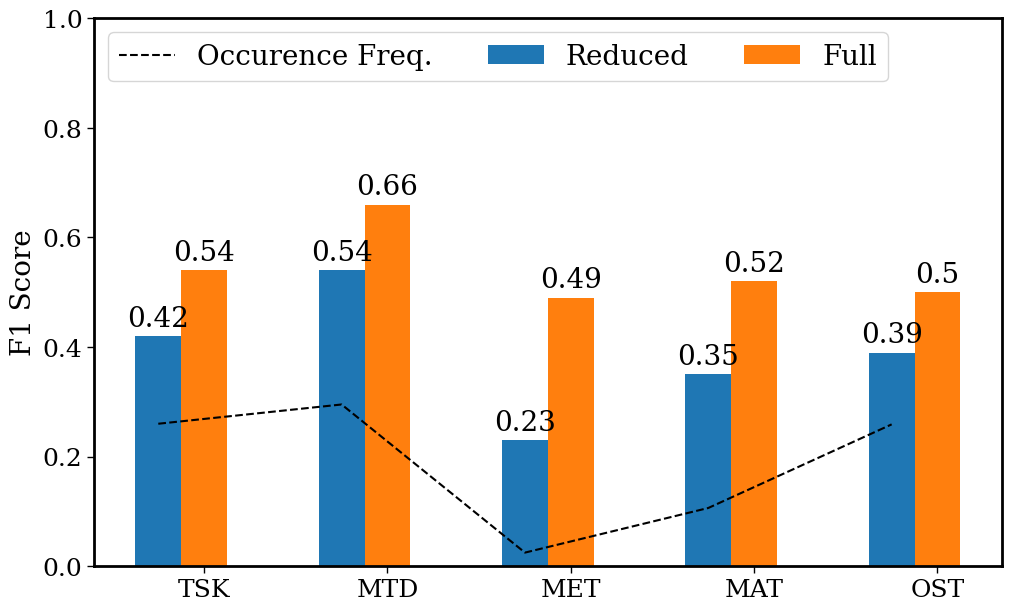
- RQ4数据集大小和类别不平衡对科学文本中命名实体识别性能有何影响?
- RQ5微调后的 LLM 是否能有效提取并以非专家可理解的方式呈现科学知识?
主要发现
- 微调后的 BART 和 LED 模型在科学论文摘要生成任务中显著优于基线模型,其中 BART 生成简洁摘要,LED 则能处理更长、更全面的内容。
- 全量微调在文本生成任务中取得更高的 ROUGE 分数,尽管 LoRA 在计算资源受限场景下提供了显著的计算节省,且仍保持良好性能。
- 领域预训练模型如 SciBERT 在少样本抽取式问答中表现更优,而 FLAN-T5 展现出强大的生成式问答能力。
- 在生成式问答中,SciBERT 的完整 Transformer 架构支持直接、连贯的答案生成,表明其具备强大的内部推理与生成能力。
- 在命名实体识别任务中,领域特定预训练在低数据场景下具有显著优势,但随着数据集规模增大,通用 BERT 模型的性能趋近于领域专用模型,类不平衡的影响也相应减弱。
- 该框架成功使非专家能够有效查询和提取科学知识,验证了微调 LLM 作为科学知识发现与传播工具的潜力。
阅读本论文
在 Nubint 阅读器中打开原文,边读边就任意段落提问。
在 Nubint 中阅读本论文本解读由 AI 根据论文原文生成,引用前请核对原文。