
[论文解读] Komodo: A Linguistic Expedition into Indonesia's Regional Languages
Komodo-7B-Instruct 是一款参数量为 70 亿的多语言语言模型,旨在通过在印度尼西亚地区语言上实现最先进性能,弥合该国地区语言的 NLP 资源差距,涵盖印度尼西亚语、英语以及 11 种地区语言。该模型基于经过筛选的高质量开源数据和人工收集的数据进行训练,并经过严格的数据预处理,其在多语言基准测试中表现优于 GPT-3.5、Llama-2-13B 和 Mixtral-8x7B 等领先模型,可实现从英语到 11 种地区语言的直接、高质量翻译,显著推动了印度尼西亚的语言包容性与教育公平。
The recent breakthroughs in Large Language Models (LLMs) have mostly focused on languages with easily available and sufficient resources, such as English. However, there remains a significant gap for languages that lack sufficient linguistic resources in the public domain. Our work introduces Komodo-7B, 7-billion-parameter Large Language Models designed to address this gap by seamlessly operating across Indonesian, English, and 11 regional languages in Indonesia. Komodo-7B is a family of LLMs that consist of Komodo-7B-Base and Komodo-7B-Instruct. Komodo-7B-Instruct stands out by achieving state-of-the-art performance in various tasks and languages, outperforming the benchmarks set by OpenAI's GPT-3.5, Cohere's Aya-101, Llama-2-Chat-13B, Mixtral-8x7B-Instruct-v0.1, Gemma-7B-it , and many more. This model not only demonstrates superior performance in both language-specific and overall assessments but also highlights its capability to excel in linguistic diversity. Our commitment to advancing language models extends beyond well-resourced languages, aiming to bridge the gap for those with limited linguistic assets. Additionally, Komodo-7B-Instruct's better cross-language understanding contributes to addressing educational disparities in Indonesia, offering direct translations from English to 11 regional languages, a significant improvement compared to existing language translation services. Komodo-7B represents a crucial step towards inclusivity and effectiveness in language models, providing to the linguistic needs of diverse communities.
研究动机与目标
- 解决印度尼西亚低资源地区语言在自然语言处理方面存在的显著性能差距,特别是那些缺乏足够语言资源的语言。
- 开发一款高性能、多语言的大规模语言模型,专门针对印度尼西亚语及 11 种地区语言,以克服现有模型主要基于英语训练所带来的局限性。
- 提升跨语言理解与翻译能力,以支持印度尼西亚多样化语言社区的教育可及性与内容传播。
- 构建一款在多语言及语言特定任务中表现超越现有基准的模型,包括翻译和指令遵循,尤其针对资源匮乏的语言。
提出的方法
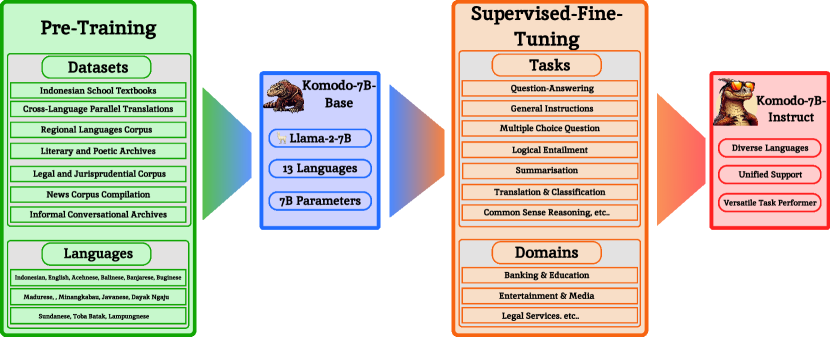
- 在结合多样化开源来源与人工收集的高质量数据的精选数据集上进行预训练与指令微调,涵盖 13 种语言,包括 11 种印度尼西亚地区语言。
- 采用严格的数据预处理流程,包括使用 n-gram 分析去除重复内容,以及质量过滤以消除低质量或冗余内容。
- 采用专家混合(MoE)架构,实现高效的参数扩展与性能提升,其设计灵感源自最先进模型如 Mixtral。
- 实施两阶段训练流程:首先在大规模、过滤后的多语言语料上进行预训练,随后在精选的指令式数据上进行指令微调,以增强零样本与少样本泛化能力。
- 采用针对形态多样性与低资源语言特征优化的专用分词器,以提高分词效率与表征质量。
- 在多个基准测试中评估性能,包括多语言指令遵循、翻译与零样本迁移,以确保在各类语言上的鲁棒性。
实验结果
研究问题
- RQ1当在精选的高质量数据上进行训练时,70 亿参数的 LLM 是否能在包括印度尼西亚 11 种低资源地区语言在内的 13 种语言上实现最先进性能?
- RQ2Komodo-7B-Instruct 在跨语言理解与零样本泛化能力方面,与 GPT-3.5、Llama-2-13B 和 Mixtral-8x7B 等领先多语言模型相比表现如何?
- RQ3Komodo-7B-Instruct 在多大程度上能够实现从英语到 11 种印度尼西亚地区语言的高质量、直接翻译,超越现有服务如 Google Translate?
- RQ4该模型在多种自然语言处理任务中是否显著优于现有印度尼西亚专用 LLM(如 SEA-LION)?
- RQ5Komodo-7B-Instruct 是否能有效减少教育差距,通过在语言多样性高的印度尼西亚地区实现多语言内容访问与翻译?
主要发现
- Komodo-7B-Instruct 在多个多语言基准测试中表现优于 GPT-3.5、Cohere 的 Aya-101、Llama-2-13B、Mixtral-8x7B-Instruct-v0.1 和 Gemma-7B-it,展现出最先进性能。
- 该模型在语言特定任务与整体评估中均表现优异,尤其在跨语言理解与零样本迁移能力方面表现突出。
- Komodo-7B-Instruct 在几乎所有评估任务中均显著超越现有印度尼西亚语专用 LLM SEA-LION,显示出显著的性能优势。
- 该模型可实现从英语到 11 种印度尼西亚地区语言(包括爪哇语和巽托语)的直接、高质量翻译,表现优于仅支持印尼语、爪哇语与巽托语的 Google Translate。
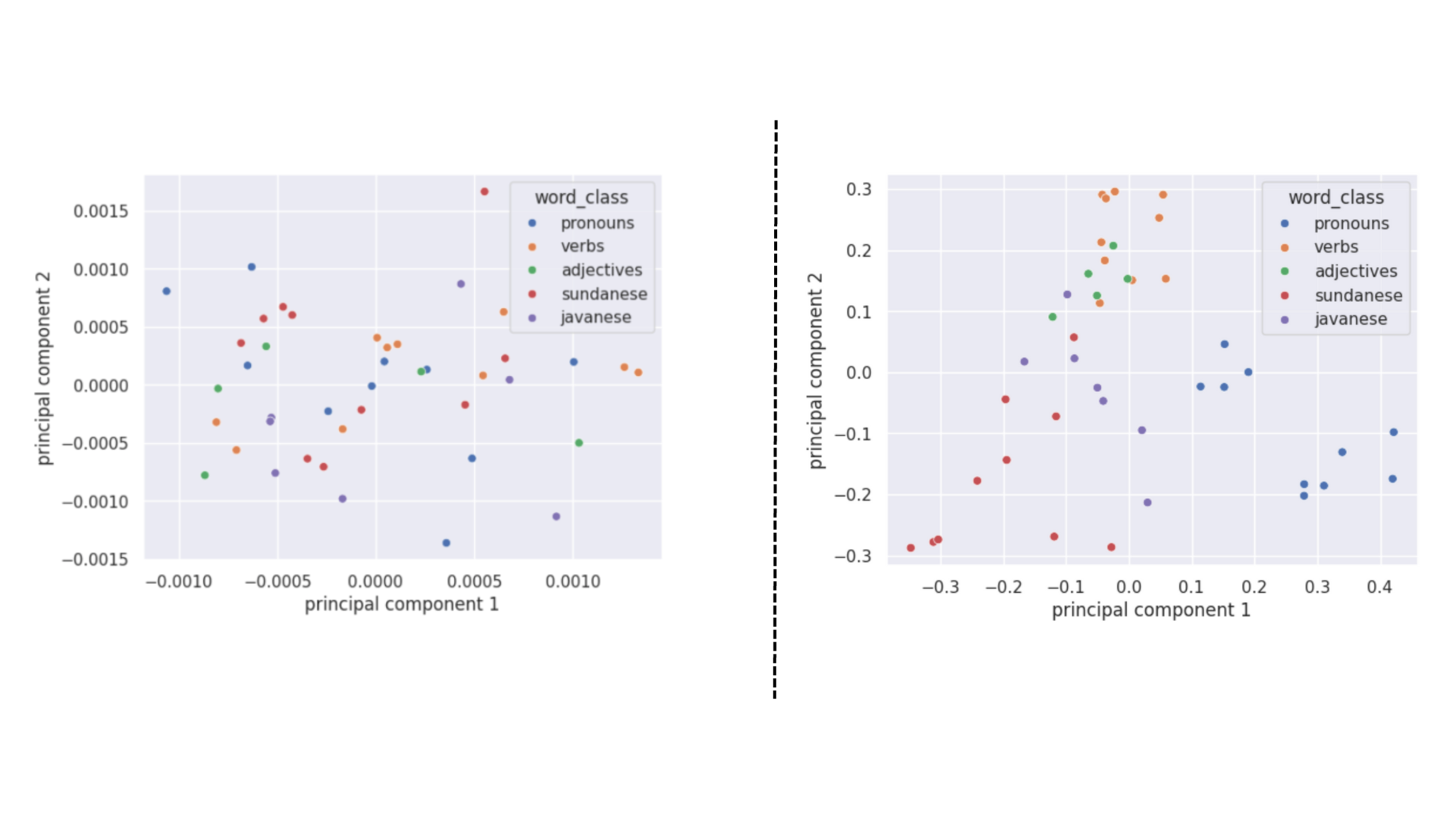
- 该模型在多种语言类型中表现稳健,展现出在形态与句法差异显著的地区语言间强大的泛化能力。
- 该模型的成功归因于高质量、经筛选的训练数据与有效的预处理流程,包括重复内容去除与质量过滤,而非单纯依赖大规模数据量。
阅读本论文
在 Nubint 阅读器中打开原文,边读边就任意段落提问。
在 Nubint 中阅读本论文本解读由 AI 根据论文原文生成,引用前请核对原文。