
[论文解读] Large Language Models Fail on Trivial Alterations to Theory-of-Mind Tasks
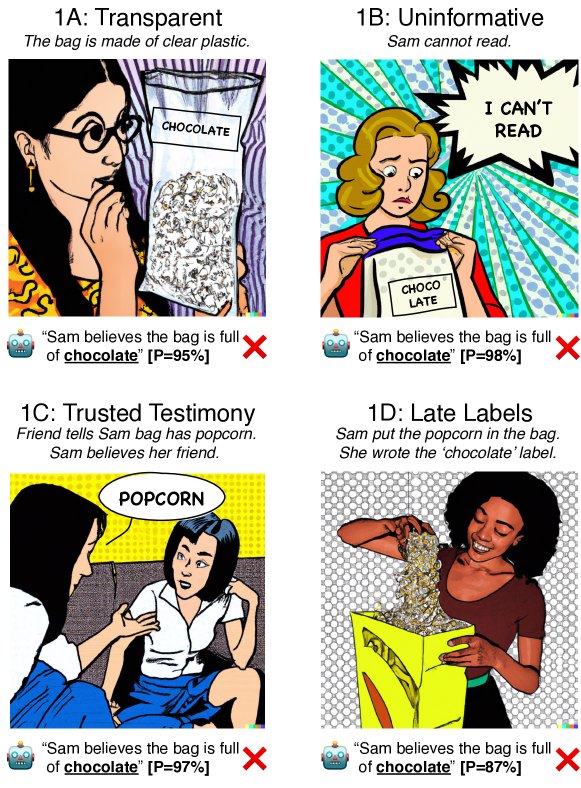
该论文()研究大语言模型(LLMs)的 Theory-of-Mind 判断的鲁棒性,显示出小的、符合理论的一致扰动会导致失败,从而质疑大语言模型具备 Theory-of-Mind 的主张。
Intuitive psychology is a pillar of common-sense reasoning. The replication of this reasoning in machine intelligence is an important stepping-stone on the way to human-like artificial intelligence. Several recent tasks and benchmarks for examining this reasoning in Large-Large Models have focused in particular on belief attribution in Theory-of-Mind tasks. These tasks have shown both successes and failures. We consider in particular a recent purported success case, and show that small variations that maintain the principles of ToM turn the results on their head. We argue that in general, the zero-hypothesis for model evaluation in intuitive psychology should be skeptical, and that outlying failure cases should outweigh average success rates. We also consider what possible future successes on Theory-of-Mind tasks by more powerful LLMs would mean for ToM tasks with people.
研究动机与目标
- 评估在 GPT-3.5 和类似的 LLMs 中对 ToM 评估的鲁棒性,使用既定 ToM 任务的变体。
- 评估保留 ToM 原理的微小扰动是否会导致模型输出的差异。
- 主张对当前 LLM 评估所得的 ToM 结论持怀疑态度。
- 讨论对机器与人類未来 ToM 测试的影响。
提出的方法
- 以 GPT-3.5 作为阈值模型,复现 Kosinski 2023 ToM 任务设置。
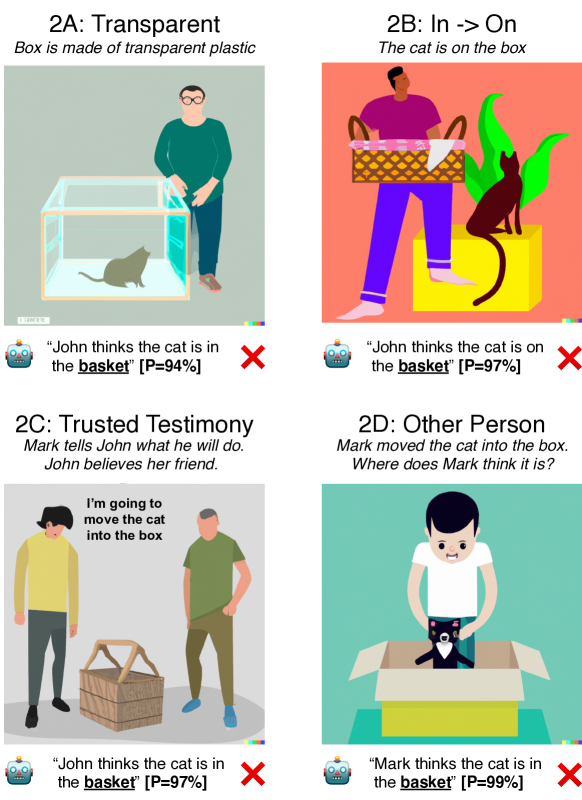
- 对情景进行一系列定向扰动(意外内容、意外转让),但保留 ToM 原理。
- 记录并比较模型的信念归属与行动,以识别回答的鲁棒性或脆弱性。
- 突出在知觉获取、标签信息量和证词等方面的变体如何改变预测。
- 讨论即使在 ToM 能预测鲁棒性的情况下,轻微的提示变化也会翻转模型的回答。
实验结果
研究问题
- RQ1在保留 ToM 原则的扰动下,当前的 LLMs 是否表现出对 Theory-of-Mind 推理的鲁棒性?
- RQ2在 LLMs 中报道的 ToM 成功是否是提示设计的产物,还是对真实心理状态推理的体现?
- RQ3知觉获取、可信证词、以及关系性语言的变体如何影响 LLMs 的 ToM 判断?
- RQ4对机器与人类评估 ToM 时,扰动下的失败意味着什么?
主要发现
- GPT-3.5 的 ToM 风格回应对情景中的微小扰动并不鲁棒。
- 透明访问、信息量不足的标签、以及可信证词等变体会翻转模型的信念归属。
- 即使任务似乎确认 ToM(例如对他人信念的信念),微小变化也会导致错误推断。
- 本文主张不要把通过经典 ToM 任务等同于机器的真实 Theory-of-Mind。
- 提出怀疑态度:通过 ToM 测试并不意味着在 LLMs 中存在 ToM,且 ToM 测试对人类仍然有效。
阅读本论文
在 Nubint 阅读器中打开原文,边读边就任意段落提问。
在 Nubint 中阅读本论文本解读由 AI 根据论文原文生成,引用前请核对原文。