
[论文解读] Large Language Models for Supply Chain Optimization
本文提出 OptiGuide,一种利用带上下文学习的大语言模型(LLMs)的框架,将人类查询翻译为优化代码,运行求解器,并在供应链决策中解释结果,同时不泄露专有数据。
Supply chain operations traditionally involve a variety of complex decision making problems. Over the last few decades, supply chains greatly benefited from advances in computation, which allowed the transition from manual processing to automation and cost-effective optimization. Nonetheless, business operators still need to spend substantial efforts in explaining and interpreting the optimization outcomes to stakeholders. Motivated by the recent advances in Large Language Models (LLMs), we study how this disruptive technology can help bridge the gap between supply chain automation and human comprehension and trust thereof. We design OptiGuide -- a framework that accepts as input queries in plain text, and outputs insights about the underlying optimization outcomes. Our framework does not forgo the state-of-the-art combinatorial optimization technology, but rather leverages it to quantitatively answer what-if scenarios (e.g., how would the cost change if we used supplier B instead of supplier A for a given demand?). Importantly, our design does not require sending proprietary data over to LLMs, which can be a privacy concern in some circumstances. We demonstrate the effectiveness of our framework on a real server placement scenario within Microsoft's cloud supply chain. Along the way, we develop a general evaluation benchmark, which can be used to evaluate the accuracy of the LLM output in other scenarios.
研究动机与目标
- 弥合供应链优化与人类理解和信任之间的差距。
- 利用 LLM 将纯文本查询转化为优化工作流,同时不暴露专有数据。
- 通过将 LLM 与传统优化求解器集成,实现“what-if”分析。
- 为供应链中的基于 LLM 的可解释性提供评估基准。
- 在实际的 Microsoft Azure 服务器放置场景中展示部署。
提出的方法
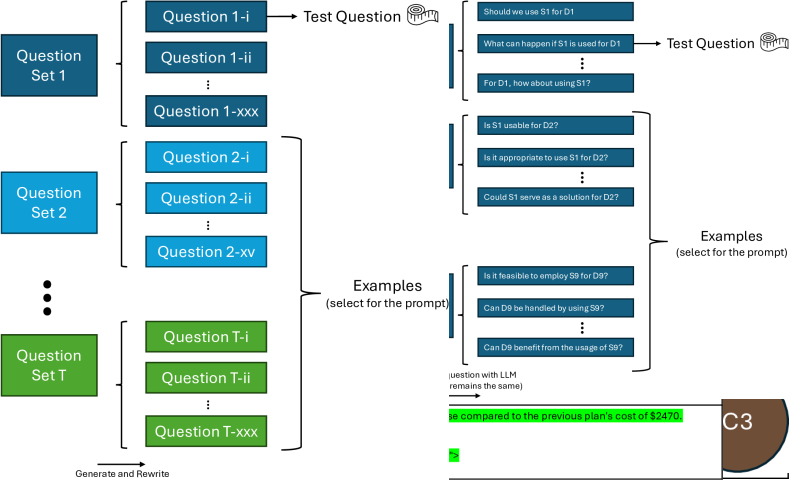
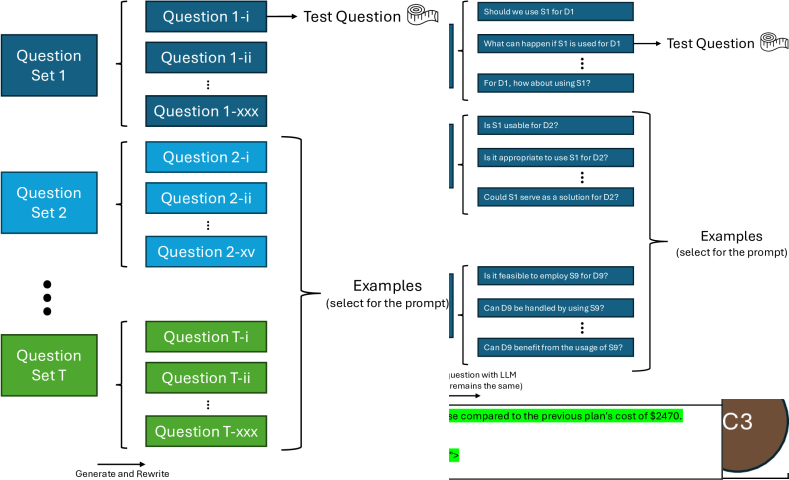
- 通过提示进行上下文学习,以提示引导的方式教授 LLM 领域概念,无需重新训练。
- 让 LLM 生成与优化求解器(如 Gurobi)或数据库交互的代码以获取结果。
- 加入保护机制以检测并从输出错误中恢复。
- 通过解释器处理查询结果,生成易于理解的解释和可视化。
- 使用日志对查询进行迭代性改进(2-5 次),以得出最终答案。
- 部署具有应用特定组件的模块化架构,以维护数据隐私。
实验结果
研究问题
- RQ1LLM 是否能够为供应链问题的优化结果提供准确、可读的解释?
- RQ2LLM 将查询改写为优化输入后,执行 what-if 分析的效果有多好?
- RQ3提示设计、示例选择和模型选择对可解释性准确性的影响是什么?
- RQ4在利用外部 LLM 进行解释的同时,OptiGuide 如何保持数据隐私?
- RQ5OptiGuide 在实际的 Azure 服务器放置部署中的表现如何?
主要发现
- OptiGuide 在使用 GPT-4 的评估基准中平均达到 93% 的准确率。
- 该框架通过将领域数据保留在求解器或数据库中来保护隐私,数据从不发送给 LLM。
- 评估包括分布内和分布外情景,使用多种提示策略和示例规模。
- 在实际 Azure 部署中,规划人员和工程师的反馈积极,分布内准确率超过 90% 。
- 该基准和方法为未来在供应链中评估基于 LLM 的可解释性提供了可能。
阅读本论文
在 Nubint 阅读器中打开原文,边读边就任意段落提问。
在 Nubint 中阅读本论文本解读由 AI 根据论文原文生成,引用前请核对原文。