
[论文解读] Large Language Models(LLMs) on Tabular Data: Prediction, Generation, and Understanding -- A Survey
本综述回顾了大语言模型在表格数据上的应用,涵盖预测、数据生成和表格理解任务,提供技术、数据集、评估指标以及未来方向的分类法。
Recent breakthroughs in large language modeling have facilitated rigorous exploration of their application in diverse tasks related to tabular data modeling, such as prediction, tabular data synthesis, question answering, and table understanding. Each task presents unique challenges and opportunities. However, there is currently a lack of comprehensive review that summarizes and compares the key techniques, metrics, datasets, models, and optimization approaches in this research domain. This survey aims to address this gap by consolidating recent progress in these areas, offering a thorough survey and taxonomy of the datasets, metrics, and methodologies utilized. It identifies strengths, limitations, unexplored territories, and gaps in the existing literature, while providing some insights for future research directions in this vital and rapidly evolving field. It also provides relevant code and datasets references. Through this comprehensive review, we hope to provide interested readers with pertinent references and insightful perspectives, empowering them with the necessary tools and knowledge to effectively navigate and address the prevailing challenges in the field.
研究动机与目标
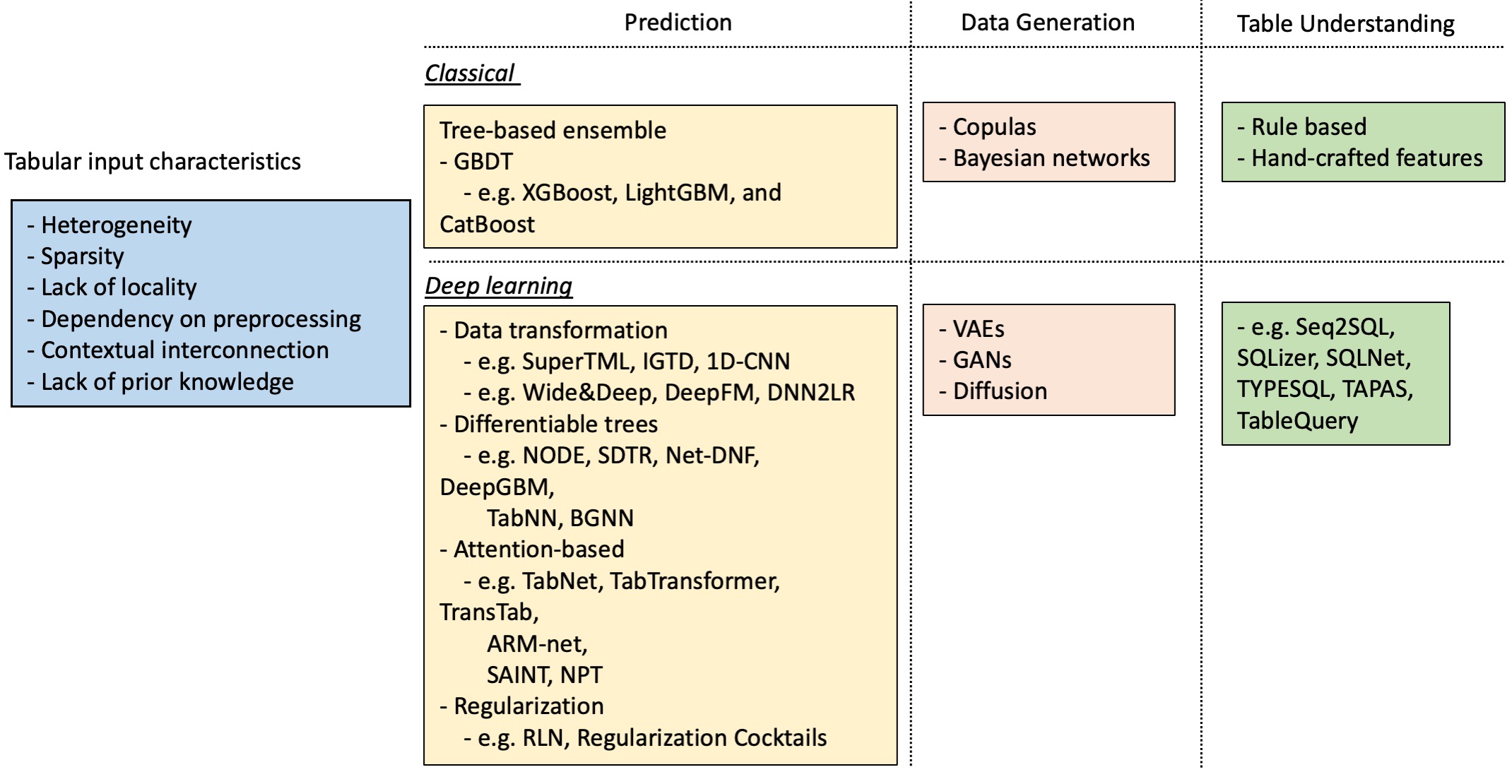
- 概括表格数据的特征及传统方法的挑战。
- 提出一套将LLMs适应于表格数据在预测、生成、问答和理解等任务中的技术分类。
- 评审用于表格数据的LLMs的数据集和评估指标,并将它们映射到相应任务。
- 识别该领域的局限性、空白与未来研究方向。
- 提供给从业者的相关代码和数据集的参考。
提出的方法
- 对用于表格数据的LLMs的数据集、度量标准和方法进行综述与分类。
- 将技术分类为序列化、表格操作、提示工程和端到端系统设计。
- 讨论LLMs如何用于预测、数据扩增/生成,以及问答/表格理解。
- 分析鲁棒性、扰动,以及表格结构和预处理对LLM性能的影响。
- 综合未解决的问题和未来研究方向,并提供实际的参考。

实验结果
研究问题
- RQ1哪些技术能够在跨任务的表格数据中有效利用LLMs?
- RQ2在不同数据集上,LLMs在表格数据的预测、生成和问答任务中的表现如何?
- RQ3哪些数据集和评估指标最能基准LLM为基础的表格数据方法?
- RQ4LLMs在表格数据上的主要局限性和未来方向是什么?
主要发现
- LLMs提供上下文学习和指令遵循能力,可用于表格数据任务。
- 序列化格式和输入表示的选择对性能和令牌效率有显著影响,HTML/XML格式有时有助于GPT风格的模型,但会增加令牌使用。
- 提示工程、思路链策略、自洽性以及检索增强生成在表格任务上提升性能,尤其是在较大模型上。
- 传统的表格基线如梯度提升树仍然是预测的强基线,尽管深度学习方法在非常大或高度分类化的数据集上表现出色。
- 本文提供了对数据集、指标和技术的结构化分类,并强调了偏差、幻觉、数值数据表示、可解释性以及标准化基准等开放问题。
阅读本论文
在 Nubint 阅读器中打开原文,边读边就任意段落提问。
在 Nubint 中阅读本论文本解读由 AI 根据论文原文生成,引用前请核对原文。